
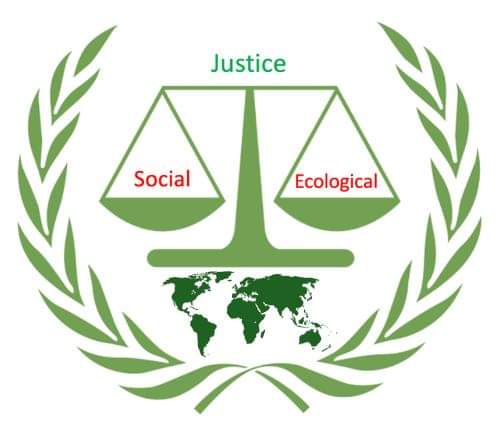
Sustainability involves the integration of social, economic, and environmental considerations to meet the needs of the present without compromising the ability of future generations to meet their own needs. The concepts of social justice and ecological justice are integral components of sustainability, each addressing different aspects of human well-being and environmental health.
Social Justice focuses on creating fair and equitable societies where all individuals have access to basic human rights, opportunities, and resources. In the context of sustainability, social justice means ensuring that the benefits and burdens of environmental policies and practices are distributed equitably among different social groups.
Sustainable development should address issues such as poverty, inequality, and social exclusion to promote a just and inclusive society. Consideration of social justice in sustainability emphasizes the importance of engaging marginalized communities and ensuring their active participation in decision-making processes.
Ecological justice, sometimes referred to as environmental justice, emphasizes the fair distribution of environmental benefits and burdens among different communities, regardless of their socioeconomic status. It addresses the disproportionate impact of environmental degradation, pollution, and resource depletion on vulnerable communities.
Ecological justice calls for the protection of ecosystems, biodiversity, and natural resources to maintain the balance and resilience of the environment for current and future generations. It recognizes the interconnectedness of ecosystems and the need to preserve the integrity of the planet’s life-supporting systems.
Interconnection, Social justice and ecological justice are interconnected; environmental degradation often disproportionately affects marginalized communities, leading to a cycle of poverty and vulnerability. For sustainable development, it’s crucial to address the interdependence of social and environmental issues, recognizing that a healthy environment is essential for the well-being of all people.
Examples, An environmentally sustainable project that displaces vulnerable communities without providing alternative solutions can be considered environmentally sound but socially unjust. Conversely, a socially just initiative that neglects ecological impacts may not be sustainable in the long term.
Challenges, Balancing social and ecological priorities can be challenging, as trade-offs may arise in certain situations. Achieving both social and ecological justice requires comprehensive policies, collaboration between stakeholders, and a holistic understanding of the complex interactions between human societies and the environment.
In summary, sustainability necessitates a harmonious integration of social justice and ecological justice to create resilient, equitable, and thriving societies while safeguarding the health of the planet. This requires a holistic approach that considers the needs of people and the planet in tandem, recognizing their interconnectedness for long-term well-being.
Collected by
Hesham Saad

آخر فيديو
استعرض معنا في هذا الفيديو الإبداع الفني الخالص من خلال عرض أعمال