
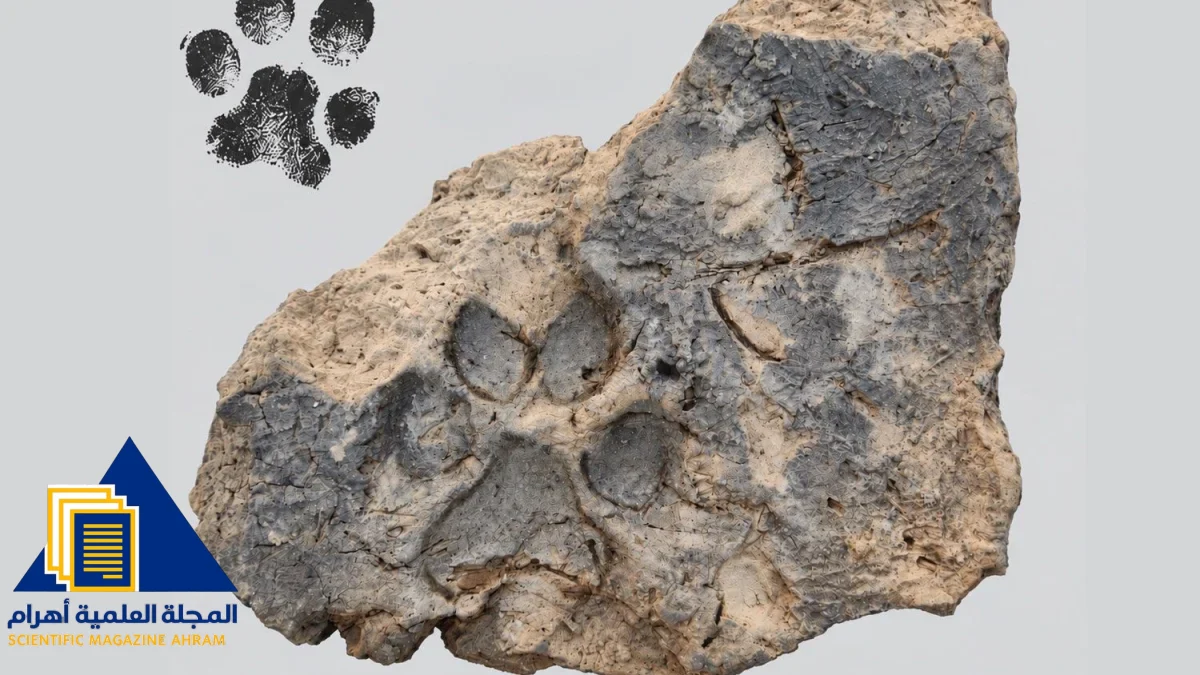

A Timeless Print Telling an Ancient Tale
In archaeology, a grain of sand or a piece of stone can tell stories far larger than its actual size. This is what happened recently at the Tavşanlı Höyük archaeological site in western Turkey, where archaeologists found a Bronze Age mud brick bearing the footprint of a dog dating back about 4,000 years. This brick was not just an ordinary building material; it turned into a time capsule preserving a fleeting moment from the distant past, when a pet walked carelessly across fresh mud that later dried to immortalize its existence for generations to come.
The Secret Behind the Close Bond Between Humans and Dogs
This unique discovery sheds light on the long and deep history of the relationship between humans and dogs in that region of the world. Dogs were not merely passing animals in the lives of Bronze Age communities; rather, they were an integral part of the daily fabric of ancient villages and towns. Researchers believe this footprint reflects the shared living conditions, as dogs coexisted freely amid human dwellings, leaving their physical and symbolic imprints alike in our shared history.
A New Window Into Daily Life Details
The importance of small archaeological discoveries, such as animal prints, lies in their ability to transport us directly to the forgotten daily details of ancient civilizations. Unlike palaces and temples that tell stories of kings and wars, this brick speaks to us about the simple, quiet life in a family home dating back 4,000 years. It reminds us that the deep bond uniting us with our loyal friends today is not a product of the modern era, but rather an extension of a long-standing human legacy that began thousands of years ago on the banks of mud and stone.
By: Hany Sallam
Source: smithsonianmag.com


Latest video
تابع معنا تحليل قراءة الصحف اليومية مع الكاتب الصحفي Hany Sallam عبر