
By: Abdullah Saeed Al Habsi, MIoL
Through my experience writing and publishing in the Egyptian press, I have found that geographical distances between Arab societies do not necessarily reflect the distance between the concerns and ambitions of their people. What occupies the mind of a young person in Ras Al Khaimah may be identical to what occupies a young person in Cairo or Alexandria, despite the differing economic and social environments in which each lives.
Perhaps one of the most prominent challenges shared by Arab youth is the gap between having an idea and having the ability to execute it. We have plenty of ideas, diverse talents, and minds capable of innovation, but we do not always possess sufficient mechanisms to discover these energies and transform them into economic and social value.
Furthermore, I say this from my personal experience in writing, research, and innovation. I have learned that producing an idea is merely the beginning of the journey; the effort a person exerts to deliver their idea to someone who can understand or adopt it can sometimes exceed the effort spent producing it.
A writer needs a platform, a researcher needs an institution that believes in the value of their research, and an innovator needs an environment that allows them to test their innovation. Similarly, an entrepreneur needs someone to give them the opportunity to move from paper to reality.
In the Egyptian press, I have found an important space to express my ideas and discuss issues that transcend national borders. This has made me more convinced that embracing Arab talent should not stop at geographical boundaries, because a person may find someone outside their immediate circle who reads their experience, recognizes its value, and gives it a chance to emerge.
A Meeting That Renewed the Question
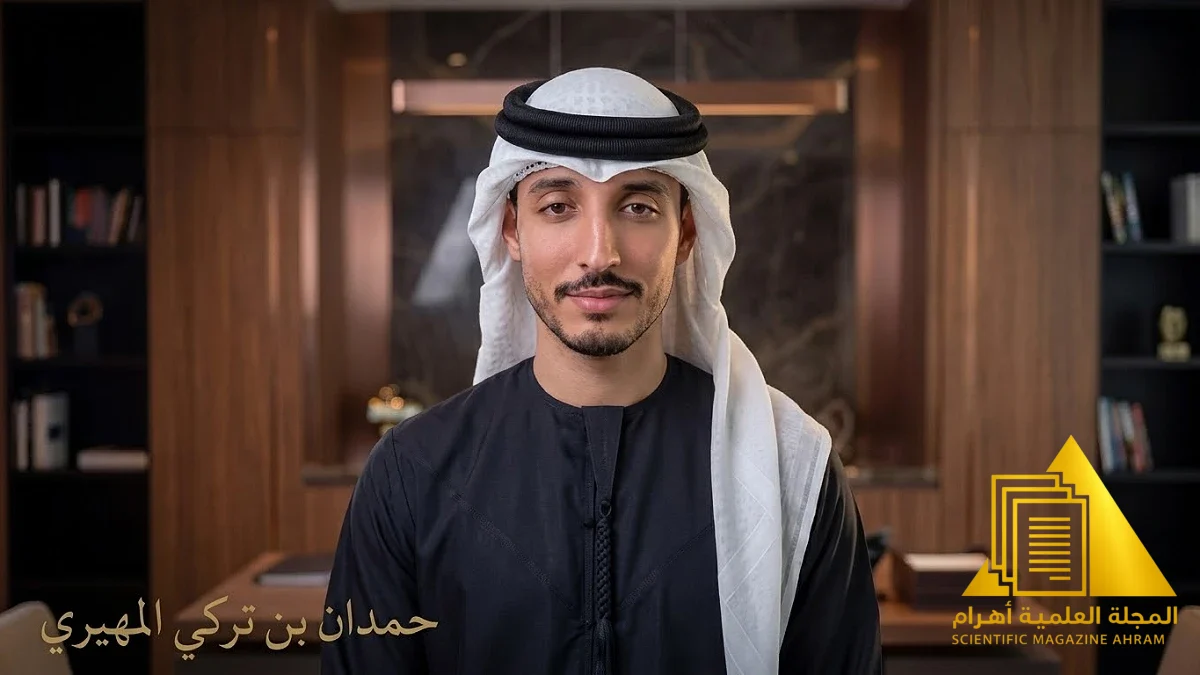
During a recent meeting with the business team of the young Emirati writer and entrepreneur Hamdan bin Turki Al Mheiri, founder of Bin Turki Group, our conversation touched upon several initiatives. I received a copy of his book, Out of the Ordinary, and learned about an initiative titled “Achieve Your Dream.”
The initiative caught my attention, not only because it offers financial support for projects, but because it brought back to my mind a question worth discussing across our Arab world: What if every person who has managed to build their professional and economic experience dedicated a part of their resources to help someone else build their own experience?
The initiative, which targets Emirati youth in Ras Al Khaimah, provides project owners with the opportunity to present their projects and discuss them directly. One project is then selected to be adopted and supported until it becomes a reality, according to the initiative team.
Although its geographical scope is limited, and its actual results remain tied to the outcomes of the selection and execution process, the idea itself deserves to be discussed beyond the place where it started.
What If Opportunity-Making Became an Arab Culture?
Egypt possesses a massive reserve of minds, talents, and human expertise, while the UAE has a growing experience in building environments for innovation and entrepreneurship. Between the two experiences lies a wide space for integration, not only at major governmental and investment levels, but also at the level of individual initiatives and private institutions.
It is not necessary for every Arab initiative to be a massive project, nor to start with large budgets and wide conferences. Perhaps it is enough for a businessperson to adopt a young person’s project, or for a publisher to adopt a manuscript by a new writer. A research institution can also help an independent researcher develop their idea, and someone with professional experience can open a door for a person seeking to acquire it.
Consequently, if these practices became part of the corporate social responsibility culture of Arab institutions, we might be able to reduce the number of ideas that are lost before finding their first opportunity.
We talk a lot about the brain drain from the Arab world, but we do not talk enough about the minds that never found an opportunity to prove their existence in the first place. We also overlook talents that withdrew in silence, projects that never began, books that were not published, and innovations that remained in drawers. These are losses that are difficult to measure in numbers, because we cannot know the value that could have been produced by an idea that was never allowed to see the light of day.
Between the Writer and the Entrepreneur
On the other hand, writing and entrepreneurship may seem like different fields, but I see them meeting at a core point: the ability to envision something that does not yet exist, and then work to bring it into being.
A writer builds a world of words, an entrepreneur builds a project from ideas and resources, and a researcher tries to build new knowledge from questions and evidence. All of them face at some stage the challenge of convincing others of the value of something that is not yet complete.
Therefore, the title of the book Out of the Ordinary holds a significance for me that extends beyond the book itself. It pushes us to think about the need to review prevailing concepts of success and opportunity, and the responsibility of a person who has reached a position where they can help others. Individual success is important, but it becomes more valuable when it transforms into the ability to create new successes.
I do not believe the goal is for every businessperson to turn into a charity, or to abandon the economic considerations that govern their work. Rather, what is needed is for them to realize that investing in people and ideas may be one of the most sustainable forms of investment, when coupled with careful selection, follow-up, and evaluation.
From Ras Al Khaimah to Cairo
In conclusion, what I hope for, as an Emirati writer who found a platform in the Egyptian press to express his ideas, is to see more Arab bridges that go beyond the exchange of goods and investments to exchange opportunities and embrace talent.
Why do Arab economic institutions not adopt joint initiatives to discover innovators? Why do publishing houses and cultural institutions not cooperate to embrace new literary voices? And why do those with successful experiences not dedicate part of their expertise to help Arab youth overcome the obstacles that they themselves faced in their beginnings?
Our Arab future will not be made by capital alone, nor will it be made by minds alone. Rather, it will be forged by the meeting between them, when an idea finds someone who understands it, and capital finds what is worthy of investment. From Ras Al Khaimah to Cairo, dreams remain similar, and the question remains one: How many Arab dreams could have come true, if they had found someone to believe in them at the right time?
About the Author:
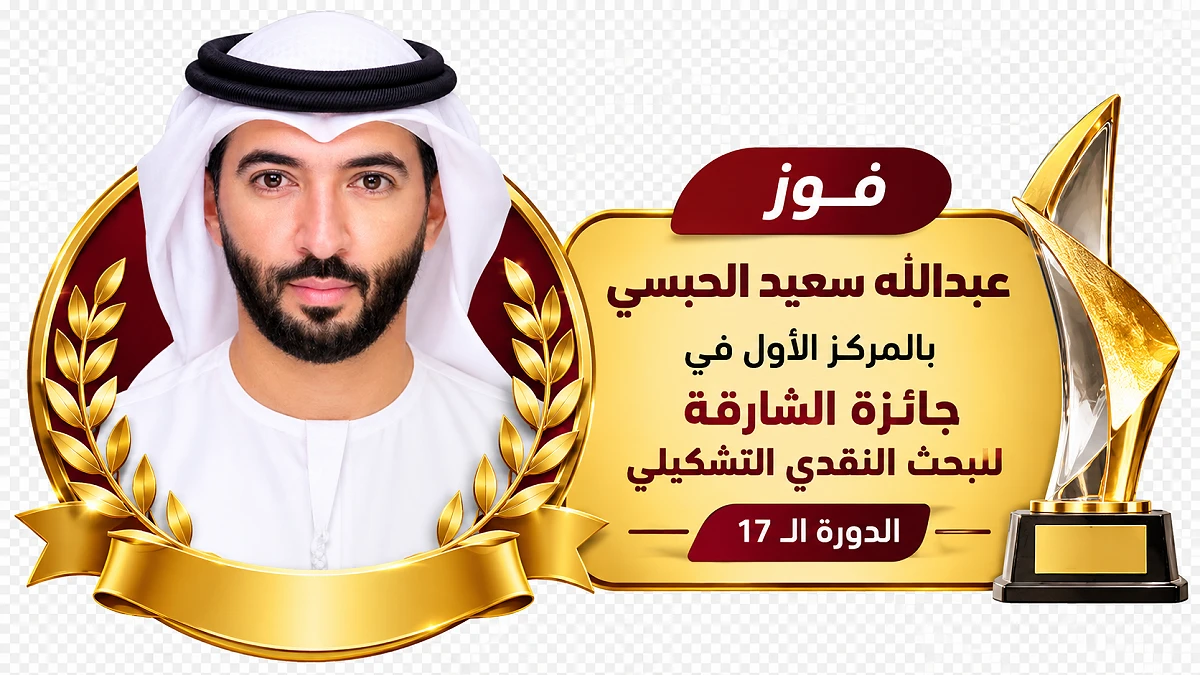
Abdullah Saeed Al Habsi, MIoL, is an Emirati writer, researcher, and critic from Ras Al Khaimah, holding a master’s degree in leadership and organizational development, and a Member of the Institute of Leadership (UK). He won first place in the 17th edition of the Sharjah Award for Fine Arts Critical Research for 2026. He has published books, research papers, and articles in both Arabic and English across Arab and international journalistic, cultural, and research platforms. His interests include heritage, cultural criticism, leadership, security, risk management, and innovation.

Latest video
تابع معنا تحليل قراءة الصحف اليومية مع الكاتب الصحفي Hany Sallam عبر