
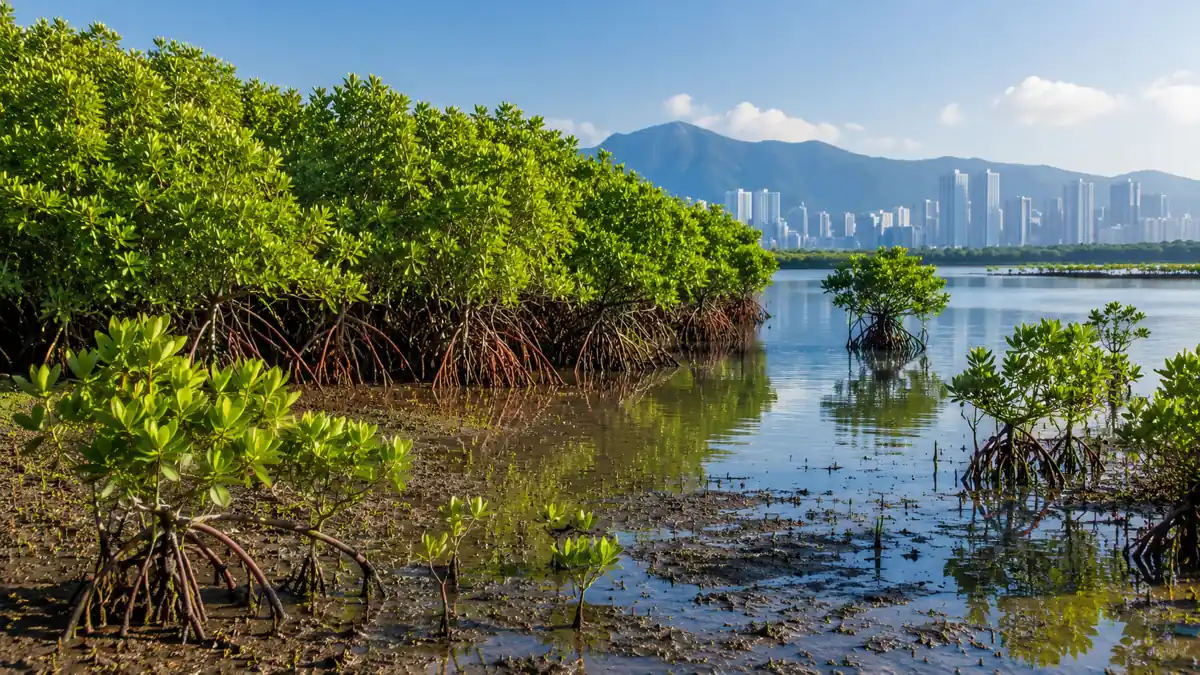

A recent scientific study has revealed that mangrove forests in East Asia are gradually moving toward new northern regions because of rising global temperatures.
Researchers explained that climate warming is allowing these coastal forests to reach areas that were previously too cold, particularly in China, South Korea, and Japan.
How Does Climate Change Affect Mangrove Forests?
Mangrove forests depend on relatively warm temperatures to survive and grow. For this reason, cold regions limited their spread over past decades.
However, the new study showed that rising winter temperatures in East Asia have begun to change this situation. As a result, some northern coasts have become more suitable for mangrove growth.
Scientists also used satellite imagery and long-term climate data to analyze forest health and expansion in recent years.
China, Korea, and Japan Among Affected Regions
Researchers pointed out that northern coasts in China may experience a clear expansion of mangrove forests in the coming decades.
The study also projected the emergence of potential new habitats in parts of South Korea and Japan as global warming continues.
Scientists believe this expansion may help increase carbon absorption and protect coasts from storms and marine erosion.
New Factors May Threaten Expansion
Despite these benefits, the study warned of risks that could hinder mangrove growth in the future.
Researchers explained that reduced solar radiation caused by air pollution in parts of East Asia may limit the trees’ ability to grow normally.
Scientists also noted that extreme weather events could negatively affect the stability of these sensitive ecosystems.
Why Are Mangrove Forests So Important?
Mangrove forests rank among the world’s most important coastal ecosystems. They store massive amounts of carbon and help protect shores from floods and storms.
In addition, these forests provide natural habitats for many marine organisms and birds. Therefore, scientists describe them as one of the strongest natural solutions for tackling climate change.
Calls to Protect Coastal Forests
Researchers urged Asian governments to develop long-term plans to protect both new and existing mangrove forests.
They also called for reducing air pollution and carbon emissions to maintain the stability of these important ecosystems. Scientists believe the future of mangroves may become a core element in Asian climate strategies in the coming decades.
Hany Sallam


Latest video
تابع معنا تحليل قراءة الصحف اليومية مع الكاتب الصحفي Hany Sallam عبر