
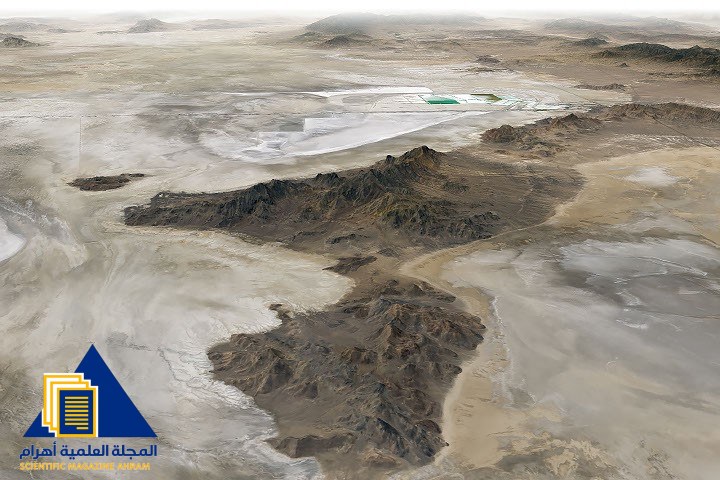

From an Inland Sea to a Wonderland
Thousands of years ago, the massive Lake Bonneville covered vast expanses of the western United States, forming a giant body of water resembling an inland sea. Yet with climate change and the receding of water across geological eras, the lake gradually vanished, leaving behind a remarkable legacy of sprawling salt flats and mud flats known as playas. Once the floor of deep waters, this land has turned into one of the most striking landscapes on Earth.
A Laboratory for Human Ambition
These salt flats were not merely barren spaces; they became a global platform for engineering and technical achievements. Thanks to their perfectly flat terrain and hard soil, the area turned into a world stage for testing extreme speeds, where global records for automobile racing were set as the sprawling expanse provided an endless horizon for breaking the speed barrier. This land was not used for sports alone; it also hosted logistical and scientific innovations that reflected humanity’s ability to adapt harsh terrain to serve technological progress.
Stories Born of History
Behind this majestic, salty stillness lie stories of exploration and deep human suffering. These flats witnessed the journeys of early pioneer caravans that found an existential challenge in these vast spaces, where stories of survival and despair mingled with the search for new lands. Today, scientists do not see this lost lake merely as geological history; they view it as a living record telling the story of the climate changes that shaped our planet’s geography, and how this change drove humans to rediscover the environment around them and turn natural challenges into opportunities for human creativity.
The Geological Vision for the Future
Lake Bonneville remains a lesson in Earth’s resilience. Researching its salt layers gives us unique insights into how ecosystems respond to major climate shifts. Studying these plains is not just unearthing the past; it is a way to understand the paths that Earth’s nature may take amid contemporary environmental challenges, making the lost lake an inexhaustible, open laboratory for scientists and researchers.
By: Hany Sallam
Source: NASA


Latest video
تابع معنا تحليل قراءة الصحف اليومية مع الكاتب الصحفي Hany Sallam عبر