
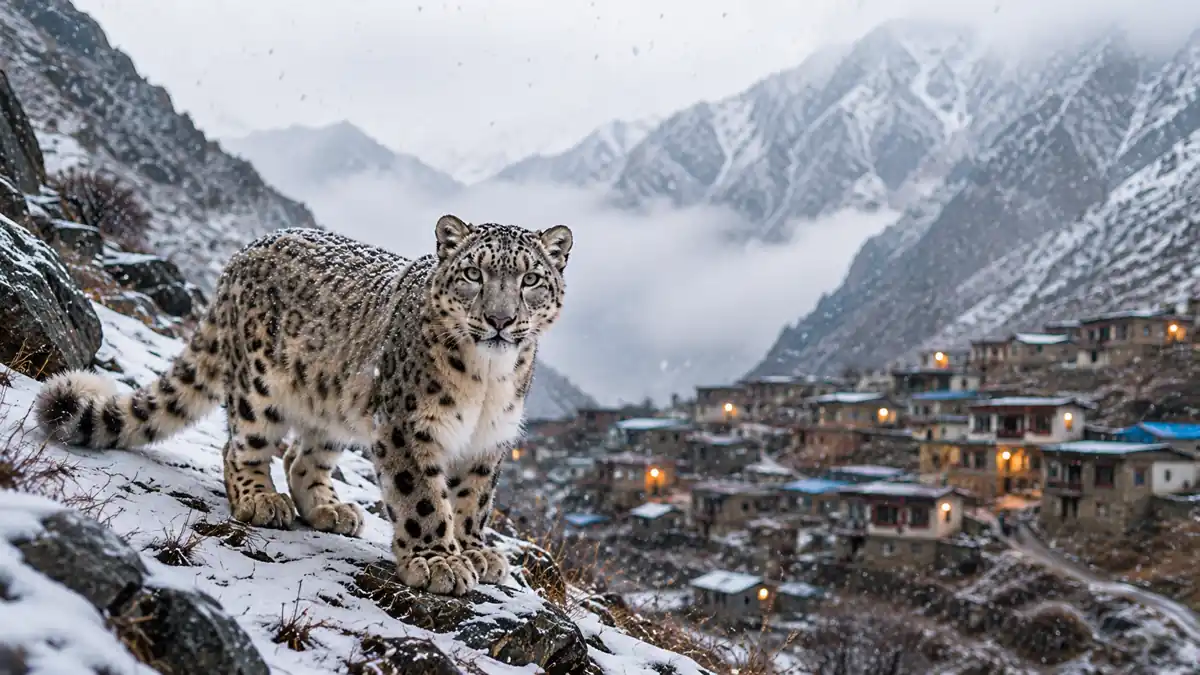

A recent study has revealed that climate change is beginning to drive rare snow leopards closer to populated areas in Asia, after their natural mountain habitats shrank rapidly in recent years.
Researchers explained that rising temperatures in the Himalayas and Central Asia have led to major changes in snow cover and the wild prey that these endangered animals depend on.
How Does Climate Change Affect Snow Leopards?
Snow leopards rely on cold environments and rugged mountain heights to survive and hunt. Therefore, rising temperatures pose a direct threat to the stability of these animals.
The study showed that shrinking ice cover drives wild prey to move toward new areas. As a result, snow leopards are forced to approach villages and farms in search of food.
Researchers also warned that increased contact with humans could lead to higher rates of poaching and conflicts with local residents.
Asia’s Mountains Are Experiencing Rapid Changes
Scientists confirmed that the mountains of Central Asia and the Himalayas are among the regions most quickly affected by global warming.
Researchers pointed out that melting ice and changing snow patterns are increasingly affecting mountain ecosystems. Some animal species have also begun to change their distribution ranges and migration routes.
Scientists believe that continued warming could lead to the loss of large parts of snow leopards’ natural habitats over the coming decades.
Snow Leopards Face Multiple Threats
The danger is not linked to climate change alone. These animals also face illegal hunting, habitat loss, and declining numbers of wild prey.
International estimates indicate that wild snow leopard numbers remain relatively low, despite international efforts to protect them. Environmental experts therefore describe them as one of the mountain species most vulnerable to climate change.
Calls to Protect Mountain Wildlife
Researchers urged Asian governments to expand natural reserves and improve monitoring of illegal hunting in mountainous areas.
They also called for supporting local communities living near snow leopard habitats to reduce conflicts with wild animals. Scientists believe that protecting mountain species has become an essential part of addressing the impacts of climate change globally.
Hany Sallam


Latest video
تابع معنا تحليل قراءة الصحف اليومية مع الكاتب الصحفي Hany Sallam عبر