

A Time Window Into the Prehistoric World
Deep in the remote wilderness of Colorado, within rock layers dating back millions of years, young researcher Leah Muck has successfully extracted buried secrets from the distant past. During meticulous fieldwork in the famous Green River Formation, the Yale University student discovered a unique fossil treasure that opens wide the door for scientists to understand the diversity and evolution of ancient wildlife on planet Earth.
A Mysterious Insect Telling a 50-Million-Year Story
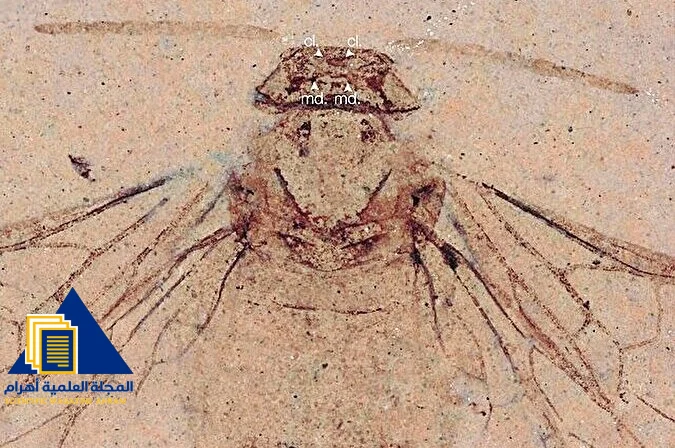
The discovered fossil revealed a completely new species of leafcutter wasp, or what are known as sawflies, which lived around 50 million years ago. These ancient insects, whose preservation was ensured by the exceptional conditions of ancient sediments, offer scientists tangible evidence of the natural environment that prevailed in the region during the Eocene epoch, when North America enjoyed a tropical climate and abundant freshwater rich in diverse plant and animal life.
Why Are These Fossils of Major Importance to Scientists?
The discovery is not limited to recording a new biological species; rather, it goes on to grant researchers deeper insights into how insects respond to major climatic changes across geological history. Studying the delicate structures of these insects preserved in the rocks helps track environmental evolutionary pathways and illustrates how these organisms survived or adapted to the massive ecological shifts our planet experienced over the past millions of years.
By: Hany Sallam
Source: phys.org


Latest video
تابع معنا تحليل قراءة الصحف اليومية مع الكاتب الصحفي Hany Sallam عبر