
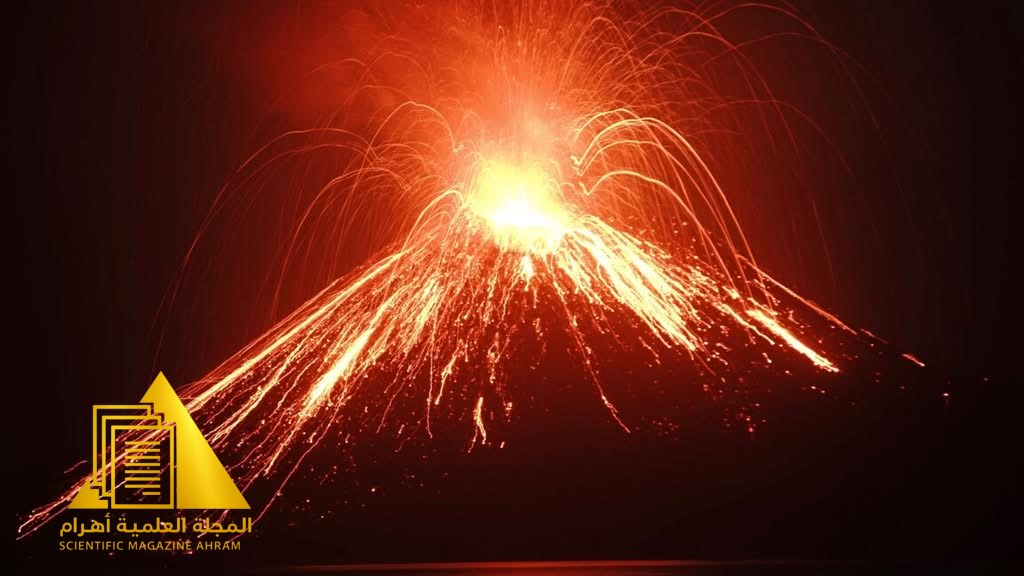

Nature’s Fury: When the Earth’s Interior Decides to Alter the Course of History
We have long viewed volcanoes as stunning geological phenomena or local threats to surrounding areas, but the reality goes much deeper than that. Volcanoes are not merely vents in the Earth’s crust; they are global engines capable of reshaping the global climate and, consequently, changing the face of human civilization. Recent scientific studies indicate that massive volcanic eruptions have not just destroyed cities, but have caused widespread economic and social collapses throughout the ages.
Volcanic Winter: The Relentless Climate Challenge
When a colossal volcano erupts, it hurls millions of tons of ash and sulfur into the upper layers of the atmosphere. These particles act like a mirror that reflects sunlight away from the Earth, leading to a sharp and sudden drop in global temperatures. This “volcanic winter” does not pass quietly; the disruption of agricultural seasons immediately leads to food shortages and rising prices, followed by bread riots and political unrest that undermine the stability of the mightiest empires.
Lessons from the Past for an Unknown Future
Historical and archaeological records tell us that many ancient civilizations faced sudden collapses that coincided with periods of intense volcanic activity. These collapses were not the direct result of lava flows, but rather of climate consequences that extended for years. Human ability to adapt to sudden climate shifts has been, and remains, the ultimate test of survival. Today, amid accelerating climate change, studying these historical events becomes an urgent necessity to understand how disruptions deep within the Earth can reshuffle our deck on the planet’s surface.
An Impact That Goes Beyond Geography
The impact of a volcano is not limited to its geographical location; the atmosphere that connects the world together carries the effects of volcanic dust to distant continents. This linkage confirms that we live in an interconnected ecosystem, where a volcanic eruption in a remote corner of the world can cause markets to collapse or famines to occur on another continent. The Earth’s memory, carried by ice sheets and soil deposits, tells us clearly that the destiny of human societies has been, and continues to be, hostage to the delicate balances of nature.
By: Hany Sallam
Source: arstechnica.com


Latest video
تابع معنا تحليل قراءة الصحف اليومية مع الكاتب الصحفي Hany Sallam عبر