

By Dr. Hisham Saad El-Sherbiny
PhD in International Commercial Arbitration – Oslo Institute for Legal Studies
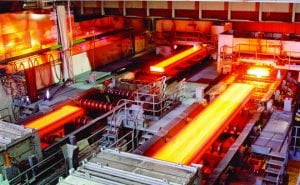
The shift from ingot casting (casting ingot) to continuous casting (continuous casting) was an industrial revolution and a turning point in handling liquid steel (liquid steel). Likewise, moving from standalone rolling mills (standalone rolling mill) to comprehensive units consisting of steel melt shops (steel melt shop) combined with rolling mills, known as a mini mill (mini mill), marks an important turning point.
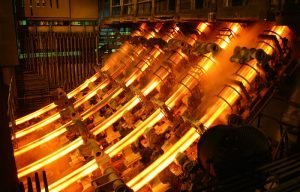
Upgrading production lines to lower overall production costs, save energy, and reduce waste, inventory, and transport costs forms one of the most important processes used as the basis for technical and economic feasibility studies.
Building on this, integrating continuous casting machines with rolling lines under the name “endless casting and rolling” brought a new industrial revolution by completely eliminating reheating furnaces, saving natural gas, and reducing oxide waste.
Similarly, applying continuous charging systems to melting furnaces under the name “endless melting” was another revolution, having a profound impact on saving the energy needed for melting, shortening melting times, controlling dust emissions, and improving oxide ratios to support metal recovery (metal recovery).
These units were recently supplied and run entirely on solar energy in Arizona, USA, turning the steel industry into a project that needs only the sun and scrap metal.
References
https://www.industrialheating.com/articles/96075-cmc-steel-arizona-to-receive-renewable-solar-energy


Latest video
تابع معنا تحليل قراءة الصحف اليومية مع الكاتب الصحفي Hany Sallam عبر