
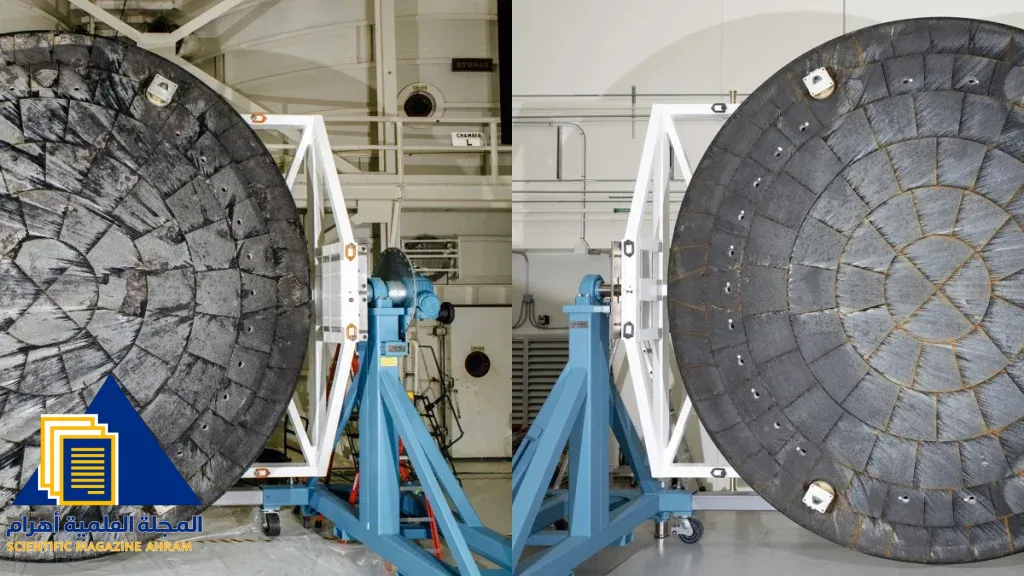

A Technical Milestone Paving the Way Back to the Moon
In a pivotal step under the ambitious Artemis program, precise engineering analyses performed on the Orion spacecraft have proved the exceptional efficiency of its heat shield. The four astronauts who undertook a flight around the Moon successfully returned safely to Earth—a success that could not have been achieved without the meticulous design of this shield, which faced immense temperatures while piercing the atmosphere.
Trial by Fire: Protecting Astronauts
The return to Earth is one of the most critical moments in any spaceflight, as the spacecraft turns into something resembling a fireball due to friction with the air at hyper-speeds. Technical data showed that the heat shield of the Orion spacecraft performed its function according to precise engineering standards, acting as a protective barrier that kept the interior cabin and passengers safe from heat that could melt metals.
Toward a New Era of Manned Exploration
The success of this mission goes beyond a mere safe return; it represents the cornerstone for upcoming missions aimed at putting human feet back on the Moon. Confirming the performance of the heat shield gives the space agency absolute confidence in the ability of newly designed vehicles to withstand harsh space conditions, paving the way for establishing sustainable human settlements on the Moon and exploring the secrets of its far side.
Beyond the Numbers of Engineering Analysis
Away from complex technical numbers, these results reflect the precision of engineering planning and the advancement of materials science in the 21st century. This technical stability is not merely a scientific triumph, but the real guarantee that astronauts need to fly far into the unknown, confident that the technology carrying them is the safest in human history.
By: Hany Sallam
Source: NASA


Latest video
تابع معنا تحليل قراءة الصحف اليومية مع الكاتب الصحفي Hany Sallam عبر