
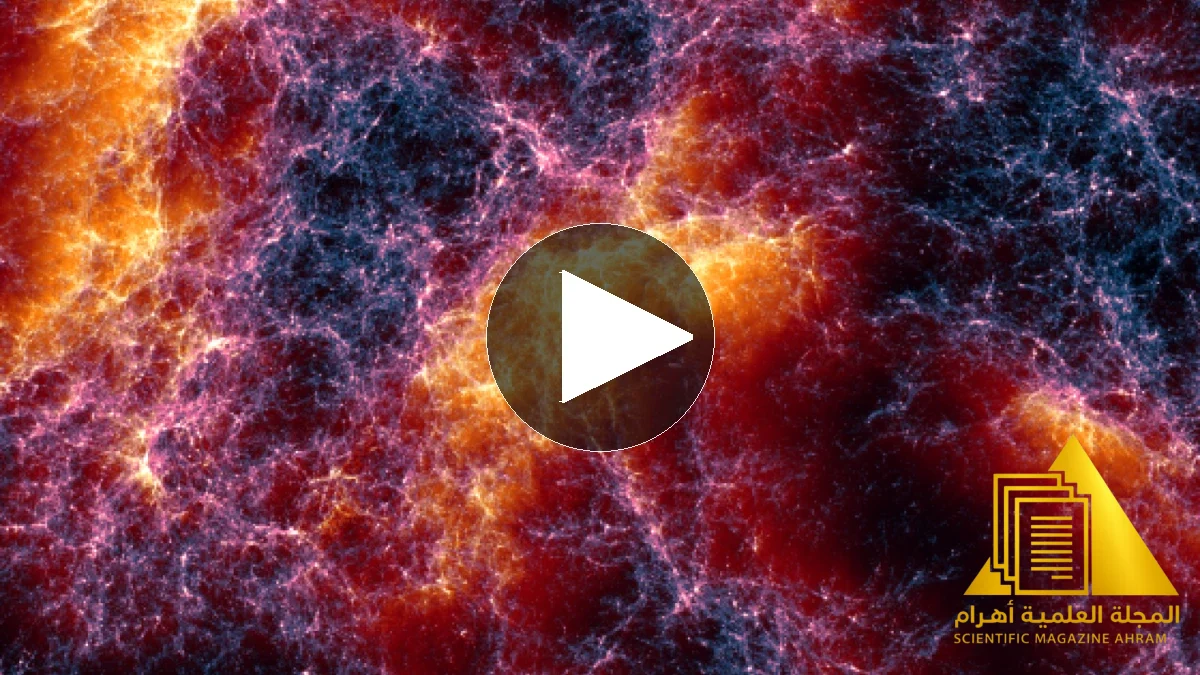

Journey Back to the Dawn of the Universe
For a long time, the early formation of the universe remained a perplexing mystery that eluded astronomers’ observation instruments. For millions of years after the Big Bang, the universe was plunged into a suffocating, pitch-black darkness before the first flashes of stars emerged to announce the beginning of a new chapter. Today, science is taking an unprecedented step toward understanding that dark era thanks to a stunning digital innovation.
Digital Simulation Illuminates the Darkness of Space
In a prominent scientific achievement, a team of researchers at the prominent Center for Astrophysics at Harvard University and other research institutions succeeded in developing an extremely precise computer simulation model. This unique model captures with astonishing accuracy how the first stars and black holes began to form and interact slowly to dispel the darkness of the universe, releasing the first sparks of light into deep space.
A New Window Into the Distant Past
This simulation serves as a digital time machine that allows scientists to see what telescopes have so far failed to observe directly. By simulating the complex physical processes that governed the birth of the first stars, researchers are coming a step closer to answering the big questions about the nature of our origins and our destiny in this vast universe.
By: Hany Sallam
Source: smithsonianmag.com


Latest video
تابع معنا تحليل قراءة الصحف اليومية مع الكاتب الصحفي Hany Sallam عبر