
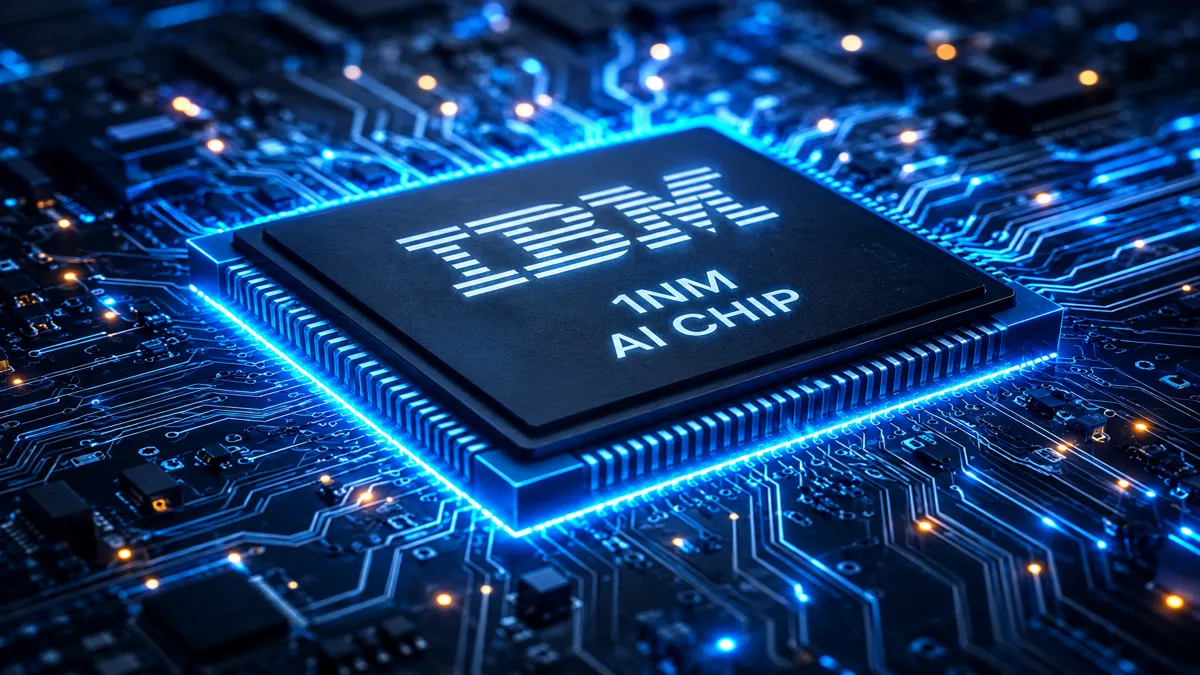

In a move that may reshape the future of computing and artificial intelligence, IBM has unveiled the world’s first sub-1-nanometer chip technology, in a breakthrough that industry experts describe as a historic leap in the race for ultra-powerful processors.
The new chip relies on 0.7-nanometer technology, or roughly 7 angstroms, making it smaller than the previous generation the company introduced in 2021 at 2 nanometers. This translates to higher transistor density and greater processing capabilities.
Why Is This Development Important?
The smaller the transistor, the greater a processor’s ability to execute operations at higher speeds while consuming less power. This is crucial in the age of artificial intelligence, which requires massive computational power.
According to IBM, the new chip houses about 100 billion transistors in an area roughly the size of a fingernail, which is nearly double the density of previous 2-nanometer chips. 0
What Is New in This Chip?
Nanostack 3D Technology
IBM relies on a new architecture called “Nanostack,” which vertically stacks transistors instead of using traditional horizontal expansion, allowing for greater density and performance.
Higher Performance and Greater Efficiency
Initial estimates indicate that the chip may deliver up to 50 percent higher performance or 70 percent greater energy efficiency compared to the previous generation. 1
Boosting Artificial Intelligence Capabilities
This development may directly impact the performance of data centers, artificial intelligence models, cloud computing, and even mobile devices in the future.
Are We Facing the End of Moore’s Law?
For many years, some believed that Moore’s Law was approaching its physical limits, but IBM is proving that there are new ways to continue shrinking chips and improving performance.
With the arrival below the 1-nanometer level, the world is effectively entering the “angstrom” era in processor manufacturing.
When Will It Reach the Market?
Despite the official announcement, this technology remains in the research and development stage, and IBM expects it to enter commercial production over the next five years, in cooperation with global manufacturing partners. 2
What Does This Mean for the Average User?
This leap may seem far removed from daily use right now, but it paves the way for a future where phones, computers, smart cars, and robots evolve with unprecedented speed and efficiency.
In other words, this is not just a smaller chip, but a step toward a new generation of technology that is faster, smarter, and consumes less energy.
Hany Sallam


Latest video
تابع معنا تحليل قراءة الصحف اليومية مع الكاتب الصحفي Hany Sallam عبر