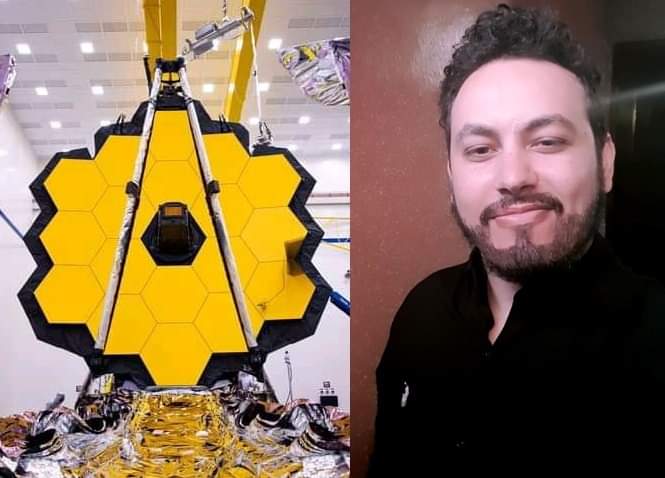
The James Webb Space Telescope, launched by NASA in collaboration with the European Space Agency, is the most powerful piece of astronomical observation technology ever built. It succeeds the remarkable Hubble Space Telescope, which revolutionized astronomy and our understanding of the cosmos. It is also the most expensive, with a price tag of around $10 billion, and its construction required a quarter-century of continuous work.
James Webb Space Telescope
Telescope Features:
This telescope has unique features. Placed on Earth, it would be capable of spotting a coin on the Moon, and it can sense the heat of a bee from a distance of 500,000 kilometers, making it an extremely sensitive instrument. This is hardly surprising, since astronomical observation requires the latest technologies given the vast distances involved in the universe.
The Difference Between the James Webb Space Telescope and the Hubble Space Telescope:
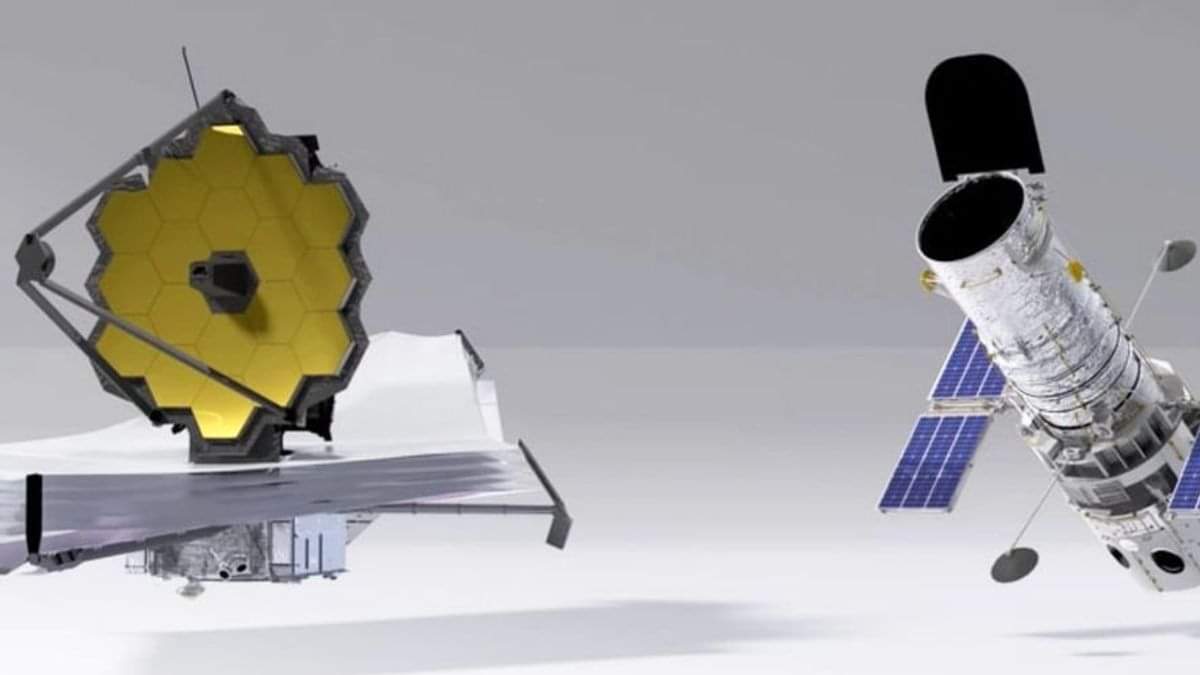
The Difference Between the James Webb Space Telescope and the Hubble Space Telescope
The difference between these two telescopes is enormous. Webb’s mirrors are very large, gold-coated, and extremely precise in their observations, representing a major advancement over Hubble’s lens. In addition, Webb observes in infrared, unlike Hubble, which relied solely on visible light. Viewing the universe in infrared allows Webb to see things that Hubble was unable to detect, especially given that gaseous nebulae and cosmic dust obscure much of the universe. The James Webb Space Telescope is able to look behind these nebulae, gas clouds, and dust. Furthermore, Webb possesses other sensitive observation instruments that can give us more detailed information about the atmospheres of distant planets.
Missions of the James Webb Space Telescope:
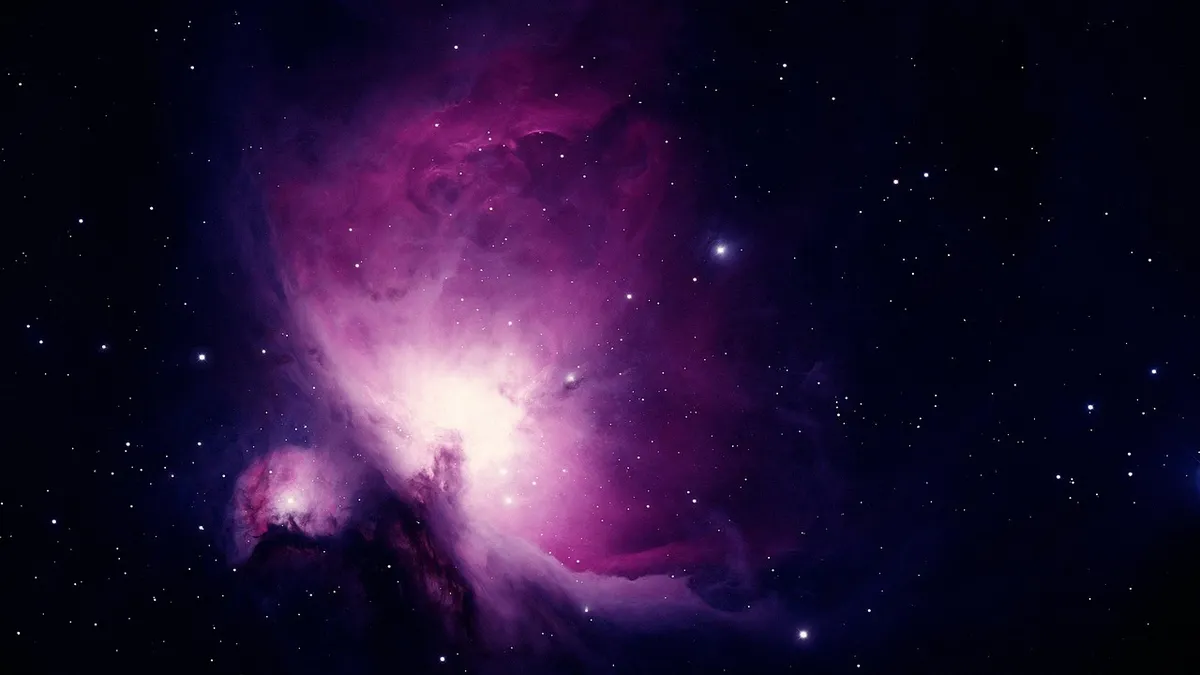
The missions of the James Webb Space Telescope include observing galaxies that formed immediately after the Big Bang using its advanced, complex technologies, and studying nebulae where stars form more deeply than ever before. It will also make it possible to study and observe exoplanets, which could not be clearly observed previously because they do not emit heat. Since the James Webb Space Telescope observes in infrared, it will be able to detect these planets in a way that was not previously possible, and it will enable the study of their atmospheres. Studying the atmospheres of these planets gives us an important clue as to whether they harbor life, along with the nature of their climates and atmospheric factors. Its ultimate required step remains finding extraterrestrial life. In our galaxy alone, there are more than 200 billion stars, most of which have planets orbiting them, including millions of planets that may support life. There are more than 100 billion similar galaxies in the universe, so the chances of life existing elsewhere are very high—in fact, scientifically, it is the logical idea.
Drawbacks of the James Webb Space Telescope:
This telescope is deployed at the second Lagrange point, a location about 1.5 million kilometers outside Earth, in order to be completely away from the influence of Earth’s atmosphere, as it is extremely sensitive. Despite being this far away, no contingency plan was put in place in case it suffers a malfunction, much like what happened with the Hubble probe, since running into a problem is entirely possible. In the case of the Hubble probe, astronauts could be sent to repair it, and that is indeed what happened. But in Webb’s case, that is impossible due to the distance. Even if it were possible, it might cost more than the probe itself. If its mirrors were struck by even a small space rock, that would be enough to disable it completely. Moreover, it requires about 300 automatic operations before it begins working, and any flaw in any of those operations will lead to the loss of this colossal effort. I certainly hope that does not happen, and I await its results with eagerness, but an emergency plan should have been put in place for such a very plausible scenario.
Conclusion:
Talking about the James Webb Space Telescope is a vast subject, which is why we are being concise and trying to simplify the science as much as possible so that it is understandable to everyone, away from scientific complexities… If the James Webb Space Telescope succeeds in its mission, it will vault humanity forward in cosmology, astronomy, and space exploration to important revolutionary points, and it may solve mysteries that have puzzled mankind. Therefore, we can do nothing but await what this major mission will yield.
Ezzeddine Gaddari El Idrissi is an Algerian polymath, astronomer, and space scientist who holds the world international record for the number of university science degrees.
Hany Sallam, Founder and Editor-in-Chief of Scientific Magazine Ahram An independent Arabic science magazine operating since 2008, dedicated to simplifying science, technology, space, natural phenomena and scientific stories for Arabic readers. The magazine includes sections such as “Zodiac Group” and “Stories and Tales”, alongside science topics that combine knowledge with a spirit of discovery. It operates independently and is not affiliated with Al-Ahram Press Foundation or any governmental body.




Latest video
تابع معنا تحليل قراءة الصحف اليومية مع الكاتب الصحفي Hany Sallam عبر