
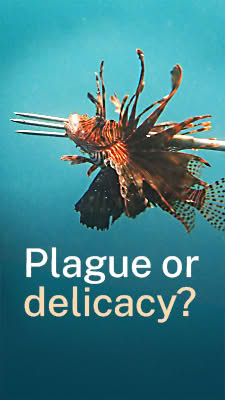

Beauty That Hides an Environmental Hazard Within
The lionfish is one of the most stunning marine creatures in the oceans, thanks to its feathery, colorful fins and unique patterns. Yet, behind this enchanting beauty lies a severe environmental threat. Originally native to the Indo-Pacific, this fish has turned into a genuine nightmare threatening the biological balance of Caribbean reefs, becoming a fierce invader that devours everything in its path.
Why Is the Lionfish an Enemy of the Reefs?
The problem is that the lionfish has no natural enemies in Caribbean waters, and local fish do not recognize it as a predator, allowing it to hunt with terrifying efficiency. It feeds on juvenile fish and crustaceans that play a key role in cleaning coral reefs, leading to a decline in the overall health of the marine ecosystem. This rapid reproduction and unchecked predation push coral reefs toward the brink of collapse, which has required urgent human intervention.
The Confrontation: From the Hunt to the Table
In Honduras, divers and environmental activists have taken the initiative to counter this invasion. It is no longer limited to traditional fishing; instead, it has evolved into inventing handmade fishing gear and organizing regular competitions to catch the largest number of fish. What is even more exciting is the shift in economic strategy, as the lionfish is marketed as a delicacy in local restaurants.
This trend not only helps reduce the numbers of the invasive fish, but also creates a sustainable economic demand that encourages local fishermen to target it continuously. By turning this threat into a food resource, local communities in Honduras have managed to transform the battle against the environmental invasion into a model to be followed in how to coexist and protect marine resources for future generations.
By: Hany Sallam
Source: news.mongabay.com


Latest video
تابع معنا تحليل قراءة الصحف اليومية مع الكاتب الصحفي Hany Sallam عبر