
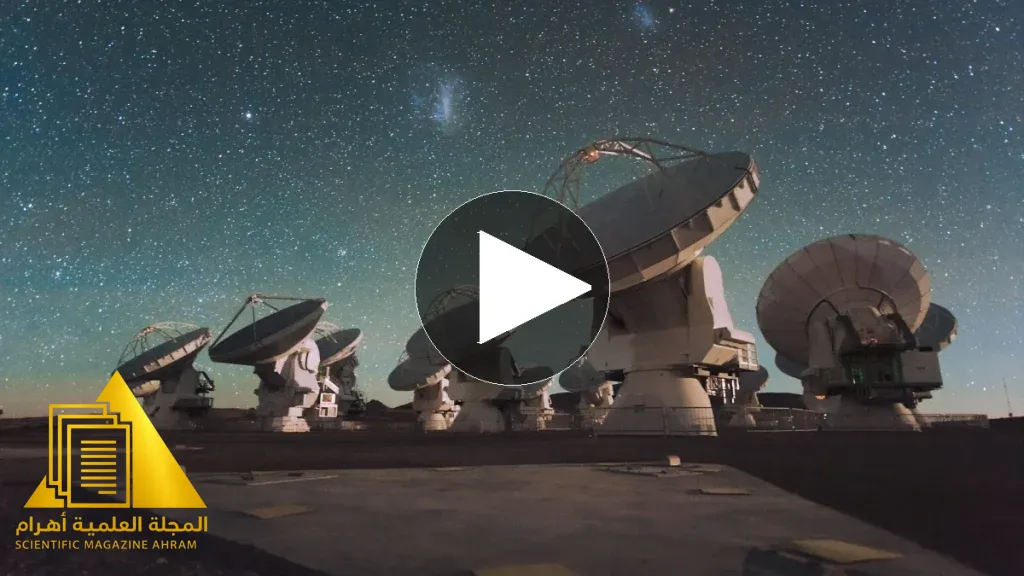

Between Listening and Speaking: The Quest to Find Others
For decades, astronomers have pointed their telescopes toward the vast expanse of space in search of signals or messages that might indicate the presence of other intelligent civilizations in the universe—a field known as SETI. Yet the question that has long occupied the minds of dreamers and researchers is whether we should simply listen, or if the time has come to take the initiative and send messages ourselves. From this question, the METI project, or Messaging Extraterrestrial Intelligence, was born.
Early Ideas for Knocking on Space’s Door
Humanity did not wait for the modern technological era to think about addressing the stars. In the 19th century, scientists and inventors proposed highly inventive and quirky ideas to attract the attention of potential extraterrestrial beings. These proposals included digging giant trenches in geometric shapes across the great deserts, filling them with kerosene, and setting them on fire, or using giant mirrors to reflect sunlight and direct bright flashes toward the surface of Mars or the Moon.
From Theoretical Fiction to Scientific Experiments
With the development of radio and communication technology in the 20th century, attempts at space communication moved from abstract theoretical ideas to serious scientific experiments. Scientists began sending encrypted signals and powerful radio waves carrying information about our planet and our physical and biological characteristics, trying to craft a common cosmic language that any intelligent beings intercepting these signals in the depths of deep space might understand.
Why Try to Communicate with the Unknown?
METI attempts spark considerable debate among scientists and philosophers. While some view them as the natural next step in human evolution and cognitive curiosity, others warn of the risks of revealing our location to civilizations that may be advanced and curious in ways that could work against us. Despite these concerns, humanity’s desire to break cosmic isolation and venture into the unknown remains the strongest driver for continuing this unique adventure.
By: Hany Sallam
Source: universetoday.com


Latest video
تابع معنا تحليل قراءة الصحف اليومية مع الكاتب الصحفي Hany Sallam عبر