
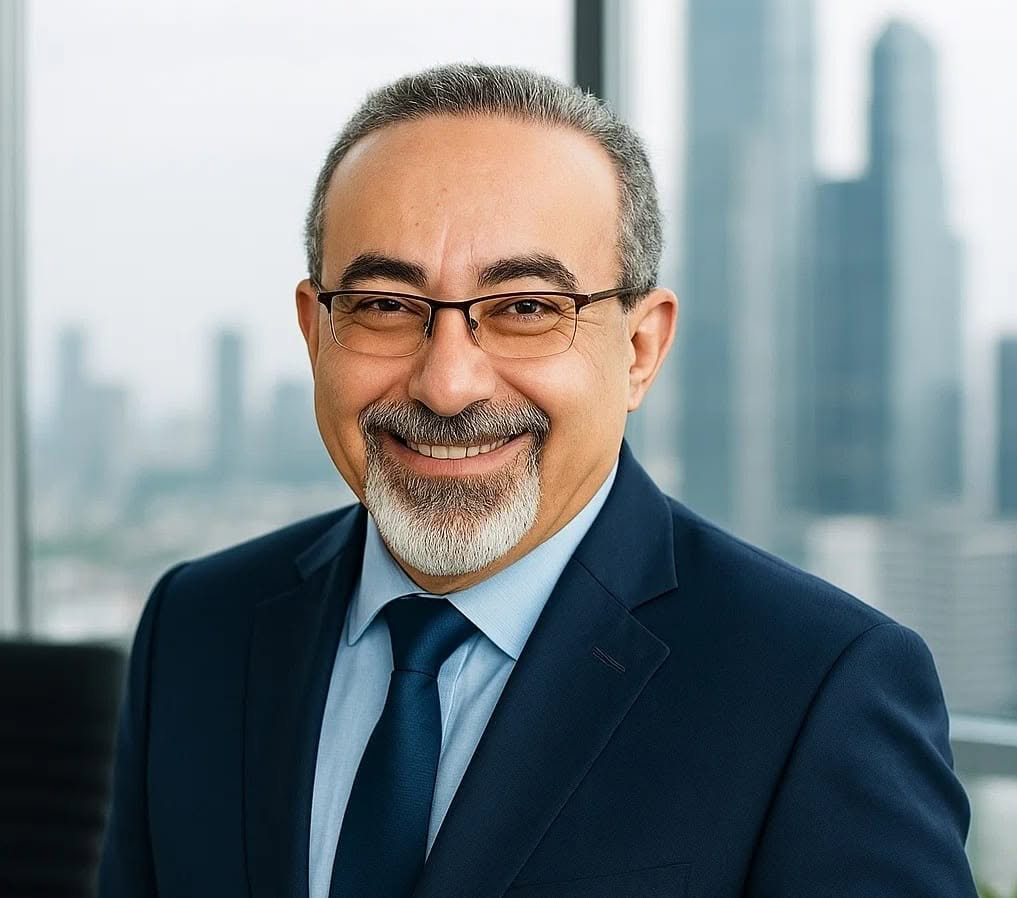

Articles on Education 2
The Minister’s Baccalaureate… Between Pros and Cons
Part One
Note: The second article is in two parts.
Introduction:
• First of all — as repeating things is useful — this is a reformist critical perspective, not merely critical as is my usual approach when writing about the reality of education.
• The Baccalaureate — to reiterate — is the term given to the new minister’s project, and it has no connection whatsoever, close or distant, to the old Baccalaureate name. The difference between them is vast.
• This vision put forward by the Minister of Education and Technical Education can be the cornerstone for moving the educational system to a position and level that rivals some advanced Arab countries, provided the development is comprehensive rather than a superficial change, as we will discuss in detail. Otherwise — in my personal view — it is a hasty attempt that will not bear its desired fruit.
• Some statistics:
– The number of general secondary students last year reached 729,835, including 323,174 male students and 406,661 female students. This number doubles when adding the second year of secondary school according to the ministry’s new vision (and this is an important note that must be taken into consideration, as will be clarified later).
– Egyptian families’ spending on education varies according to their income level: the lowest-income bracket spends 6.4%, while the highest-income bracket spends 18.9% (this must also be taken into account, especially when applying the new vision and calculating the cost of retaking an exam for the purpose of improvement).
– Spending on private tutoring and tutoring groups accounts for 30.8% of the educational spending of the lowest-income bracket, while this percentage reaches 67.1% for the highest-income bracket, according to the income and expenditure survey issued by the Central Agency for Public Mobilization and Statistics for 2019 – 2020 (noting that these data do not cover spending levels after the coronavirus pandemic and the economic crisis that Egypt has been experiencing since 2022).
• The general secondary stage is always targeted for change by a number of ministers. For example: in 1994, the two-stage system was applied with compulsory and elective subjects in what was known as the improvement system; then in 1996, the grade improvement system was canceled! In 2013, general secondary school returned to a single year (completely canceling the improvement system and the so-called Hussein Kamel Bahaa El-Din amendment), and it became three branches. In 2017, the booklet system was introduced following the famous exam leakage incident in order to prevent cheating, followed by a complete overhaul of the system during the tenure of Prof. Tarek Shawky, introducing the tablet system while keeping general secondary exams on paper using the multiple-choice system known as the bubble sheet. Then, during the tenure of Prof. Reda Hegazy, some very simple essay questions were added to the general secondary exam. Last but not least, this year saw a comprehensive and sudden change to the general secondary stage as a whole less than a month before the start of the year!
• Upon implementing the new system, which has been dubbed the Baccalaureate, the Egyptian Baccalaureate will not apply to students in international schools, the Nile Egyptian Schools, or the International Public Schools (IPS).
This is an introduction that was necessary to clarify certain data that must be taken into consideration when discussing the new minister’s vision. We note that the dialogue revolves around three dimensions:
The first dimension: Numerous questions must have swept through the minds of many educational stakeholders — meaning experts, teachers, parents, students, and others — and they must be answered, or at least most of them, so that everyone or the majority can accept the new system and participate in it? This has been addressed.
The second dimension: Discussing the contents of the new system in all its dimensions included in the minister’s new system called the Baccalaureate, starting with the description of subjects across the three years, whether this aligns with international data and the demands of the modern era in light of unprecedented scientific explosion, and whether there are other proposals and modifications to this model?
Second Dimension
First: The Philosophy of the New System:
According to what was announced by the Ministry of Education, the philosophy is multifaceted and includes:
– Developing critical and intellectual skills instead of rote memorization and indoctrination.
– Interdisciplinary learning by integrating scientific, literary, and artistic subjects.
– Continuous assessment and dividing subjects across at least two years.
– Multiple opportunities through two exam sessions annually.
– International recognition (for the record, the general secondary certificate itself is not recognized).
Second: Prescribed Subjects, Pathways, and Exam System:
A – First-Year Secondary Subjects:
No. Subject Name Classification
1 Arabic Language Core
2 English Language Core
3 Mathematics Core
4 Philosophy and Logic Core
5 Egyptian History Core
6 Integrated Sciences Core
0 Religious Education Non-core, but requires a 70% passing grade
0 Programming and Computer Science Non-core
0 Second Language Non-core
The first year of secondary school will include six core subjects in addition to non-core subjects as shown in the table: Note (these subjects are the exact same subjects as the first year in the general secondary system).
Pathway Details in the Second and Third Years of Secondary School:
The subjects to be studied in the second and third years will be divided into several pathways:
Second Year and Third Year Track
Medicine and Life Sciences Track: Arabic Language
English Language
Egyptian History
Mathematics or Physics; Religious Education is excluded from the total score, conditioned on achieving a 70% passing grade
Biology (Advanced Level)
Chemistry (Advanced Level)
Engineering and Computer Science Track: Arabic Language
English Language
Egyptian History
Chemistry or Programming; Religious Education is excluded from the total score, conditioned on achieving a 70% passing grade
Mathematics (Advanced Level)
Physics (Advanced Level)
Business Track: Arabic Language
English Language
Egyptian History
Accounting or Business Administration; Religious Education is excluded from the total score, conditioned on achieving a 70% passing grade
Economics (Advanced Level)
Mathematics
Arts and Humanities Track: Arabic Language
English Language
Egyptian History
Psychology or Second Language; Religious Education is excluded from the total score, conditioned on achieving a 70% passing grade
Geography (Advanced Level)
Statistics
Examination System for Second and Third Secondary Years:
The examination system will be as follows (pursuant to the ratified law, noting that this was not explicitly stated in Law 169 of 2025).
Second-Year Secondary Students:
• First attempt exam in May (free of charge).
• Second attempt exam in July for a fee of 200 pounds.
Third-Year Secondary Students:
• First attempt exam in June (free of charge).
• Second attempt exam in August for a fee of 200 pounds.
Note: – Registering for the exam for the first time is free of charge. The categories of exam fees for subsequent attempts are determined by a decision from the Minister of Education and Technical Education, not exceeding two hundred pounds for each attempt. The Minister of Education and Technical Education may, after cabinet approval, issue a decision to increase this limit gradually, provided that the total fees do not exceed 400 pounds per subject.
– The final score is calculated out of 700 marks distributed across the two years, and the highest grade from the two attempts is adopted.
– The maximum study duration under the baccalaureate system is that the maximum number of study years for the primary stage is 4 years, excluding the first secondary year.
Third: Advantages of the Minister’s Baccalaureate (according to statements by the Minister and his aides):
– Restructuring: the number of subjects in Thanawiya Amma is five subjects in addition to subjects not added to the total for third-year secondary students, whereas there are only 6 subjects in the baccalaureate system in addition to the subjects not added to the total.
– It is supposed to reduce the pressure of private tutoring and make the student more comfortable and capable of absorbing information.
– The baccalaureate system includes new subjects related to future sciences, labor market sciences, and programming, giving students an opportunity for creativity and future work.
– It allows students to choose from more than one track rather than only two specializations (scientific and literary), according to their inclinations and abilities, which opens up greater opportunities for admission to colleges related to each track.
– Teaching programming activities in the first year to prepare students to work in the age of artificial intelligence.
– It allows students to take the exam more than once, which relieves the pressure and anxiety they feel during conventional Thanawiya Amma exams.
To be continued — Part Two
Mohamed Mostafa El-Gizawey
Consultant of Public Education Administration
Former General Manager of Public Education
Former General Manager of Borg El Arab Administration


Latest video
تابع معنا تحليل قراءة الصحف اليومية مع الكاتب الصحفي Hany Sallam عبر