

May the Lord protect you, boys and girls, as you head to your schools…..
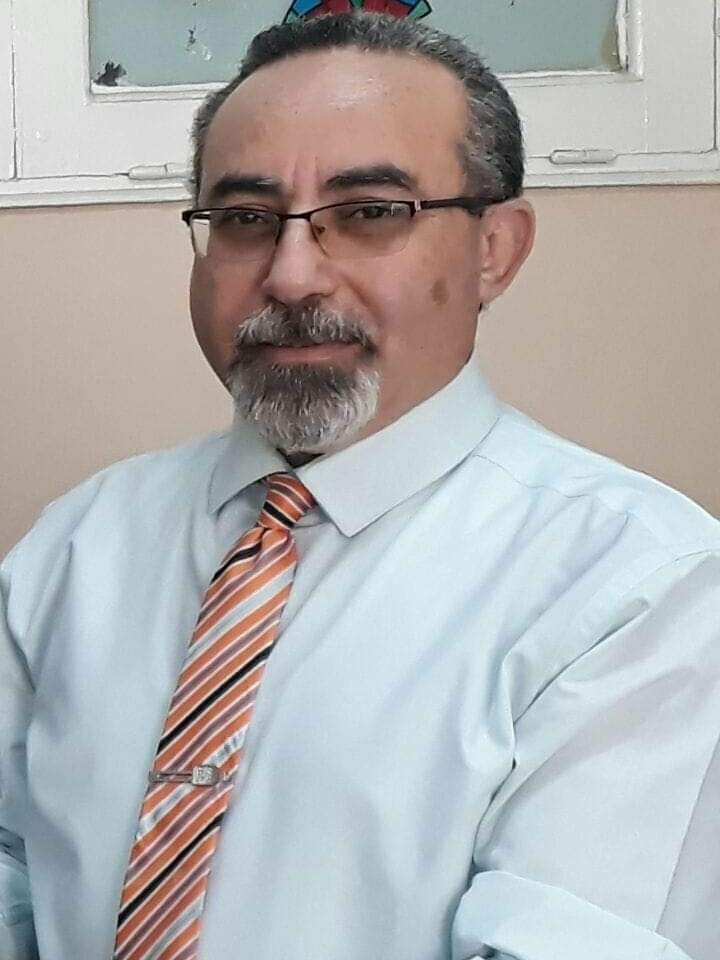
Consultant for Public Education General Administration
That was the lovely saying chanted by millions across past eras. Days passed, conditions changed, and time marched on until we found third-year secondary students disappearing from our schools. Time flew by until most of our secondary schools became completely deserted.
This desertification continued until the classrooms in our preparatory schools—specifically the third preparatory grade—became empty as well. This happened despite the tireless attempts by the Ministry of Education to bring students back to school through various incentives, steering them away from private tutoring, which has unfortunately become a bitter reality. I am referring to private lessons that have moved from homes—with a private tutor coming to the house—to what are known as centers.
These centers gather large numbers of students at times. The ministry has made relentless efforts with alternative solutions such as remedial tutoring groups, free caravans, and others. Yet all of these remained unsuccessful and even futile, due to government red tape and financial restrictions on spending. As a simple example, a teacher who conducts remedial tutoring groups receives their financial share after a long period, and the amount is meager and does not match the effort they put in.
With the current Minister of Education taking office, several initiatives have emerged. We will discuss some of them in detail in upcoming articles, God willing. However, one of the things that most provoked Egyptian society was what Professor Dr. Reda Hegazy, Minister of Education, raised regarding private tutoring centers, commonly known as centers, and his idea of placing these centers under the supervision of the Ministry of Education, legalizing them, or governing them. This represents a major and striking shift in the vision of the minister and consequently the ministry: moving from attacking and criminalizing private tutoring centers, forming committees, and issuing ministerial decrees to close them, to treating them as a fait accompli.
To understand what happened and why it happened, we must at least try to analyze the decision-maker’s point of view and their academic and professional background. The current minister, Dr. Reda Hegazy, has worked in many places and held numerous positions. In my view, however, a certain job or position can have a practical impact on a person and influence their decisions. Here, in our case, working as a trainer may have been the most influential factor in the minister’s life. Why?
Because a trainer usually has the premise or imperative of dealing with reality, no matter how bitter it is, and tackling its problems without confrontation in many cases. Those who have worked in this role or practiced the profession of training know very well that a trainer meets many personality types, and the outstanding, successful trainer is the one who manages to deal with everyone
without overlooking any type of person they encounter. If we apply this to Reda Hegazy’s way of dealing with an actual reality—even if it is bitter and unacceptable to many, yet already exists, and ignoring it is futile, just as violent crackdowns failed in the past—the minister decided to face the matter. Some may believe there are many deeper issues
that should have been addressed, such as the teacher shortage, the problems of educational buildings, the selection of administrative and educational staff, private education, training, the teachers’ academy, the methodology of teacher development, and before and after all of this, the curricula, including their development and evaluation methods…
Regarding what Reda Hegazy raised, reactions came from civil society, noting that despite the minister’s personal invitation to civil society and those interested in education to participate in dialogue and contribute to this long-standing issue and problem, none of the executive officials in education tried to present a remedial vision for this thorny subject!
The important point is that Reda Hegazy’s vision may not have been grasped by some who did not understand what he meant, perhaps because those speaking on behalf of the minister and the ministry lack a technical grasp of the ground reality, or because the minister himself did not present it personally to clarify his vision and message regarding this dilemma,
so much so that some people became confused and believed that the centers are an alternative to schools, or that the company whose idea was floated will take over the private centers. This is untrue; rather, the company planned to be established is one that will oversee school groups after changing their name to support groups.
This will certainly be followed by changes in routine decisions that hinder the disbursement of dues to the teachers running the support groups. Here, we would like to point out that changing ministerial decrees is not only up to the Ministry of Education, but also the Ministry of Finance.
Regarding private tutoring centers, or what are commonly known as “centers,” we need to understand why these centers exist and why we complain about overcrowded classrooms in many schools while, at the same time, students and their parents rush to enroll their children in these centers, even looking for connections with the teacher to get their child accepted?!
Is there a difference between a school teacher and a private center teacher, and does this difference come down to the quality of the teacher?
Meaning, is the school teacher less competent? Many well-known and famous teachers are graduates of non-educational colleges. Is there an advantage for graduates of academic colleges over graduates of educational colleges in subject matter knowledge? What if the teacher is the same person? There are many questions.
Why, despite what has been said about developing curricula and assessment methods—meaning exams—have these centers remained strong and even exerted more control, despite the revolution previously led by former Education Minister Professor Dr. Tarek Shawky, with the current Minister Dr. Reda Hegazy having been a partner in the development process? Consequently, the volume of questions was large, as was the reaction, especially within the local community.
It is certain that Reda Hegazy tackling this issue is important, very important, but in my personal view, many people focused on the issue of private centers and overlooked the idea of modifying remedial support classes and how they might be a solution that may contribute, as a start, to addressing the problem of private centers.
Generally speaking, among the things that need to be discussed is what His Excellency the Minister raised, but this must go hand in hand with tackling the reform and treatment of all educational problems. While we appreciate Reda Hegazy addressing a matter of extreme gravity and importance that weighs heavily on parents, this does not deter us from discussing the current minister’s vision regarding this issue, offering proposals, and understanding this direction.
As well as discussing the minister’s other statements, keeping in mind that the minister facing this problem is an unprecedented challenge, and that the goal of the discussions is to contribute to reform rather than unjustified or targeted attacks, and worse still, having an ulterior motive for attacking ideas and proposals.
To be continued… if God wills it.
Next
2– Private Tutoring Centers: A Path to Success or a Poor Alternative to School?
Mohamed Mostafa El-Gezawy
Consultant in General Education Administration


Latest video
تابع معنا تحليل قراءة الصحف اليومية مع الكاتب الصحفي Hany Sallam عبر