
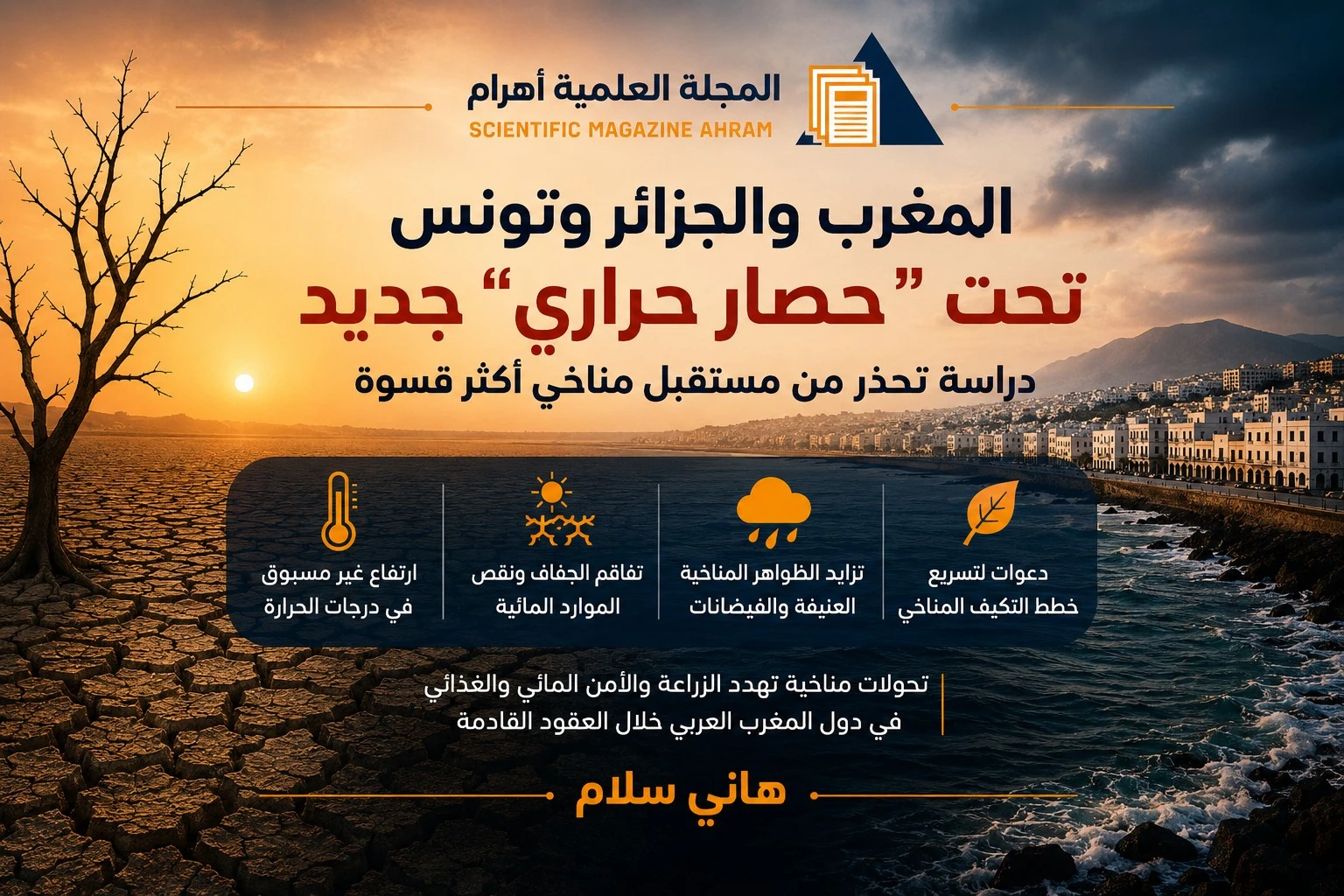

A recent climate study warns that the countries of the Arab Maghreb are entering a new phase of “thermal extremeness,” with a clear surge in heatwaves, droughts, and severe weather events in recent years.
The study, which covers Morocco, Algeria, and Tunisia, reveals that heatwaves are no longer fleeting seasonal events, but have become a recurring pattern that grows longer and more intense year after year.
Unprecedented Heat Strikes North Africa
Recent climate data shows a notable rise in the number of extremely hot days, alongside a decline in cool nights that previously helped mitigate the heat impact.
Researchers view the region as one of the global climate hotspots most affected by global warming, especially with increasing periods of drought and water resource shortages.
Drought Is No Longer the Only Danger
Although drought remains the greatest threat, the study also points to an increase in violent rainfall and flash floods in some Maghrebi cities.
Experts stress that climate change no longer means only rising temperatures, but a complete disruption of traditional weather patterns within the region.
Long-Term Climate Shifts
Researchers point out that continued temperature rises may affect agriculture, water resources, and food security in North Africa over the coming decades.
Specialists also warn that coastal cities and populations in inland areas may face harsher climatic conditions compared to what the region has known historically.
Calls to Accelerate Adaptation Plans
Environmental experts believe that the Maghreb countries need to accelerate climate adaptation plans, especially in the water, energy, infrastructure, and agriculture sectors.
Researchers also demand expanding the reliance on clean energy and improving water resource management to cope with upcoming environmental pressures.
Scientists stress that what is happening today in North Africa may be just the beginning of deeper climate shifts over the coming decades.
Hany Sallam


Latest video
تابع معنا تحليل قراءة الصحف اليومية مع الكاتب الصحفي Hany Sallam عبر