

Tales Carved in Stone: Secrets of Romanesque Architecture
In the heart of the French city of Brive-la-Gaillarde, the Church of Saint-Martin stands as a testament to medieval ingenuity. Here, architecture was not merely the laying of stone, but a visual language that told the stories and beliefs of the Romanesque era. Among its hidden treasures, the column sculptures immediately draw the gaze of historians and archaeologists alike, particularly those pieces depicting mythical creatures in a unique artistic dialogue with nature.
Mythical Animals Between Legend and Flora
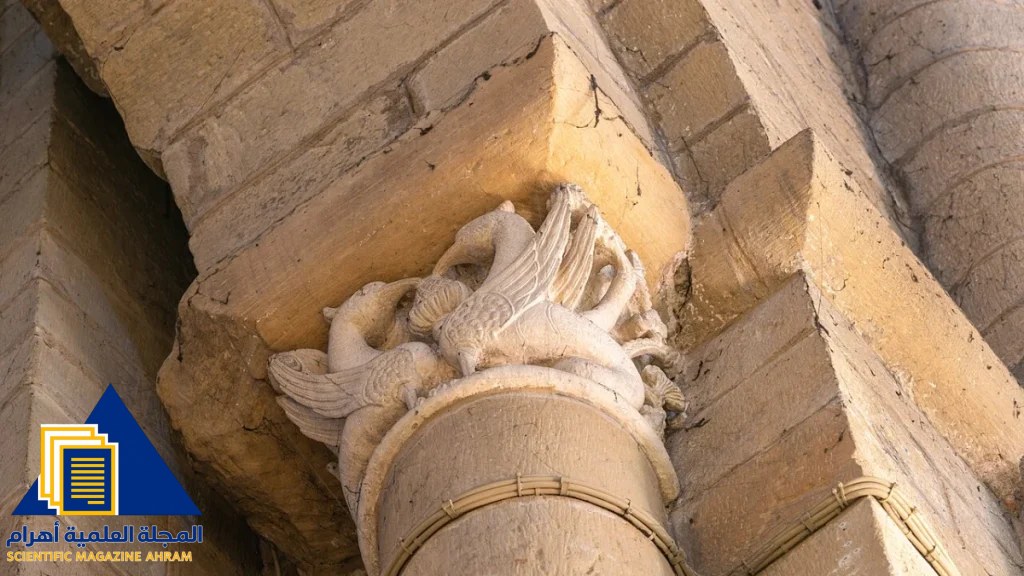
Capital No. 10 inside the church serves as an exceptional example of sculptural art from that period. This artwork portrays hybrid creatures unknown in reality, featuring mythical traits as they nibble on a flower in a scene blending mystery and beauty. The artist’s choice of these creatures was no accident. During the Middle Ages, the use of animal symbolism was a primary tool for embodying moral and religious concepts. These creatures sometimes represented the struggle between good and evil, or reflected the ancient worldview of nature blended with imagination.
Historical and Scientific Value
Studying these sculptures opens a wide window onto artistic thought in France’s Corrèze department. Romanesque art was distinguished by its ability to merge decorative elements drawn from folklore and mythology with rigorous architectural construction. These mythical animals represent remnants of sculptural arts inspired by ancient manuscripts and handed-down stories, which sculptors transformed into timeless masterpieces that still retain their fine details despite centuries having passed since their creation.
A Heritage Worth Documenting
Experts emphasize that these carvings are not simply decorations, but a historical record preserving the culture and imagination of our ancestors. Preserving these pieces and understanding their aesthetic contexts helps us form a clearer picture of cultural development in Europe during the Middle Ages. The Church of Saint-Martin in Brive-la-Gaillarde remains a gateway that opens horizons for scientific research in art history, constantly reminding us that stone in the hands of creative artists has spoken to tell stories that never die.
By: Hany Sallam
Source: commons.wikimedia.org


Latest video
تابع معنا تحليل قراءة الصحف اليومية مع الكاتب الصحفي Hany Sallam عبر