
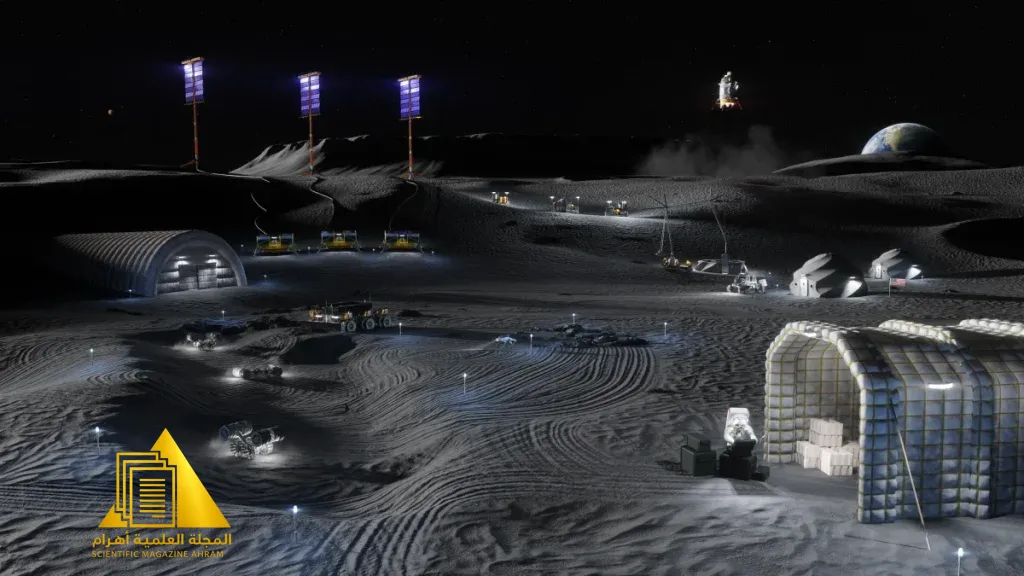

A New Generation Shaping Life on the Moon
In a move that reflects its belief in the capabilities of young minds, NASA has launched its annual call for university students to participate in the RASC-AL competition—an initiative aimed at gathering bold, innovative ideas capable of turning our science-fiction concepts of life on the Moon into tangible reality. In this competition, NASA is not looking for conventional solutions; instead, it is opening the door for the next generation of engineers and innovators to chart the path for human sustainability beyond Earth.
Innovating Technologies for a Sustainable Future
The competition goes beyond academic theories
to dive into the actual challenges facing space exploration, such as how to provide energy, develop life-support systems, and deal with the harsh lunar environment. Participating teams are asked to propose operational technical concepts that help make long-term human presence on the Moon feasible and sustainable, thereby enhancing the agency’s ability to plan deeper and more advanced missions in deep space.
More Than Just a Competition: Building the Future
This initiative represents a vital bridge between the classroom and professional reality in space agencies. By working on these projects, students gain hands-on experience in designing complex systems and are given the opportunity to present their visions to prominent experts and scientists. This collaboration seeks to replace traditional space systems with more flexible and intelligent ones, paving the way for a new era of exploration driven by creative minds that do not recognize the impossible.
The Exploration Challenge: Beyond the Moon
Ambition does not stop at the Moon; the ideas submitted by the university teams serve as a technical test and training ground for future crewed missions to Mars. By focusing on advanced engineering innovation, NASA aims to turn the Moon into a scientific and technological launchpad, giving young innovators a unique opportunity to help write a new chapter in human scientific history, where technology becomes the key that unlocks the vast expanse of the universe.
By: Hany Sallam
Source: NASA


Latest video
تابع معنا تحليل قراءة الصحف اليومية مع الكاتب الصحفي Hany Sallam عبر