
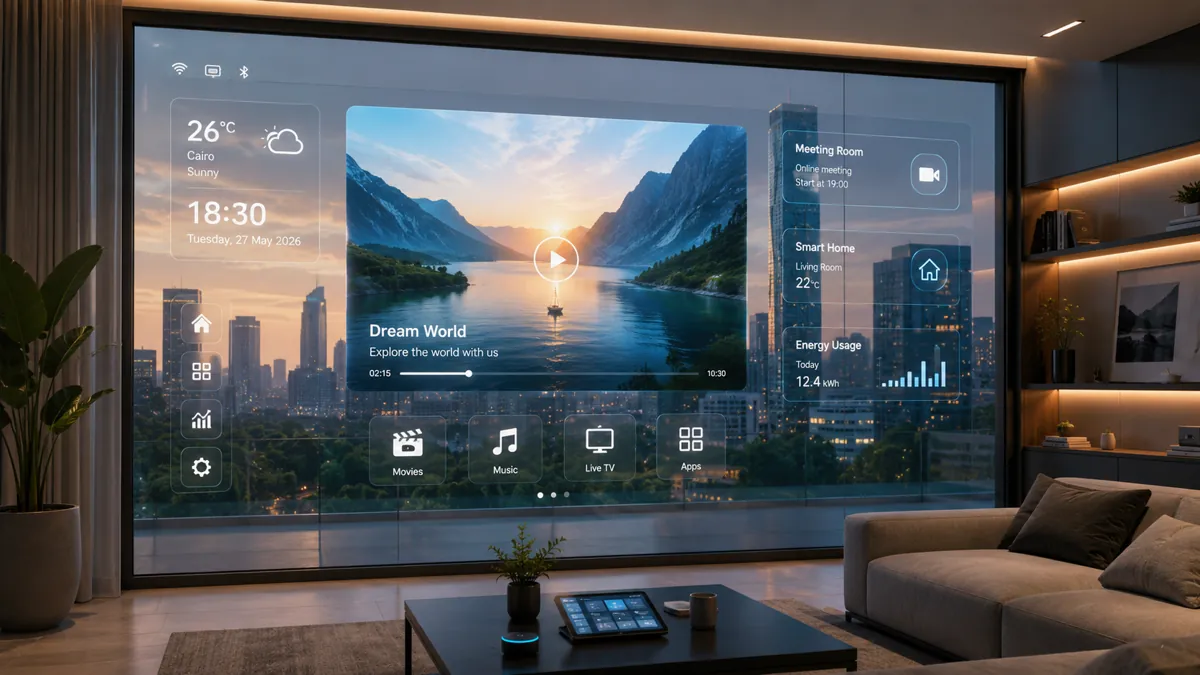

Technology companies in Asia and Europe are developing a new generation of interactive smart glass capable of transforming into giant display screens inside homes, offices, and cars.
The new technology relies on integrating transparent display layers with artificial intelligence systems that can turn windows and glass surfaces into interactive digital interfaces within seconds.
Windows May Transform Into Future Screens
Instead of using traditional television sets, users may in the future be able to run movies, meetings, or applications directly on home glass.
The new systems also allow the screen to be completely hidden when not in use, returning the window to its normal transparent state.
Advanced Display Technologies
Companies rely on transparent OLED technologies and smart projection systems to create high-quality images on glass surfaces.
In addition, artificial intelligence technologies help adjust lighting and colors automatically according to the surrounding environment.
A New Future for Smart Homes
Experts believe that these technologies may change the design of smart homes in the coming years, especially with the spread of connected devices and digital interfaces.
These systems may also be used inside cars, airplanes, and smart hotels to provide more advanced interactive experiences.
But the Cost Remains High
Despite the rapid development, these technologies face challenges related to cost, power consumption, and the lifespan of transparent screens.
However, technology companies expect smart glass screens to become a natural part of daily life over the coming decade.
Hany Sallam


Latest video
تابع معنا تحليل قراءة الصحف اليومية مع الكاتب الصحفي Hany Sallam عبر