
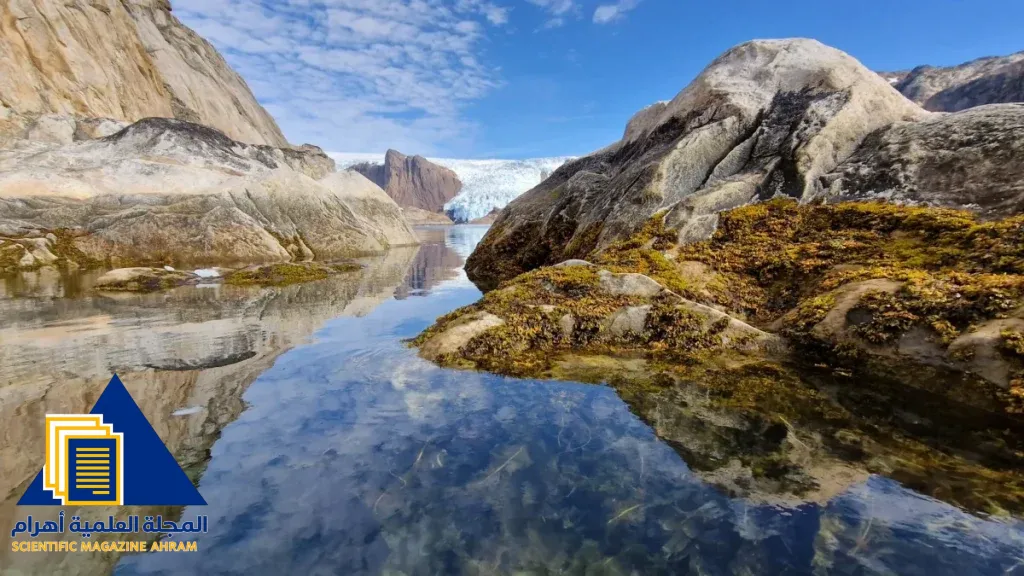

The Forgotten Carbon Sink at the Ends of the Earth
While global attention focuses on the Amazon and tropical forests as the “lungs of the Earth,” international climate policies overlook a true champion hiding in the far north and south: the polar oceans. These vast expanses of freezing water are not just silent blocks of ice, but massive biological engines that play a central role in absorbing carbon dioxide from the atmosphere and storing it in the ocean depths, directly contributing to cooling our planet.
Biodiversity: A Climate Safety Valve
The importance of the polar oceans is not limited to carbon storage, but extends to supporting a complex web of biodiversity. From microscopic plankton that absorb carbon as they grow, to larger marine organisms that help bury this carbon on the ocean floor for centuries, these ecosystems act as a highly effective natural mechanism. However, these delicate processes remain threatened by rapid climate changes that may turn these oceans from “carbon sinks” into “sources of emissions” if they are not handled with care.
The Gap Between Science and Policy
The sad paradox is that current international climate frameworks still lack the scientific and legal mechanisms needed to calculate the contribution of the polar oceans to the global carbon budget. The absence of this data in official reports means it is excluded from climate action plans and environmental policies, which hinders efforts to protect these sensitive regions. We cannot gamble on achieving carbon neutrality while ignoring the calculations of one of the most important natural carbon sinks on our planet.
Toward International Recognition of the Polar Regions
Recent studies put the ball in the court of decision-makers, calling for the development of more accurate scientific models to estimate the amount of carbon these oceans trap. Integrating this data into global climate agreements is not just a routine procedure, but a strategic necessity. Protecting these regions is not limited to preserving natural beauty, but is an additional safety valve for humanity against the catastrophic effects of global warming, which requires international cooperation to document this role and protect it legally.
By: Hany Sallam
Source: phys.org


Latest video
تابع معنا تحليل قراءة الصحف اليومية مع الكاتب الصحفي Hany Sallam عبر