
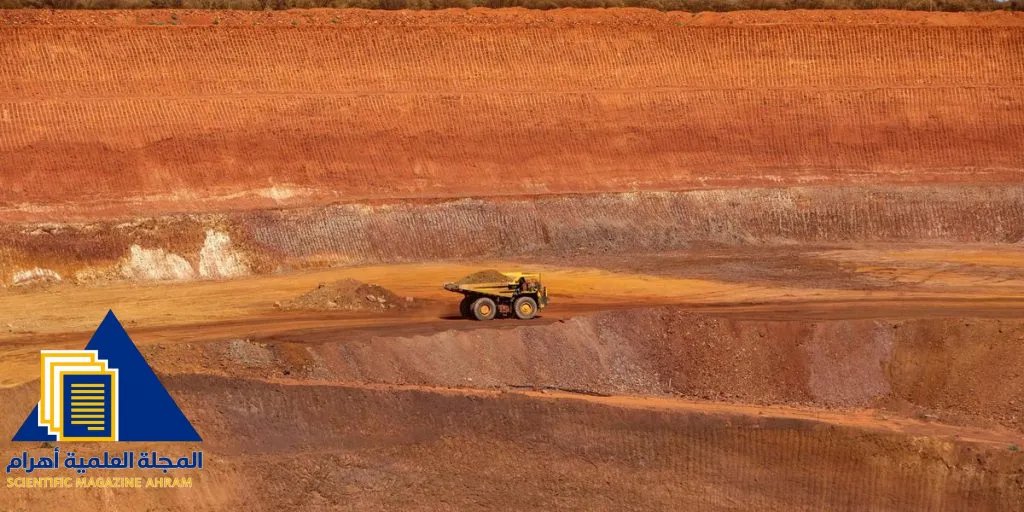

Monazite Ore: The World’s Hope in Combating the Monopoly on Rare Earths
Countries around the world are currently locked in an intense geopolitical struggle to control the rare earth metals market. These vital elements go into the manufacturing of everything from smartphones and lasers to advanced electric motors and defense systems. China currently controls roughly 90% of this market, placing global industries under the pressure of dependency. Now, monazite ore is emerging as a pivotal player that could upend the balance and change the rules of the game.
What Is Monazite and Why All the Attention?
Monazite is not just a rock; it is a natural treasure rich in permanent-magnet elements such as neodymium and dysprosium. Its major advantage lies in its abundance and the ease of extracting it from heavy mineral sands, rather than through costly drilling and blasting in traditional mines. Experts believe that monazite is the most logical path for diversifying global supply chains away from Chinese dominance.
The Radiation Dilemma: An Obstacle on the Road to Independence
Despite its immense potential, monazite faces a complex legal and environmental challenge. It naturally contains thorium and uranium, two radioactive elements that require strict storage standards. Handling this radioactive waste is not only a financial burden, but it also places companies under the weight of strict nuclear laws. In the past, this led to environmental disasters, such as the one in Malaysia. Therefore, the future of monazite depends on the ability of countries to develop safe technologies to treat this waste or recycle it as a potential source for future nuclear energy.
Will Western Investments Succeed?
Companies such as the American firm Energy Fuels have begun utilizing their uranium-processing infrastructure to convert monazite into rare earth oxides, achieving promising initial steps. Even so, the path remains fraught with risks. Failing to secure continuous sources of the ore, bureaucracy, and the financial speculation shadowing many projects could hinder this transition. Achieving true independence in the rare earth market requires more than just mineral wealth; it needs wise industrial management, transparency in transactions, and a superior ability to balance technical need with environmental responsibility.
By: Hany Sallam
Source: spectrum.ieee.org


Latest video
تابع معنا تحليل قراءة الصحف اليومية مع الكاتب الصحفي Hany Sallam عبر