

When Preparations Begin After the Problem Strikes
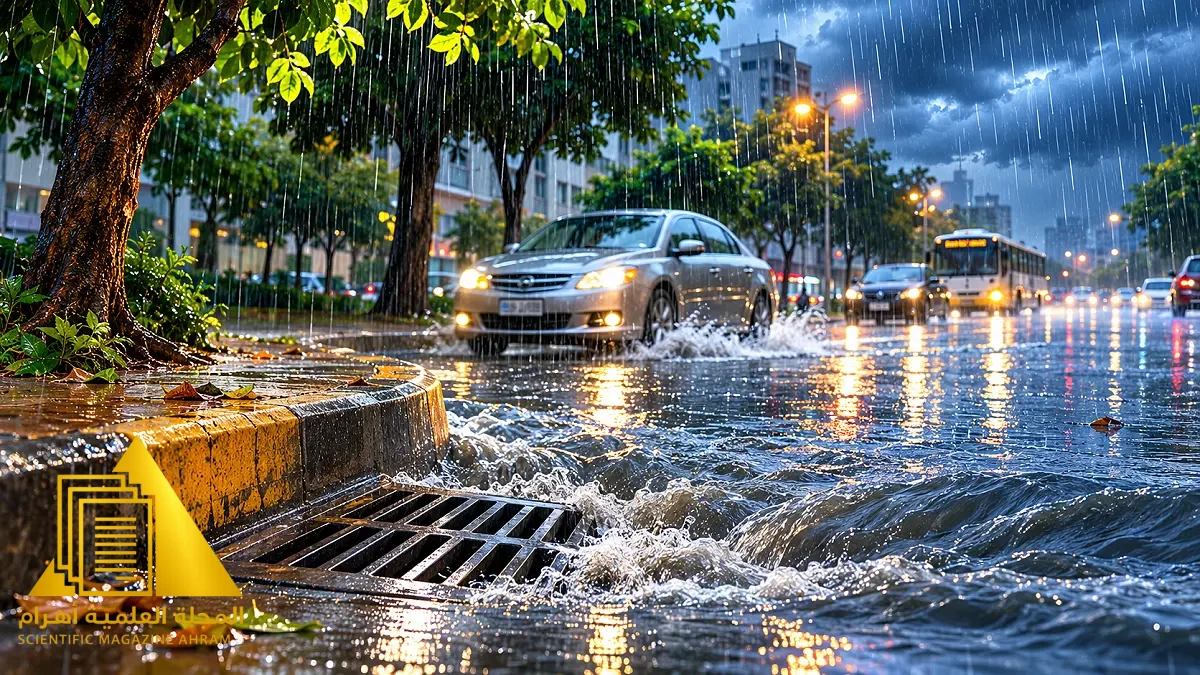
In some cities, preparations for rain begin after traffic grinds to a halt, water enters homes, and residents’ phones fill up with photos. That is when everyone springs into action, monitoring rooms open, maintenance teams are dispatched, and questions are raised about drainage systems and roads that failed to hold up. As soon as conditions settle, life returns to its rhythm, and it seems as though the problem ended with the last puddle drying up in the street.
Streets Whose Residents Know the Danger Zones
Yet rain does not vanish from a place’s memory. There is a street whose residents know it turns into a watercourse with every heavy downpour, a parking lot where water pools, and a small culvert blocked by debris before anyone notices. These details are not engineering secrets, but everyday knowledge experienced by the people, and they may be the true starting point for better prevention.
The Test of Climate Adaptation Begins in People’s Lives
The 31st climate conference opens in Antalya on November 9, and grand words like adaptation, resilience, and finance will echo through its halls. Yet the test of these words begins in a simple neighborhood: Can a child get to school after the rain? Can an ambulance reach a house on a low-lying street? And do residents know which authority to notify about pooled water before it turns into a hazard?
The Difficulty of Coping With Rain Does Not Justify Repeat Surprises
It is not fair to expect any city to prevent every single damage; severe rains may exceed the capacities of infrastructure designed for different conditions. Moreover, urban expansion alters the nature of water drainage, and solutions may need studies and investments that cannot be completed in a week. But acknowledging the difficulty of the matter does not justify repeat surprises in the same locations year after year.
Repeated Complaints Reveal the Absence of Root-Cause Treatment
The problem is often not just a lack of knowledge alone, but the way it is handled. A hotline center may receive a complaint about a blocked drain, and the case is then closed after a temporary fix. Months later, the water returns to the exact same spot, and a new complaint is opened with a new number. In the records, the two incidents appear separate, while to the residents, it is a single problem that was not resolved from its roots.
Measuring Success by the Number of Locations Where Risks Have Declined
Therefore, success is not measured solely by the number of closed reports during a weather event, but by the number of locations where risks have declined before the next event. Reviewing recurring complaints may sometimes be more useful than buying a new system to display response indicators on screens.
Preventive Maintenance Needs a Fixed Budget
Preventive maintenance needs a dedicated spot in the budget rather than remaining an item that can be postponed whenever a clearer priority arises. Clearing a drainage channel, correcting a road gradient, and inspecting a pump do not make for photogenic moments, but they may save people from heavy losses. Prevention rarely comes with a celebratory spectacle, which is perhaps why it is easily delayed.
Cooperation Between Institutions and Residents in Identifying Risks
An institution’s responsibility cannot be separated from the role of residents. It is important that reporting issues does not turn into a blame game between citizens and service providers. Municipalities can tap into the expertise of shop owners, bus drivers, and field workers; they know where and when hazards strike, while the relevant authorities have the capacity to carry out engineering checks and set priorities. Combining both types of knowledge is more powerful than relying on just one.
Clarity of Warnings Before Rainfall
One aspect needs greater attention: the clarity of the message before the rain hits. A general warning is not always enough. People need to know which roads are advised to be avoided, how to report a hazard, and when staying put is safer than trying to cross. A useful message is not the longest one, but the one that makes decision-making easier in a tough moment.
Every Incident Is an Opportunity to Improve Preparedness
Cities will not match each other in financial capacity or topography, nor will all projects cost the same. Yet they can agree on a single principle: that every incident should leave an impact that improves preparedness, rather than ending with a final report.
The City That Learns Does Not Forget What Happened
What frustrates people most is not the rain itself, but watching the exact same scene repeat and hearing the same promises time after time. A city that learns does not claim it will never face rain again; it proves to its residents, through small actions before big ones, that it has not forgotten what happened last time.

Author: Abdullah Saeed Al Habsi, MIoL, Member of the Institute of Leadership (UK), Emirati writer and independent researcher in security, heritage, risk management, leadership, and operations rooms.
A.S. Alhebsi


Latest video
تابع معنا تحليل قراءة الصحف اليومية مع الكاتب الصحفي Hany Sallam عبر