
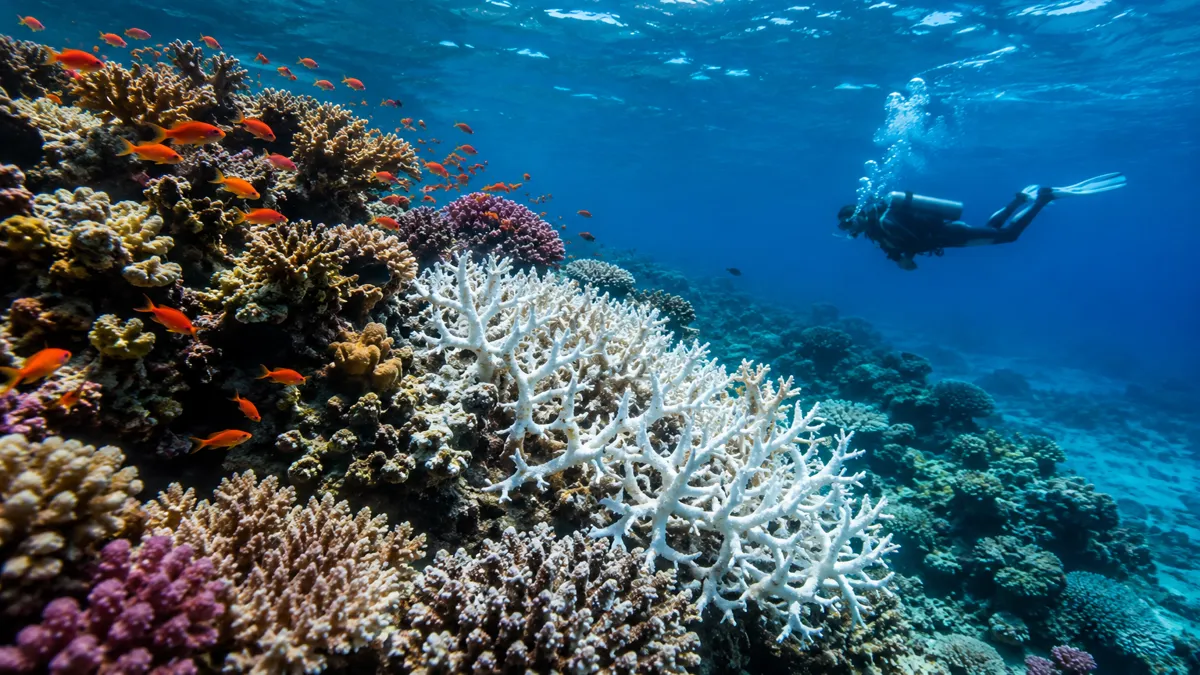

Recent environmental reports have sounded the alarm over the declining health of coral reefs in the Red Sea, one of the most vital marine ecosystems in Egypt and worldwide, amid warnings that the persistence of environmental and climatic pressures may lead to major losses in marine biodiversity.
The Red Sea is known as one of the richest marine environments for coral reefs and is relatively resilient to climate change, but recent indicators have shown concerning changes in certain Egyptian coastal areas.
Why Are Coral Reefs Important?
Coral reefs are not merely beautiful marine formations; they represent an integrated ecosystem that provides shelter and food for thousands of species of fish and marine organisms.
They also play an important role in protecting coastlines from erosion and supporting the ecotourism and diving sector upon which areas like Hurghada and Sharm El Sheikh depend.
What Threatens the Reefs in Egypt?
Rising Water Temperatures
Climate change has led to higher sea temperatures, which causes coral bleaching—a phenomenon that results in the loss of microalgae essential for coral survival.
Marine Pollution
Plastic waste, oils, and certain unregulated tourism activities contribute to the degradation of the reefs.
Overfishing
Ecological imbalances caused by excessive fishing affect the organisms that help maintain the health of the coral system.
What Did Recent Studies Reveal?
Environmental researchers have monitored a decline in the density of certain coral reefs in scattered areas along the Egyptian coast of the Red Sea, alongside clear changes in their colors and a drop in surrounding biodiversity.
Data has also shown that some species have begun to lose their ability to recover at the usual pace.
Is the Situation Serious?
Experts believe that the situation remains relatively under control, but the continuation of current pressures could turn the crisis into long-term losses.
Coral reefs need many years to grow, whereas they can suffer damage in just a few weeks.
How Can the Reefs Be Protected?
Experts emphasize the importance of reducing marine pollution, regulating ecotourism, and imposing greater oversight on coastal activities.
They also call for expanding marine protected areas and strengthening scientific monitoring programs.
Conclusion
What is happening to the coral reefs in the Red Sea is not just an environmental issue, but a matter concerning the future of biodiversity, the tourism economy, and natural balance in Egypt.
Protecting this marine wealth has become an urgent necessity before warnings turn into a reality that is difficult to fix.
Hany Sallam


Latest video
تابع معنا تحليل قراءة الصحف اليومية مع الكاتب الصحفي Hany Sallam عبر