
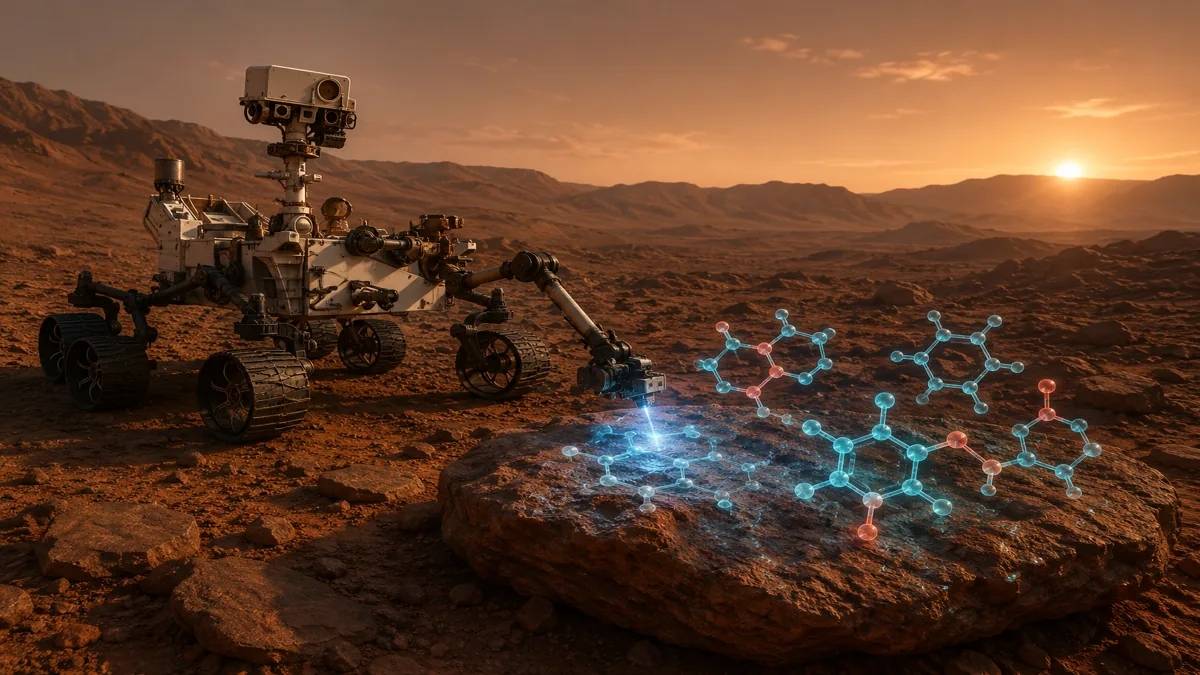

In a scientific discovery that may rank among the top space news stories of 2026, scientists working on NASA’s Curiosity rover mission have announced the detection of seven new organic molecules on the surface of Mars, a step that reinforces the hypothesis that the Red Planet may have possessed an environment suitable for microbial life in the past.
The discovered molecules were found inside rock samples analyzed by the rover using its precision chemical tools, and included complex organic compounds such as naphthalene, benzothiophene, and other aromatic compounds not previously detected on Mars with such diversity.
The researchers note that the presence of these compounds does not necessarily mean the direct discovery of life, but it indicates that organic chemistry on Mars is more complex than previously thought. Some of these molecules are also known on Earth for their association with long-term biological or geological processes.
Scientists believe these compounds may have remained preserved for billions of years inside sedimentary rocks, away from the harsh radiation and violent weather conditions on the planet’s surface. This gives researchers a better opportunity to understand the nature of Mars’s ancient environment, especially during periods when liquid water was thought to cover large parts of it.
The study team believes that the new findings will help upcoming space missions, particularly those dedicated to returning samples from Mars to Earth, select the most promising areas in the search for traces of ancient life.
This discovery comes at a time when planetary exploration programs are accelerating globally, as space agencies seek to answer one of the biggest scientific questions: Was life ever found beyond Earth?
Hany Sallam


Latest video
تابع معنا تحليل قراءة الصحف اليومية مع الكاتب الصحفي Hany Sallam عبر