
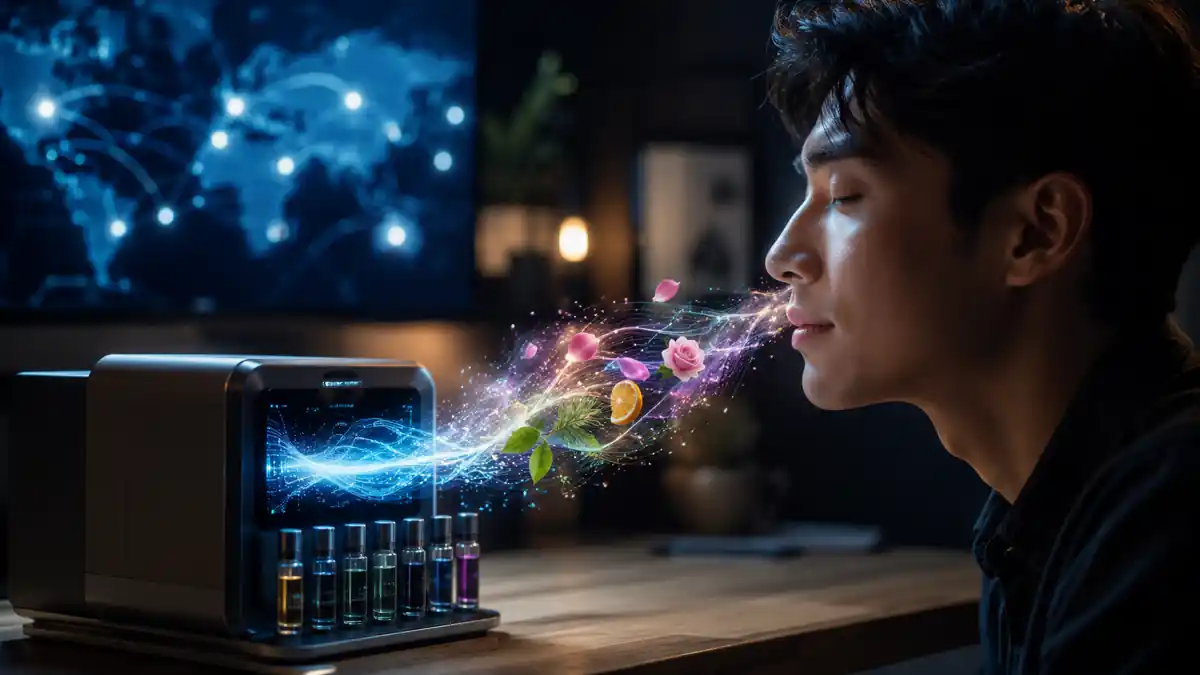

An international team of scientists has successfully developed a new technology that may one day allow scents to be sent over the internet, in a step researchers describe as potentially transforming digital communication and electronic entertainment in the coming years.
The scientists explained that the new system can analyze odors and convert them into digital data, then recreate them remotely using special devices that mimic the original scent.
How Does Scent Transmission Technology Work?
The new technology relies on precise chemical sensors that can analyze the molecular components of a scent and convert them into digital signals.
After that, the data is sent over the internet to a receiver containing small aromatic compounds that rebuild the scent once again. Therefore, scientists compare the idea to the way sound and images are transmitted digitally.
The researchers also pointed out that the system can handle multiple types of scents with relatively advanced levels of precision.
Why Are Scientists Interested in This Technology?
Tech experts believe that the “sensory internet” could become a new stage in the evolution of the digital world.
Future applications may include electronic games, movies, medical education, online shopping, and even social communication. The technology may also help transmit the smells of food, perfumes, or natural environments to users remotely.
Researchers believe that combining scents with virtual reality technologies could make digital experiences more realistic than ever before.
Challenges Still Facing the Technology
Despite the new development, scientists note that sending scents over the internet still faces several technical challenges.
The researchers explained that odors are more complex than sound and images because of the vast diversity in chemical molecules and the way the brain perceives them. Therefore, scientists are currently working on improving analysis accuracy and the speed of scent reproduction.
The researchers also pointed out that current devices are still relatively large compared to traditional electronic devices.
Asia Leads “Sensory Internet” Research
Asian universities and companies have continued to invest heavily in virtual reality technologies and digital senses in recent years.
This research has included interactive screens, haptic gloves, neural interfaces, and electronic scent transmission technologies. Analysts believe that the global race toward the “sensory internet” may accelerate over the coming decade.
Will Scents Become Part of the Internet in the Future?
Some experts believe that the technology may need years before reaching wide commercial use.
However, researchers confirm that the development of artificial intelligence and chemical sensors may accelerate the emergence of devices capable of sending and receiving scents easily inside homes in the future.
Hany Sallam


Latest video
تابع معنا تحليل قراءة الصحف اليومية مع الكاتب الصحفي Hany Sallam عبر