


Follow-up by Mohamed El Taher
Certified ICT Lecturer
Microprocessors in smartphones, computers, and data centers process information by manipulating electrons through solid semiconductors, but our brains run on a different system. They rely on processing ions in liquid to handle information.

Inspired by the brain, researchers have long sought to develop ion-based systems in aqueous solutions. While ions in water move slower than electrons in semiconductors, scientists believe that a variety of ionic species with different physical and chemical properties can be harnessed to process richer and more diverse information.
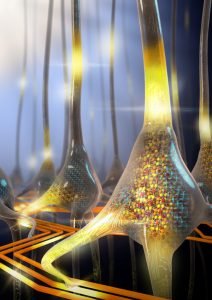
However, ionic computing is still in its early days. Until now, laboratories have only developed individual ionic devices such as ionic diodes and transistors, but no one has combined many of these devices into a more complex circuit for computing—until now.

A team of researchers at the Harvard John A. Paulson School of Engineering and Applied Sciences (SEAS), in collaboration with biotechnology startup DNA Script, has developed an ionic circuit comprising hundreds of ionic transistors and performed a fundamental neural network computing operation.
References:
ScienceDaily website
https://www.sciencedaily.com/releases/2022/09/220929133321.htm


Latest video
تابع معنا تحليل قراءة الصحف اليومية مع الكاتب الصحفي Hany Sallam عبر