
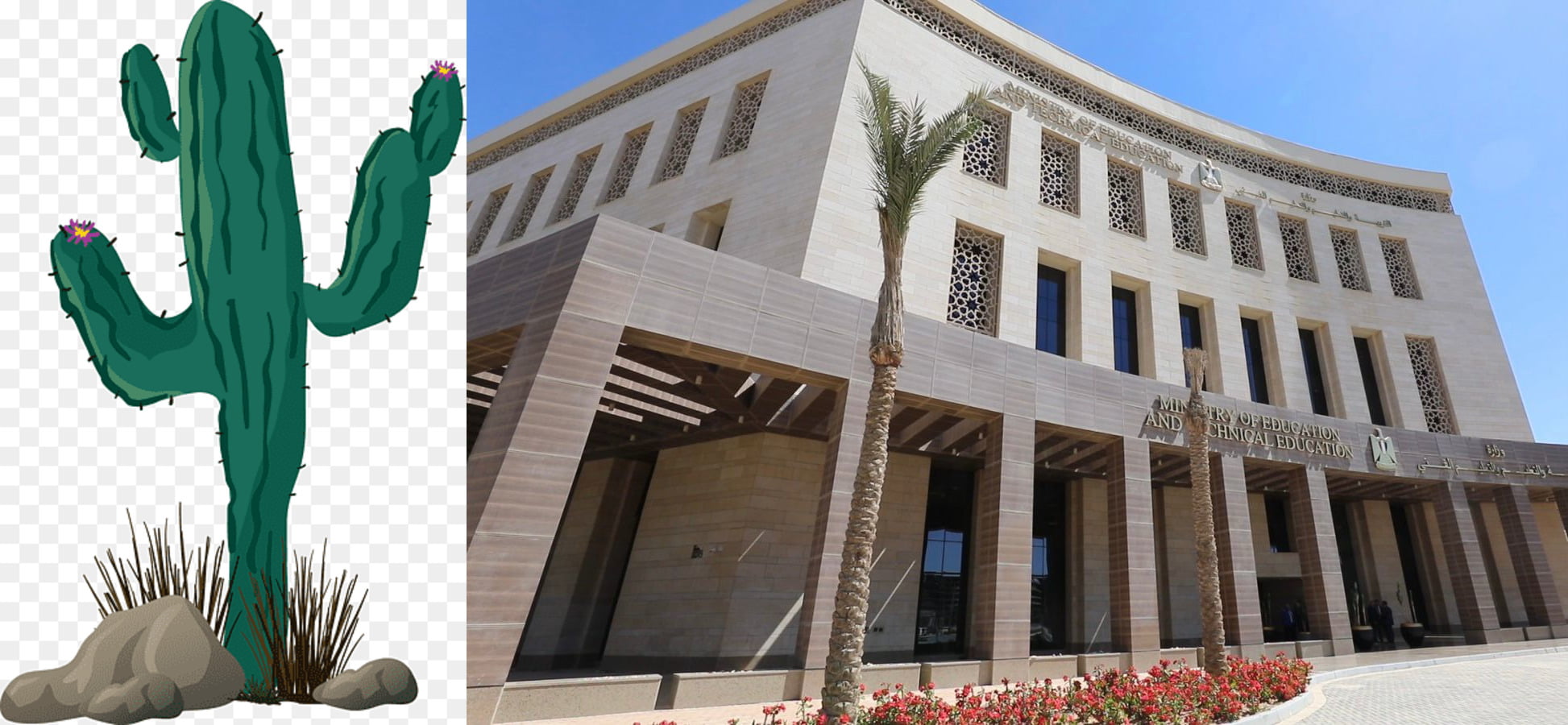

The Thorns of Reform and the Sweetness of Change:
Egypt’s Educational Boat Seeks an Inspiring Leader!
Prepared by:
Prof. Osama Maher Hussein – Professor of Educational Planning and Foundations – National Center for Educational Examination and Evaluation – Cairo.
Introduction:
At the heart of the battle to reform Egypt’s education system, formidable challenges contend with high hopes for the desired change. As our title suggests, “The Thorns of Reform and the Sweetness of Change,” the path toward ideal education is covered with thorns and pains that precede the sweetness of success and development. In this context, the search for an inspiring leader remains the key that can guide the “boat of Egyptian education” to safety.
Yet, who is the leader who can act as a beacon on this journey? Is it someone with deep educational expertise, or someone who embodies administrative innovation? What qualities should this leader possess to be able to steer education toward a prosperous future? As we search for answers, the most prominent question remains: How can an inspiring leader overcome the obstacles of thorns and bring the sweetness of change to Egyptian education?
Who Do We Want at the Present Time to Lead the Ship of Egyptian Education?
- A minister with a PhD degree, or a minister with the title of Excellency?
- A minister with an educational personality, or a minister with an administrative personality and mindset?
- A frontline executive minister, or a minister who sets policies and monitors their implementation?
- The future of Egyptian education: What kind of leadership do we need to overcome crises and achieve transformation?
These inquiries are now echoing frequently in educational circles and on social media, as everyone seeks to know the qualities the Minister of Education and Technical Education must possess to achieve a qualitative leap in Egypt’s education system. Choosing the right figure is not merely an administrative decision; it is a choice for a future vision that affects coming generations.
Here we pose the following question to the reader:
Is it unprecedented for a figure who does not belong to the field of education to assume the portfolio of the Ministry of Education in Egypt?
The answer: Of course not. The portfolio of the Ministry of Education in Egypt has been assumed by various figures with international and regional expertise who did not belong to the field of education, such as: Dr. Fathi Sorour (Law), Dr. Ahmed Gamal El-Din (Law), Dr. Hussein Kamel Bahaa El-Din (Pediatrics), Dr. Youssry El-Gamal (Marine Engineering), Dr. Ahmed Zaki Badr (Electrical Engineering), Dr. Mahmoud Abou El-Nasr (Engineering), and Dr. Tarek Shawki (Mechanical Engineering).
It is worth noting that many developed countries, such as Singapore, the United States, and the Scandinavian countries, assign their education portfolios to experts in economics, management, businesspeople, and politicians.
The question remains open:
To determine whom we want to lead the ship of Egyptian education and upbringing, we must emphasize that tackling educational problems at the present time needs a work program and policy characterized by comprehensiveness, purpose, will, and funding, alongside determining the starting point.
Hence: We must now determine what we need in the personality of the Minister of Education!
In the personality and components of whoever assumes the portfolio of the Ministry of Education in Egypt, we need them to have:
- Comprehensive Strategic Vision: The minister must possess a clear strategic vision capable of setting long-term goals alongside short- and medium-term implementation plans. This vision must be built on a careful analysis of current educational needs and future challenges, establishing strategies that remain unchanged by a change in ministers, except as needed to keep pace with the evolution of the times.
- Educational and Practical Experience: Transformation in education cannot be achieved without a leader who has practical educational experience. The minister must be familiar with modern teaching methods, assessment systems, and educational technology, and have experience in handling various educational issues.
- Ability to Innovate and Renew: Education needs leadership that innovates and adopts new solutions. The ideal minister must be able to introduce and implement new ideas, and remain open to successful local and global experiments.
- Leadership and Effective Management: The minister must be a decisive leader capable of making difficult decisions. They must also possess administrative skills that enable them to manage resources efficiently, make the most of them, and lead work teams effectively.
- Effective Communication: The minister must be able to communicate effectively with all stakeholders in education, including teachers, students, parents, and government officials.
- Passion for Education: The minister must be passionate about achieving continuous improvement in the educational system and committed to developing the educational environment to serve the interests of students and society.
- Commitment to Educational Equity: Achieving equity in education must be at the top of the minister’s priorities. They must work to provide equal educational opportunities for all students regardless of their social and economic backgrounds.
- Social Justice: The minister must focus on achieving social justice in education by providing equal opportunities for all and reducing educational gaps between urban and rural areas.
- International Cooperation: The minister should seek to build international partnerships and benefit from successful international experiments to improve the quality of education.
- The Role of Technology: The minister must have a clear vision of how to use technology to enhance education by providing technological tools to schools and training teachers to use them efficiently.
- Adaptability and Facing Challenges: Challenges in the education sector are diverse and complex. The ideal minister must possess flexibility and the ability to adapt to changing circumstances, and be able to face crises and solve problems in innovative and effective ways.
- Human Development and Comprehensive Growth: The minister must be able to develop the human aspects of pupils, teachers, and society, work to organize a national conference for specialists and stakeholders in educational development, and establish sustainable strategies that align with the evolution of the times.
- Respecting Teachers and Enhancing Their Skills: The minister must respect teachers, work to restore their confidence, and increase their digital skills.
- Maximizing the Education Budget and Improving Living Services for Teachers: The minister should seek alternatives to maximize the education budget, work to improve teachers’ living services in the areas of health, travel, and government offices, and draw up plans to develop the arts after the end of the school day.
- Developing the Role of the Syndicate: The minister must work to develop the role of the syndicate and enhance its contribution to the development of the educational system.
- Facing National Challenges: The minister must not neglect the school’s role in facing national challenges such as population growth and water scarcity, and should work to utilize solar energy.
- Encouraging Innovation and Enhancing the Role of Board of Trustees: The minister should encourage innovation and work to activate the role of the board of trustees to support educational goals.
- Stopping the Westernization of Education: The minister must focus on stopping the westernization of education and the proliferation of its Western or missionary platforms.
- Political Capability and Communication with Society and the Media: The minister must have the political capability to address society and the media regarding what is required for educational development.
Major Challenges and the Sweetness of Change:
Just as prickly pears grow in difficult and harsh environments yet produce delicious fruit when the thorns are handled correctly, the Egyptian educational system also faces a set of challenges that need careful handling and innovative solutions. These challenges include:
1- Geographical and Educational Disparities:
The large gaps in educational quality between urban and rural areas can be likened to the thorns that hide the sweetness of the fruit. The new minister must address geographical disparities in education and work to provide equal educational opportunities across the country.
2- Reviewing and amending various pieces of legislation to break away from extreme centralization in education by granting directors of educational directorates and schools the authority to take corrective measures within the scope of their administration and school. I consider this one of the core elements of reforming the educational process, and examples include:
- The right to purchase exam papers: The system of centralized bulk purchasing for all directorates through the main offices leads to delays in the timely delivery of exam papers.
- The administration’s right to organize study schedules to distribute student densities.
- The administration’s right to cooperate with government institutions within the district to provide teacher numbers using proper pedagogical guidelines, such as the Ministry of Social Solidarity.
- The administration’s right to distribute teachers within the same district across various grade levels.
- Granting administrations and schools the right to manage financial resources from student fees to spend on school maintenance.
3- Reforming curricula and study programs:
Rapidly updating curricula to match the requirements of the modern era is like prickly pear fruit, which requires careful peeling to reach its sweetness. Curriculum reform must be meticulous and precise to effectively meet students’ needs.
4- Technology and training in modern tools:
Integrating technology into classrooms and training teachers to use it is a field full of technical challenges, much like peeling prickly pears requires skill and patience.
5- Managing financial and educational resources:
Dealing with limited financial resources and ensuring their fair distribution is a thorn that must be overcome to achieve desired goals, and it must be done through innovative ways to improve resource allocation.
6- Reforming the evaluation and testing system:
Developing a fair and objective evaluation system resembles the need for careful peeling of the prickly pear to reach its sweetness. The evaluation system must be updated carefully to ensure it accurately reflects students’ abilities.
7- Motivating teachers and increasing their competencies:
- Improving working conditions and motivating teachers to achieve outstanding performance can be likened to overcoming the thorns of the fruit to get its reward.
8- Facing social and economic challenges:
Addressing the impact of social and economic challenges on education is a thorn that requires careful handling to overcome, just as prickly pears require an effective strategy to deal with challenges.
Conclusion:
For Egypt’s educational system to succeed in overcoming its challenges and achieving the required transformation, the Ministry of Education must be led by a leader who is experienced, innovative, and capable of handling challenges with flexibility and effectiveness. This leader must be able to face major challenges and achieve success, just as the prickly pear produces delicious fruit when the thorns are handled correctly.


Latest video
تابع معنا تحليل قراءة الصحف اليومية مع الكاتب الصحفي Hany Sallam عبر