

The Hell That Hides Secrets
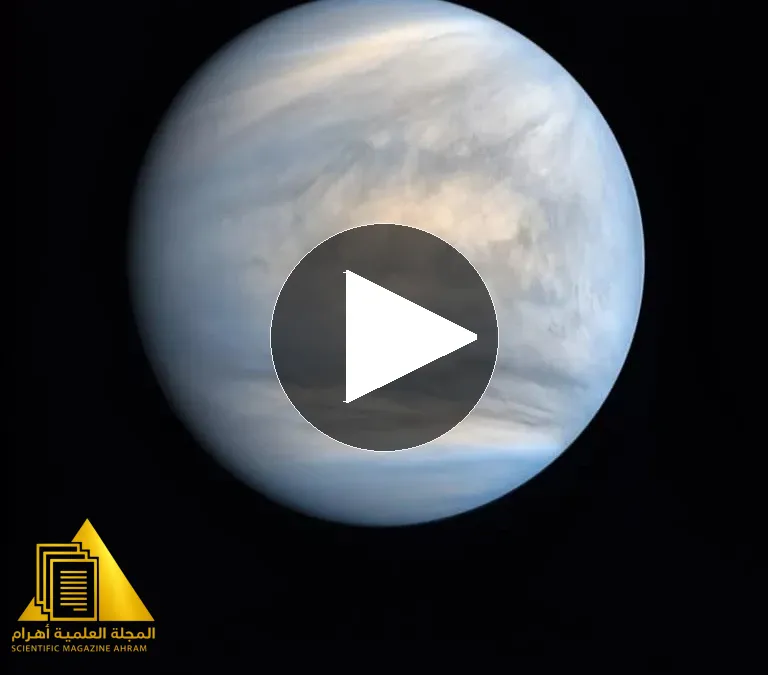
Venus has long been considered Earth’s evil twin. Its surface is nothing short of an unbearable hell, where temperatures exceed the levels needed to melt lead, and the atmosphere crushes any object with a pressure equivalent to the ocean depths. Yet while scientists turn their attention to searching for life on distant Saturnian moons like Titan, Venus stands out as a controversial candidate—not because of its surface, but because of its mysterious atmosphere, which still hides many secrets behind its thick clouds.
Acidic Clouds: A Potential Home?
In contrast to its glowing surface, the upper atmospheric layers of Venus offer conditions
that are surprisingly similar to those found on our planet. These clouds, which orbit the planet in a striking swirling motion, may provide a refuge away from the fury of the surface. The greatest challenge here is the extreme acidity of these clouds, which was previously thought to destroy any potential biological structure, though recent studies have changed our view of this idea.
Peptides: A Glimmer of Hope on High
In a surprising discovery, researchers found that peptides—chains of amino acids that serve as the fundamental building blocks of life as we know it—possess an unexpected ability to endure and survive within harsh acidic environments that mimic the atmosphere of Venus. This scientific discovery opens the door to an exciting possibility: could there be microbes or microscopic life forms floating in the clouds of Venus?
The Future of the Search for Life
The existence of life on Venus, if proven, will radically change our concepts of what makes planets habitable. We are not just looking for planets that resemble Earth in their orbits; we are looking for the resilience of life in environments we once thought were lethal. With the development of space observation technology, we may be on the threshold of a new era of exploration, where our view of Venus is not limited to a burned-out planet, but as a natural cosmic laboratory that may hold evidence of life beyond the boundaries of our world.
By: Hany Sallam
Source: universetoday.com


Latest video
تابع معنا تحليل قراءة الصحف اليومية مع الكاتب الصحفي Hany Sallam عبر