

Between the Oceans: When California’s Geography Connects to Japan
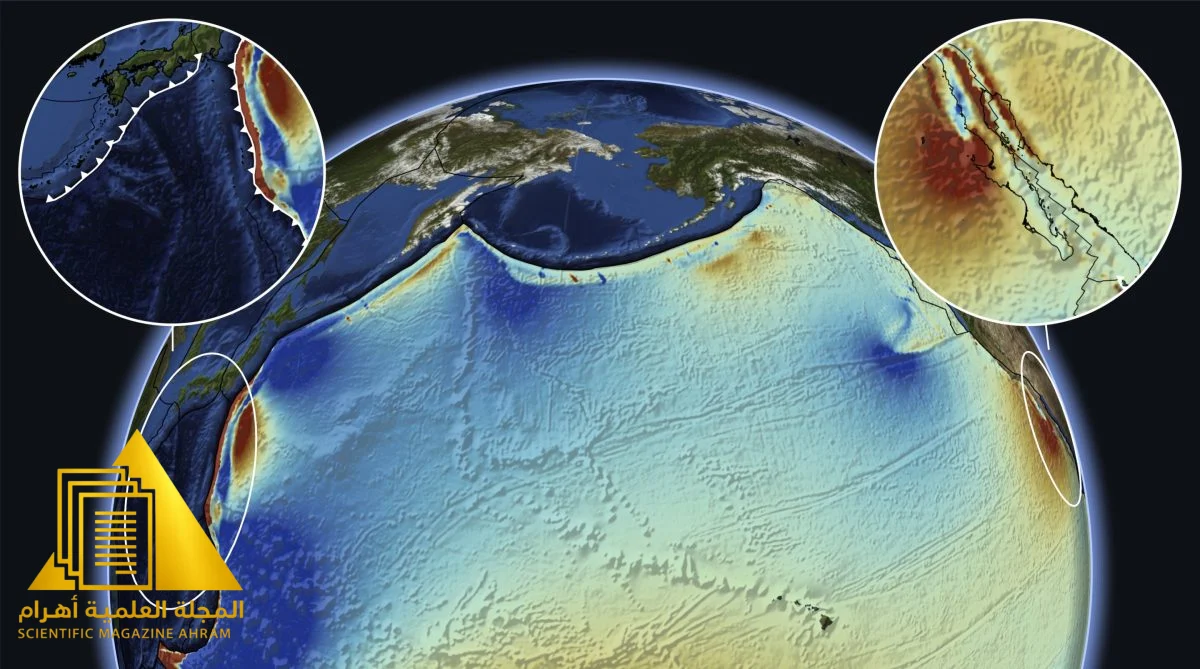
The Earth exists in a constant, hidden state of motion, its crust divided into massive tectonic plates that continuously interact with one another. Scientists have long believed that the geological processes shaping each region are purely local events. However, a recent scientific study has revealed a striking surprise, confirming that what happens in the far east of the American continent is closely linked to events that took place millions of years ago on the other side of the Pacific Ocean, specifically in Japan.
The Secret of the Western Gulf and California’s Separation
The Baja California peninsula is undergoing a gradual separation from the rest of the American continent—rapid by geological standards—which has led to the formation of a long and distinctive gulf. This geographical tearing did not happen out of nowhere; rather, it is the result of profound changes in the dynamics of Earth’s plates. Research indicates that the forces responsible for this stretching and separation were directly affected by distant tectonic movements that redrew the map of the Pacific Ocean floor and Japan millions of years ago, accelerating the pace at which the Earth’s crust is tearing along America’s West Coast.
Planetary Earth Dynamics: A Single Tectonic Network
These discoveries prove that planet Earth operates as a single interconnected mass; the collisions and slips occurring between plates in Asia and the edges of the Pacific Ocean have distant echoes that reach the Americas. The movement of molten rock and constant pressure at tectonic plate boundaries create a geological domino effect. Thus, science continues to uncover our planet’s complex secrets, illustrating how the geographies of distant regions intertwine over millions of years to shape the world as we see it today.
By: Hany Sallam
Source: universemagazine.com


Latest video
تابع معنا تحليل قراءة الصحف اليومية مع الكاتب الصحفي Hany Sallam عبر