
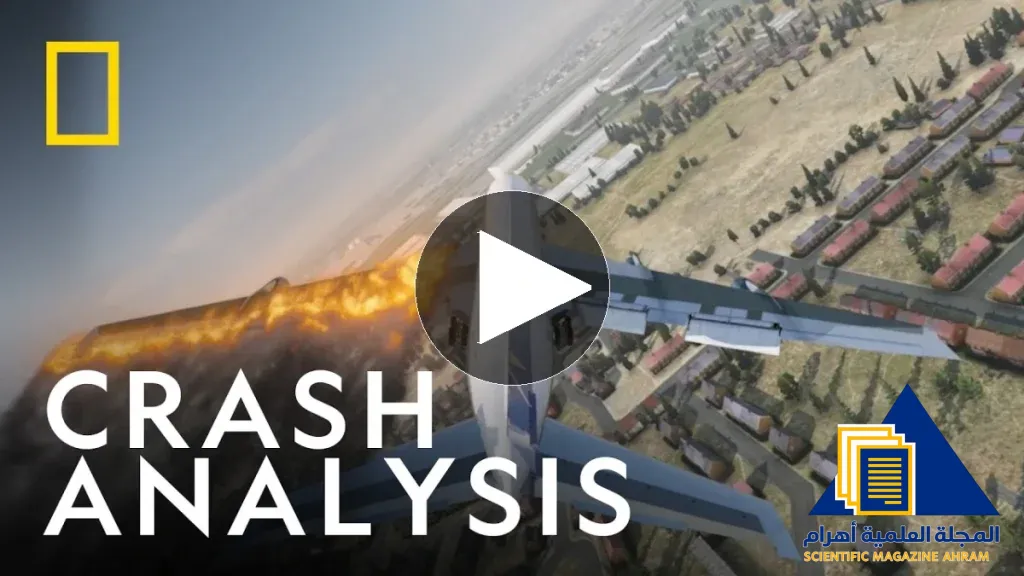

A Journey into the Depths of the Final Moments
In the world of aviation, disasters are not viewed as mere fleeting accidents, but as turning points that drive science to re-examine every intricate detail inside the cockpit. When an aircraft sets off on a journey, its passengers rely on an astonishing harmony between complex engineering and swift human decisions. But what happens when this balance falters? Rebuilding the moments before a crash is not just a simulation, but an advanced scientific tool aimed at decoding the “critical moments” that precede a loss of control.
Beyond Human and Technical Error
It often comes to mind that a plane crash results from a single cause, yet modern scientific analyses prove that disasters are frequently a series of small, consecutive failures. By studying black box data, experts can paint a three-dimensional picture of what happened in the cockpit, analyzing how pilots respond to alarms, how clear the information provided by digital screens is, and how psychological stress can affect decision-making in fractions of a second.
Safety Science: How Do We Learn from Collapse?
The primary goal of accident simulation is not merely historical documentation, but extracting “harsh lessons” to turn them into global safety standards. Scientific analysis of these moments has led to the invention of smarter flight systems capable of intervening to correct course or warn pilots of risks they may not realize during moments of stress. Thanks to these studies, the aviation sector is safer today, with aircraft and pilot training programs designed based on real-world experiences to ensure that planes stay in the sky and passengers always reach their destinations safely.
Developing the Future from the Womb of Experience
Our understanding of what happened in the cockpit is the true guarantee to avoid repeating tragedy. The science that analyzes accident wreckage is the very same science that builds stronger, more advanced wings. Every second lost in an accident translates today into years of scientific research that makes the skies safer for us all.
By: Hany Sallam
Source: National Geographic UK


Latest video
تابع معنا تحليل قراءة الصحف اليومية مع الكاتب الصحفي Hany Sallam عبر