
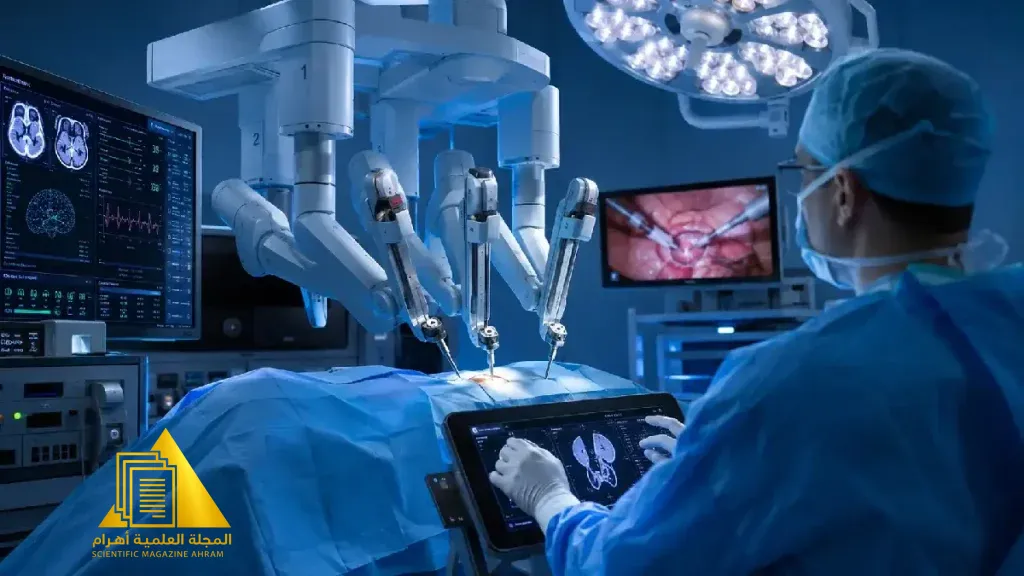

The medical technology sector is undergoing rapid transformation with the arrival of a new generation of surgical robots
powered by artificial intelligence, in a move experts view as the start of a new era of precision medicine and smart surgery.
Over recent months, technology companies and medical institutions have accelerated investments in developing robotic systems capable of helping surgeons perform complex procedures with greater accuracy, while drawing on data analytics, computer vision, and machine learning to improve performance inside operating rooms.
How Do Surgical Robots Work?
These robots
do not operate independently; rather, they serve as an extension of the surgeon’s capabilities, translating hand movements into extremely precise commands while reducing tremors and improving control over surgical instruments.
They also rely on artificial intelligence to analyze medical images and vital data during procedures, helping to determine the best surgical pathways and minimize the likelihood of errors.
Higher Accuracy and Better Outcomes
This development helps make smaller incisions, reduce blood loss, lower the risk of complications, and accelerate patient recovery after surgery.
Researchers affirm that integrating artificial intelligence with robotics allows millions of medical data points to be analyzed in a short time, giving physicians additional support when making decisions.
The Role of Artificial Intelligence in Surgery
Machine learning algorithms have become capable of analyzing radiographic images, tissues, and vital signals, and comparing their results with thousands of previous cases, providing precise recommendations that support medical expertise rather than replace it.
Work is also underway to develop systems capable of adapting to changes that may occur during procedures, allowing for a higher level of safety and accuracy.
Challenges Facing the Technology
Despite significant development, the cost of these systems remains high, and they require advanced infrastructure and specialized training for medical staff, which limits their proliferation in some countries.
Experts believe that the coming years may see a drop in costs as production expands and reliance on these technologies increases.
The Future of Smart Medicine
Researchers expect surgical robots to become an essential part of modern hospitals as artificial intelligence and medical data analysis continue to evolve, helping to improve the quality of healthcare and raise surgical success rates.
Hany Sallam


Latest video
تابع معنا تحليل قراءة الصحف اليومية مع الكاتب الصحفي Hany Sallam عبر