
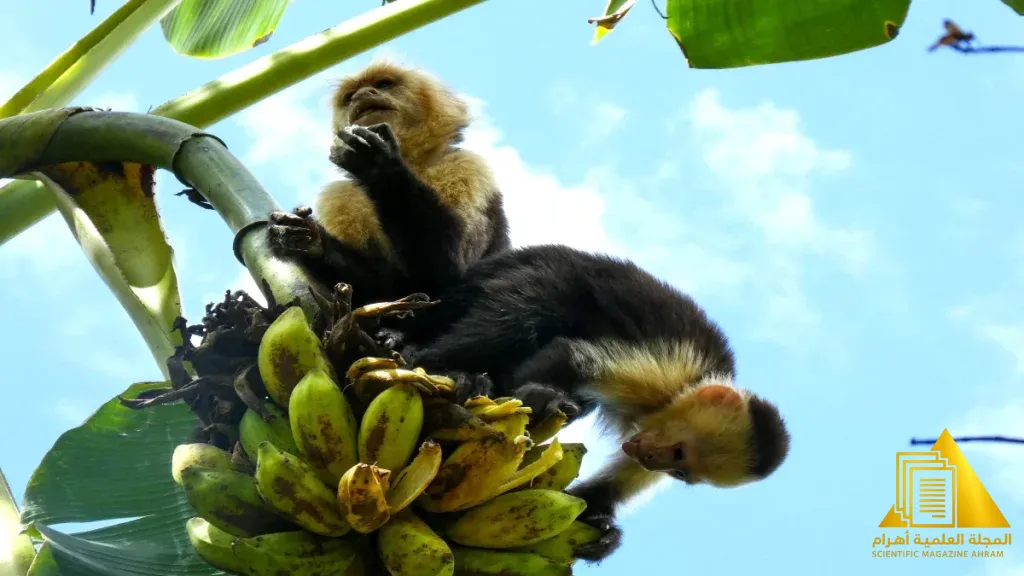

Between the Resilience of Nature and the Climate Challenge
Deep within the dry tropical forests of Costa Rica, the story begins before dawn. As the forest prepares to welcome a new day in what primate scientist Susan Perry calls “changing the guard”—when nocturnal animals wind down and diurnal creatures begin to emerge—another story is being written in silence. It is the story of white-faced capuchin monkeys
which find themselves today facing an invisible yet lethal enemy: extreme climate change.
Survival Strategies in Dry Forests
Climatic conditions in Costa Rica are no longer what they used to be; heatwaves and droughts have grown more severe and frequent. These changes do not only threaten the vegetation capuchins rely on for food, but they also alter the fabric of their complex social lives. Field observations reveal that these clever monkeys have started modifying their daily behaviors to conserve energy, cut back on exhausting activities, and search for alternative water and food resources in an increasingly harsh environment.
The Impact of Pressure on Social Structure
are highly social creatures, depending for survival on strong bonds within the group. Yet the stress caused by resource scarcity imposes new behavioral and moral challenges. Researchers have tracked a shift in the pace of social interactions: individuals tend to cooperate more closely during hard times, while competition for scarce resources increases. This capacity for social adaptation is the secret weapon these creatures possess to cope with shortages in their surrounding environment.
A Message from the Forest to the World
What is happening in the forests of Costa Rica is not an isolated incident, but a reflection of a reality living creatures face around the world. The study of capuchins shows that behavioral flexibility is the key to survival in the age of climate change. Even so, questions remain: how far can these animals continue to adapt before they reach the breaking point? The study of these monkeys offers valuable lessons not only about wildlife, but about how to face the global environmental pressures our hands inflict on this planet.
By: Hany Sallam
Source: news.mongabay.com


Latest video
تابع معنا تحليل قراءة الصحف اليومية مع الكاتب الصحفي Hany Sallam عبر