

Behind the Amazon Myths: An Unprecedented Attack
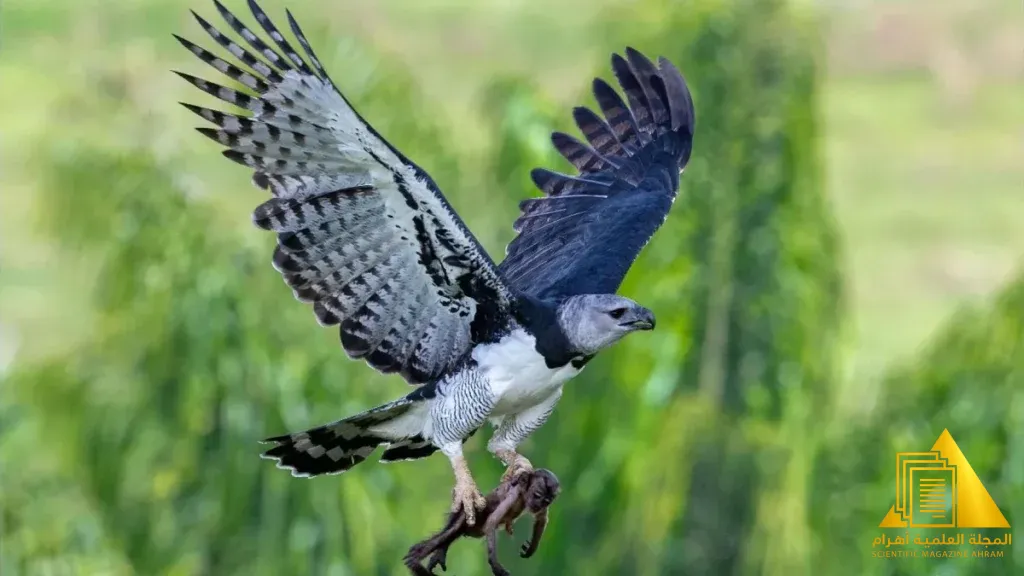
Deep within the rainforest of French Guiana, an incident has stunned the scientific community. A 29-year-old woman was suddenly attacked by a harpy eagle, classified as the largest and most powerful eagle species in the world. Taking place in October 2023, this attack was not merely a passing incident. Instead, it confronted scientists with fundamental questions about the behavior of these majestic raptors, whose paths rarely cross with humans.
The Harpy Eagle: King of the Rainforest
The harpy eagle is known for its exceptional hunting ability. It possesses massive talons capable of crushing the bones of its prey, along with sharp eyesight that makes it a crowned ruler above the Amazon canopy. Normally, these birds avoid human presence and prefer solitude in dense forests. Therefore, a direct attack raises multiple hypotheses: was it defense of a nesting territory? Or was it the result of increasing overlap between human expansion and natural habitats?
Decoding Aggressive Behavior
Recent studies examining this event indicate that attacks by birds of prey
on humans are an extremely rare phenomenon, and they are often linked to specific biological motives. Researchers suggest that the bird may have felt threatened as a result of the woman approaching its area, or perhaps it faced an environmental disturbance that affected its natural hunting pattern. Experts stress that this incident does not mean the harpy has become a “man-eating” bird; rather, it is a reminder of the need to respect wild spaces.
Coexisting Amid Environmental Change
Re-examining this event opens the door to an expanded scientific debate on the importance of nature reserves. As human activity expands into remote areas, friction with predatory animals becomes more likely. Specialists believe that understanding these behaviors helps us develop better strategies to preserve ecological balance, and ensures that these rare interactions do not turn into conflicts that threaten the biodiversity protected by tropical forests.
By: Hany Sallam
Source: news.mongabay.com


Latest video
تابع معنا تحليل قراءة الصحف اليومية مع الكاتب الصحفي Hany Sallam عبر