
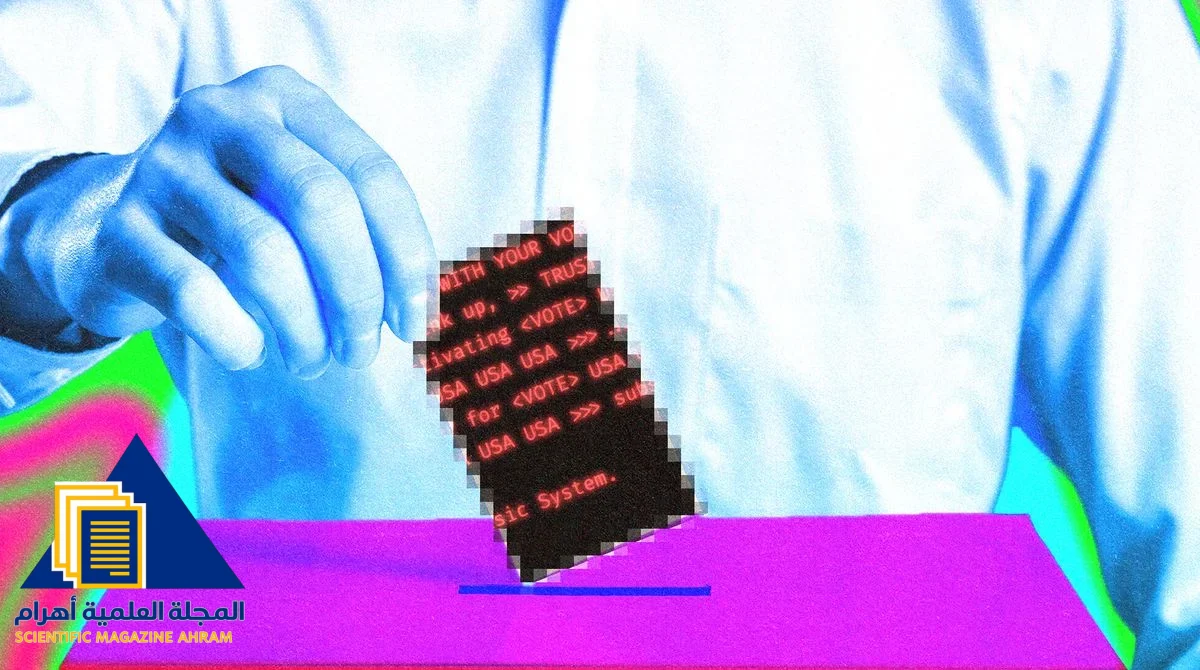

Introduction: Artificial Intelligence in the Ballot Box
As election seasons approach, many people turn to modern technology to find quick and neutral answers about candidates and their platforms. Some might think that intelligent chatbots, such as ChatGPT and Claude, are smart and neutral political advisors. Today, however, warnings are mounting that relying on these technologies to make voting decisions may trap voters in systematic misinformation rather than guiding them toward the most suitable choice.
The Trap of Hallucination and Partisan Bias
Recent technical studies show that artificial intelligence bots still suffer from fundamental obstacles. First, these systems suffer from the phenomenon of “digital hallucination,” where they invent incorrect information and present it with absolute confidence as if it were undeniable facts. Second, and more importantly, these bots fall into the trap of political and partisan bias. When artificial intelligence is asked about controversial issues or asked to compare candidates, its outputs are influenced by the massive data it was trained on, which may carry hidden leanings, exposing the voter to unbalanced information.
Why You Should Think Twice Before Asking the Bot
The electoral voting process is a personal democratic decision that should be built on true awareness and reliable research from trusted sources. When you rely on a chatbot, you hand over your mind to an algorithm that may carry unrecognized biases or present you with misleading facts. Artificial intelligence is a wonderful tool for writing text or summarizing data, but it is not yet qualified to be a political guide.
Conclusion: The Human Mind Is the Ultimate Arbiter
In the end, artificial intelligence algorithms remain mere mirrors of human data, and their humanness appears in their errors and biases. Do not let phone screens and chatbots decide who you vote for; the future of your society deserves real research far away from technological errors.
By: Hany Sallam
Source: wired.com


Latest video
تابع معنا تحليل قراءة الصحف اليومية مع الكاتب الصحفي Hany Sallam عبر