

A Revolution in Recycling Chemistry
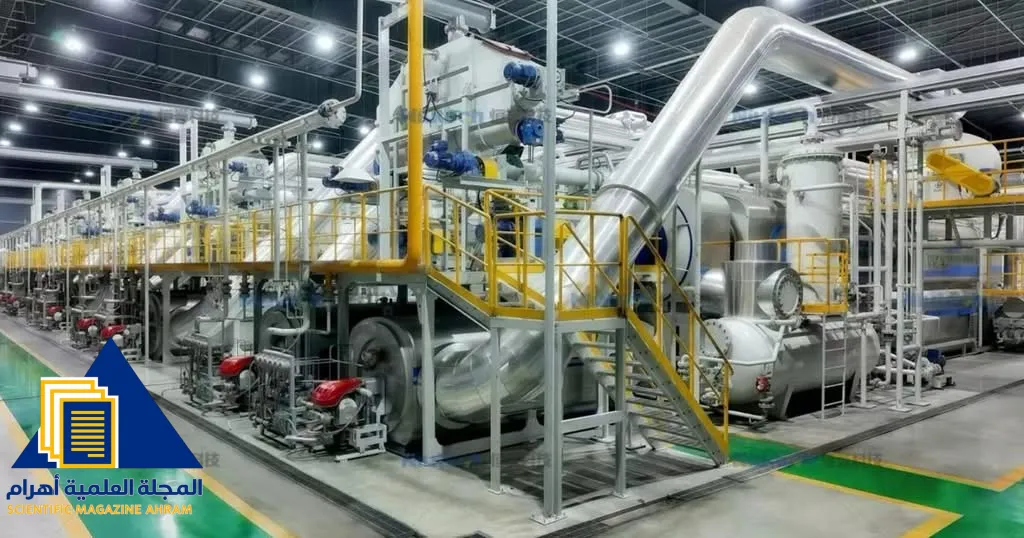
In a move that sets new benchmarks for environmental sustainability, China has begun constructing a giant industrial facility that is the first of its kind on this scale, aiming to turn tons of plastic waste
weighing down the planet into high-grade jet fuel. This project is not limited to mere waste disposal, but represents a redesign of plastics through advanced chemical processes, making it a lifeline for the global aviation sector as it searches seriously for alternatives to traditional fossil fuels.
Plastic-to-Energy Technology
The Chinese innovation relies on advanced pyrolysis techniques, breaking down the molecular bonds of plastics under precise pressure and heat conditions to convert them into liquid hydrocarbons that can be refined into sustainable aviation fuel (SAF). This scientific path solves a major dilemma: plastic that used to end up in oceans or landfills for decades has now become an energy source that boosts engine efficiency and reduces the carbon footprint of flights.
Flying Toward a Green Future
The aviation sector faces a major challenge in shifting toward clean energy, given the weight of electric batteries and their currently limited range. Here, “plastic fuel” acts as a practical solution that aligns with current airport and aircraft infrastructure. If this Chinese experiment succeeds in scaling up its production capacity, we are looking at a radical shift that will transform airline economics and make air travel more environmentally friendly, turning the plastic pollution dilemma into fuel that propels the aviation sector toward new horizons of sustainability.
By: Hany Sallam
Source: futurism.com


Latest video
تابع معنا تحليل قراءة الصحف اليومية مع الكاتب الصحفي Hany Sallam عبر