

Imagine being able to completely halt the vibrations of atoms and reach the coldest point imaginable in the universe. This is precisely what scientists recently managed to achieve aboard China’s Tiangong space station, setting a new world record for ultra-low temperatures in an achievement that opens wide doors for the future of modern physics.
Rubidium Cloud in Deep Space
The unique experiment targeted a cloud of rubidium atoms sent into Earth orbit. Using advanced techniques, scientists managed to bring these atoms into a special quantum state known as a Bose-Einstein condensate. In this state, atoms act as a single gargantuan entity, allowing researchers to study the properties of matter with staggering precision that normal conditions do not provide.
Laser Miracle and the Absence of Magnets
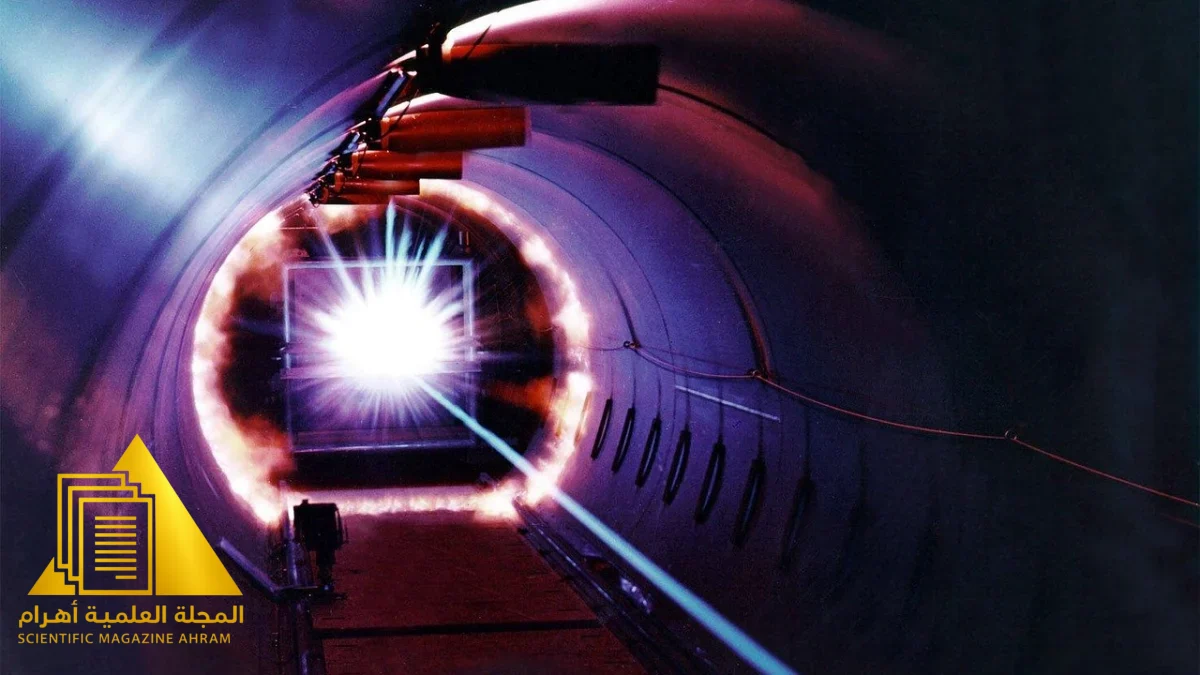
The most exciting aspect of this achievement is how the cold atoms were controlled. For the first time in history, laser beams alone succeeded in trapping and cooling atoms aboard a spacecraft without the need for any traditional magnetic field. This innovation represents a qualitative leap in quantum systems engineering, with light beams acting as precise “tweezers” that hold the atoms in place.
The Magic of Zero Gravity
This success could not have been achieved with the same ease on Earth’s surface. The zero-gravity environment in space plays a pivotal role, giving atoms the freedom to float unhindered without the need for strong magnetic fields that previously interfered with laser operation. This ideal pairing of light traps and zero gravity paved the way for the lowest temperature ever recorded, bringing us one step closer to understanding the secrets of the cosmic universe.
By: Hany Sallam
Source: universemagazine.com


Latest video
تابع معنا تحليل قراءة الصحف اليومية مع الكاتب الصحفي Hany Sallam عبر