

Paralyzing America’s Skies: An Analytical Reading of the Infrastructure and Technology Crisis
Cracks in the Walls of the Empire: Are We Living Through the End of an Era of Absolute Hegemony?
By: Dr. Ola Mahmoud Moawad
University Lecturer, Consultant in Artificial Intelligence, Information Technology, and Geographic Information Systems
What Exactly Happened? (Facts of the Crisis)
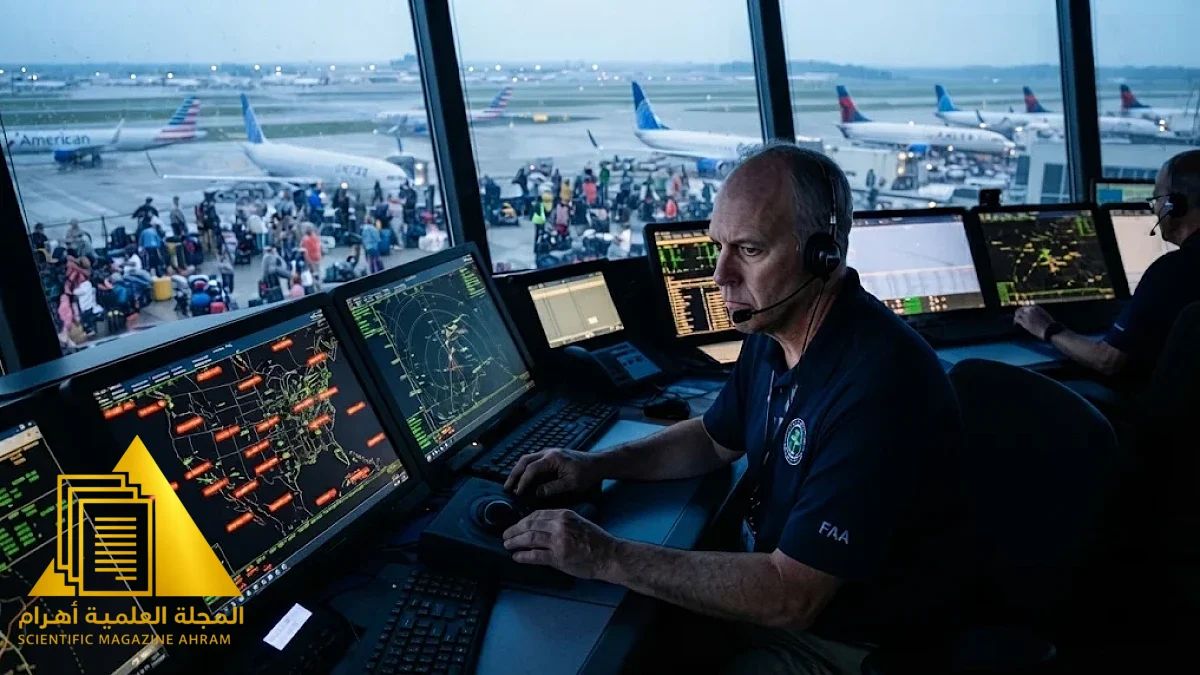
The United States witnessed pivotal and confounding events, led by an unprecedented and exceptional technical crisis represented by the complete paralysis of domestic air traffic and aviation. This led to the grounding of thousands of flights and stranded passengers in airports, amid widespread questions about the fragility of the vital systems of the world’s largest power.
In the past few hours, the Federal Aviation Administration (FAA) announced an emergency decision to halt all departing flights nationwide following a sudden and simultaneous technical glitch in communication systems and air traffic control centers.
Although officials quickly denied any cyberattacks or deliberate hostile acts, the incident revived the nightmare of cyberattacks and sparked widespread panic, especially since it disrupted a vital artery affecting not only the American domestic sphere but also echoing across the global aviation network. In the wake of the crisis, the US administration rushed to request massive funding allocations reaching approximately $50 billion to completely overhaul and re-engineer the air traffic control system.
The Real Problem: Beyond Just a Technical Malfunction
When we look at what happened with a deep analytical eye, we find that the technical malfunction is merely the “tip of the iceberg.” The real problem lies in several core factors plaguing the digital and administrative infrastructure in major countries:
1. Aging Technological Infrastructure: Sovereign and vital institutions in America (such as the aviation and navigation sector) rely on software systems and digital infrastructure that have been left behind by time or suffer from a lack of sustainable updates, making them vulnerable to catastrophic failures during any sudden pressure or disruption.
2. Excessive Centralization and Reliance on Interconnected Digital Systems: When thousands of operations and flights are tied to a single central control center or a single primary communication network without immediate, flexible, and decentralized alternatives, technology transforms from a tool that facilitates life into a fatal vulnerability (a central “kill switch”).
3. The Funding Priorities Crisis: For long periods, sufficient investment and financial funding for the maintenance and development of air transport monitoring systems were overlooked, until the incident imposed a costly reality forcing the government to request billions of dollars to address accumulated neglect.
Recommendations from an Information Systems and Technology Perspective
From a technical and strategic perspective, what happened in America is a harsh lesson that all major countries and institutions around the world should heed. My recommendations for dealing with such future crises are as follows:
– Shift Toward Digital Decentralization: Critical vital systems (such as aviation, energy, and finance) must not rely on a single central control point whose failure could paralyze the entire system; rather, built networks should be distributed and relatively independent, capable of autonomous operation during emergencies.
– Proactive Investment in Artificial Intelligence and Resilient Security: Integrating artificial intelligence and monitoring systems is not limited to speed, but extends to “predictive maintenance,” enabling algorithms to detect hidden flaws, predict them, and address them automatically before they turn into a crisis that paralyzes the state.
– Establish Business Continuity Plans: Train human cadres in alternative scenarios and immediate traditional manual work with high efficiency when digital systems go down, to ensure public life does not grind to a complete halt.


Latest video
تابع معنا تحليل قراءة الصحف اليومية مع الكاتب الصحفي Hany Sallam عبر