
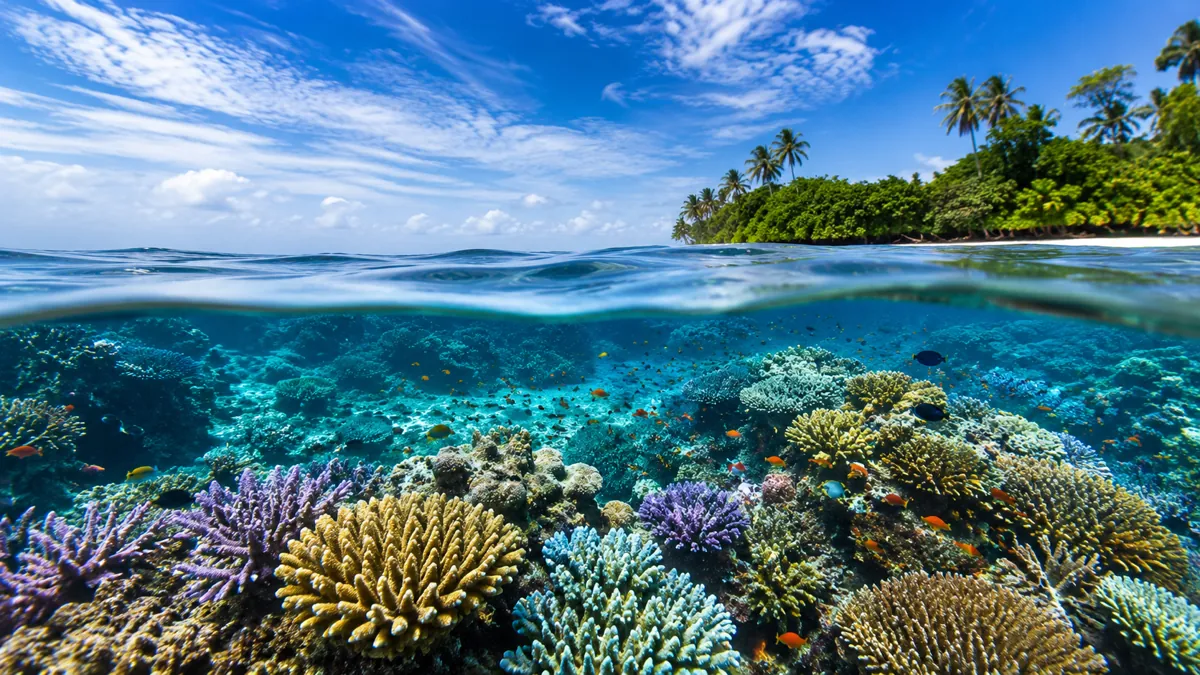

Environmental Discovery May Change the Future of Oceans
In a scientific development described by environmental experts as a “turning point,” an international team of scientists has revealed the identification of more than 166,000 square kilometers of coral reefs around the world that possess a natural ability to resist the impacts of climate change.
The new study, which relied on more than 45,000 field surveys and climate data accumulated over decades, showed that the areas capable of resilience are three times larger than previously thought.
New Hope in Facing the Climate Crisis
Coral reefs face mounting threats due to rising sea temperatures, pollution, and severe storms, which in recent years have led to widespread waves of bleaching and environmental collapse.
However, the new findings point to the existence of natural “environmental refuges” that can become the first line of defense in protecting marine ecosystems.
71 Countries on the New Map
The researchers confirmed that these reefs are distributed across 71 countries and 100 territories worldwide, including areas not previously classified as resilient regions, particularly in the Caribbean and the Atlantic and Pacific Oceans.
Despite this positive news, the study showed that only 28% of these reefs currently lie within officially protected areas.
Urgent Calls to Action
Experts called on governments to include these areas in global conservation plans, especially as the “30 by 30” targets approach, which aim to protect 30% of land and oceans by 2030.
Environmental scientists believe this discovery does not mean the danger is over, but it may grant the world a real chance to slow the collapse of marine life and save one of the most important life-support systems on Earth.
Hany Sallam
Follow the Latest Wildlife News
Within 24 Hours: Climate Warnings and Urgent Moves to Save the Planet


Latest video
تابع معنا تحليل قراءة الصحف اليومية مع الكاتب الصحفي Hany Sallam عبر