


Research Projects Between the Cries of Objectors and the Applause of Supporters
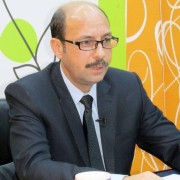
By Dr. Mohamed Mostafa El-Gizawey
Ever since the Minister of Education and Technical Education announced what came to be termed research projects as an alternative to year-end exams for the 2019–2020 academic year, cries of objection and disapproval erupted, accompanied by calls of absolute support. Both sides appeared to enter the mother of all battles, each armed with arguments and proofs for the correctness—or perceived correctness—of its stance.
If we return to what we mentioned in the previous article regarding the need to consider the three points that must be kept in mind when critiquing any idea, as well as how criticism should be constructive, we would be certain that very few people adopt a moderate approach to criticism. Generally, and as an attempt to clarify and shed light on the current situation, we can discuss three axes:
First: What is the concept of research projects, and what is their benefit?
Second: Research projects between reality and expectations.
Third: For or against?
First: The Concept of Research Projects
Scientifically, there are several specific definitions and concepts for research projects or research. If we try to analyze the term simply and without complication, we find that it is divided into two parts: the first is project, and the second is research. Regarding the term project, a project is defined as an undertaking carried out by an individual to execute a specific idea, whether it is a product or a service. The project uses certain main resources to execute this idea, such as financial resources, knowledge resources, and a workforce. A project also provides a service—meaning it solves a societal problem in exchange for something material.
Simply put, and in my view, a project is a purposeful, life-connected, and time-bound undertaking carried out to deliver a product or service in order to achieve an intentional change.
As for the word research, linguistically it means seeking or investigating a truth or a matter. It must be organized by following specific scientific methods and approaches for scientific facts in order to verify their validity, modify them, or add new insights to them. By its nature, research stimulates awareness and directs attention to the problem intended to be studied or addressed through research.
From the foregoing, and based on the definitions we have provided, we find that the idea or decision of the Minister of Education and Technical Education is a good one and is not merely a temporary solution; it can also be treated as a future methodology to address complex crises in Egypt’s education system. As an idea—and I repeat, as an idea—research projects aim to solve a societal problem through a purposeful, life-connected, and time-bound undertaking carried out to achieve intentional change as a primary goal. This is in addition to secondary or side goals for approving research projects, such as attempting to change certain concepts and ideas and formulating new ones that contribute to enriching the student’s knowledge. In my view, the most important thing is that it is a sound method that seeks to renew society’s thinking—that is, to bring about change. Herein lies the problem, given what we all know about what is known as resistance to change, which leads us directly to the second axis.
Second: Research Projects Between Reality and Expectations
The projects were announced after skirmishes by opponents and groundwork laid on social media rejecting the projects despite no details having been announced—let us return once again and remember the points of constructive criticism. This means there was clear premeditation against the minister. When the research projects were announced, they were first revealed for students from the third grade of primary school through the end of the basic education stage for regular students. This was followed by the announcement of research projects for special groups and the rest of Egypt’s educational system (community education, technical education, and so on). The minister’s announcement of the details of the research project included specific topics as well as a logistical aspect covering how to carry out the research project, sources to help obtain information, and a designated official responsible for receiving the research project. In short, the minister presented a clear and specific model for students and interested parties, containing explanatory steps starting from the formation and content of the research project, how to deal with it, the sources the student should turn to, the method for submitting the research, and the person responsible. The process was entirely electronic at first, but with growing opposing voices, the minister added paper submission and assigned responsibility to the school principal.
An impartial observer of the procedures cannot help but thank the minister and his team for the idea in the first place and praise it. This is perhaps one of the few times that things have been handled in a scientific, explanatory manner for every step—starting from the topics down to ensuring the student submits the research, whether electronically or on paper.
Undoubtedly, deciding on research projects—following the clarification of their concept and goal and the completion of instructions as outlined above—is what is hoped for to change the deeply rooted belief among parents and students that research is a waste of time, a trick, or simply a matter of “copy & paste,” which completely undermines the intended purpose of these projects. Indeed, social media platforms waged a fierce war against the research project, and after following them, one rarely finds critical steps built on a scientific basis or an intention to reform or guide; instead, there was only an attack that, regrettably, is shameful. Yet there were very few voices that discussed reality using a scientific approach to dialogue, raising several points, including:
1 – Statements by the Minister indicated that anyone who submits the research has obtained an end-of-year leave, and then he scheduled an oral exam at the start of the 2020–2021 academic year, which means results will not be announced until mid-September 2020!
2 – For example, how will students in the sixth grade or the end of basic education (the third preparatory grade) be placed in schools if the announcement of results is delayed, how will admission to the first year of secondary school be handled, and on what criteria? We should not forget another anticipated problem: higher admission cutoffs due to the relatively high grade averages, as expected.
3 – What is the status of school transfers and the implementation of Circular 40, especially given that transfers begin in June and end in early November each year?
4 – There are unusual preparations taking place before the start of the school year, not least of which are preparing class rosters and teachers’ schedules.
5 – There is major debate surrounding the evaluation of the research project, especially since one of the evaluation criteria is that the title of the research project must be engaging?!
6 – There is a ministerial decree and circular stating that third-year primary school students are automatically promoted even if they are absent or do not attend the exam. So what will the situation be if a student does not submit the research project?
In my personal view, these and other administrative and logistical procedures will be dealt with, especially since these points are now in the hands of decision-makers, and this and other concerns should not take us far from the primary goal of the research projects as mentioned earlier.
Third: For or Against?
The question put to me dozens of times is: Are you for or against? Accompanied by the same exclamation marks each time, my reply is: Why should I be for or against, and why can we not agree that the idea and goal are noble and wonderful, and that the concept can be further elevated and developed to become a distinguished model for education in the Arab Republic of Egypt? This is especially true since the camp of absolute rejectionists, in the heat of their attack, and the camp of unconditional cheerleaders, in their fierce defense, both forgot that the minister’s decision is an investment in Ministerial Decree 313 of 2011 and its numerous amendments, the latest of which is Ministerial Decree 460 of 2012. Both decrees explicitly affirmed the activation of activities accompanying coursework, yet there was no real attention given to that; mostly, what took place was the making of posters—many of which were bought and submitted, or completed by parents on behalf of students.
This leads us to emphasize the need for students to carry out research projects themselves under the supervision of their teachers and parents, with due allowance for differences, much like postgraduate university students preparing their master’s or doctoral theses—but only after providing technical support to the teacher, parent, and student alike. This is what we will address in the following section under the heading: Proposed Support Mechanisms for Producing the Research Project.

Latest video
تابع معنا تحليل قراءة الصحف اليومية مع الكاتب الصحفي Hany Sallam عبر