
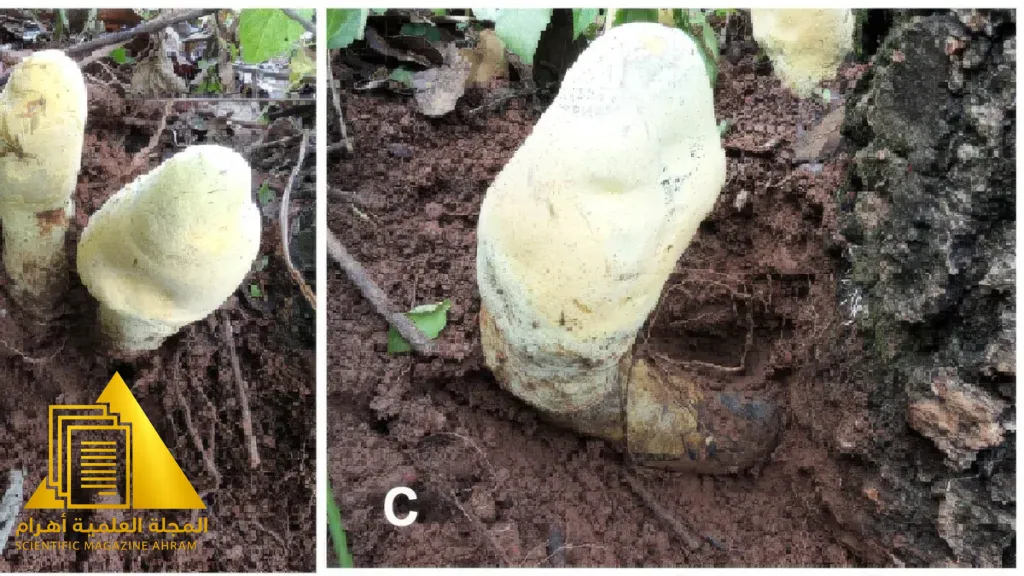

A Remarkable Discovery Changes Our Understanding of the Evolution of Life After the Extinction of the Dinosaurs
In a discovery that has astonished the scientific community, a team of researchers in China’s forests has found a rare, giant species of fungus that scientists have named “D. rex.” This organism is not just an ordinary fungus; it is so unique that it required a revision of its biological classification tree, placing it within a brand-new taxonomic family previously unknown to science.
The 2.3-Kilogram Mystery: A Fungus of Exceptional Size
D. rex is distinguished by its massive biomass, which reaches approximately 2.3 kilograms—an unusual weight in the world of wild fungi. This massive size, alongside its unique genetic characteristics, points to a complex life cycle and exceptional adaptation to its environment beneath the trees. Researchers believe that this fungus represents a missing link in our understanding of how living organisms evolved after major environmental disasters.
What Is the Connection Between the Fungus and the End of the Age of Dinosaurs?
The greatest interest in this discovery stems from the timeline of this fungal family’s origin; genetic studies indicate that its roots date back to the period immediately following the extinction of the dinosaurs. At that time, Earth was suffering from radical climatic and environmental changes, which imposed strong selective pressures on living organisms. It appears that D. rex emerged as part of the global ecosystem’s recovery process, as fungi helped decompose the massive organic materials that accumulated after the demise of the dinosaurs, paving the way for the growth of new forests and the emergence of modern life patterns.
A Window Into Earth’s Past
Finding a living organism with characteristics dating back to that ancient epoch gives scientists a rare opportunity to study how fungi adapt to climate change. Rather than being merely a biological discovery, D. rex acts as a “living fossil record” that tells us a great deal about the survival strategies employed by small organisms in the wake of major disasters. As research on this unique species continues, scientists hope that D. rex will open new doors to understanding the nature of terrestrial life and how it recovers from the monumental crises that nearly ended life on our planet.
By: Hany Sallam
Source: earth.com


Latest video
تابع معنا تحليل قراءة الصحف اليومية مع الكاتب الصحفي Hany Sallam عبر