
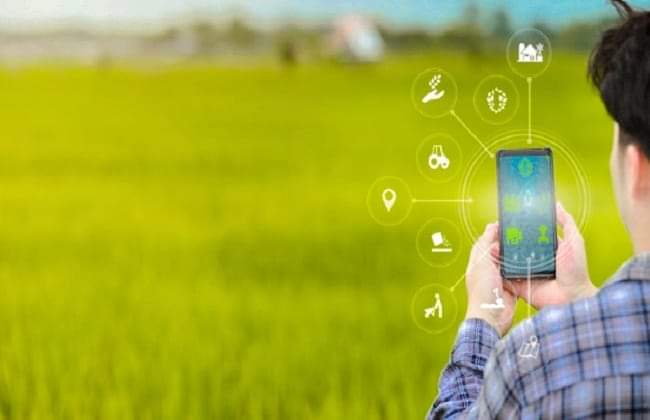

Over the years, the agricultural sector has claimed human attention above all else to supply the necessities of life—food, clothing, and remedies for disease. Human muscle power was once the driving force in farming for horizontal expansion. As time passed, technology evolved to spare physical effort, and this evolution has come to include the use of artificial intelligence to advance the agricultural sector and help increase both production and quality.
Artificial Intelligence Technologies in the Agricultural Sector:
✍️ Data Analysis:
Artificial intelligence can be used to analyze agricultural data such as temperatures, humidity, soil, rainfall, and more, generating precise results that support sound decision-making.
✍️ Vertical Farming:
Artificial intelligence is used to organize vertical farming, a technique that allows plants to be grown inside enclosed buildings, enabling climate control and reducing water and pesticide use.
🤨 Agricultural Robots:
Artificial intelligence can be used to develop agricultural robots employed in harvesting crops, clearing fields, watering plants, and other tasks.
🚨 Improving Agricultural Performance:
Artificial intelligence can be used to improve agricultural performance and boost productivity, as it can be employed to optimize resource distribution and determine the best agricultural techniques and practices.
🌴 Disease Detection:
Artificial intelligence can be used to analyze agricultural images, identify diseases and pests, and determine appropriate treatments.
👈 Climate Prediction:
Artificial intelligence can be used to analyze weather data, forecast the climate, and predict suitable weather conditions for growing specific crops.
📣📣 At present, artificial intelligence can be used to develop agriculture in several ways, including:
👈 Improving crop productivity:
Smart technologies can be used to analyze land, climate, and water data, along with fertilizer distribution, to improve crop productivity and increase the efficiency of natural resource use.
👈 Providing precise crop monitoring:
Artificial intelligence and machine learning can be used to create a precise crop monitoring system that uses geographic data and satellite imagery to analyze crop health and monitor pests and diseases.
👈 Providing climate prediction:
Artificial intelligence can be used to analyze weather and climate data to provide accurate forecasts of expected weather conditions in agricultural regions, helping farmers make sound farming decisions.
👈 Improving production and nutrition stages:
Smart technologies can be used to improve production and nutrition stages, including providing proper care for livestock, poultry, and fish, and enhancing agricultural production processes.
💪💪💪 By using artificial intelligence, agricultural efficiency and productivity can be improved, and the efficiency of natural resource use can be increased. This can contribute to enhancing food security and meeting the growing needs of the world’s population.
Prof. Dr. Magdy El-Samahy
Professor of Nanotechnology and Plant Protection at the Plant Protection Research Institute – Agricultural Research Center
Head of the Kafr El-Sheikh Branch of the Arab Union for Sustainable Development and Environment
Board Member of the Association of Egyptian Scientists Council
Member of the Scientific Research Ethics Committee at Kafr El-Sheikh University


Latest video
تابع معنا تحليل قراءة الصحف اليومية مع الكاتب الصحفي Hany Sallam عبر