
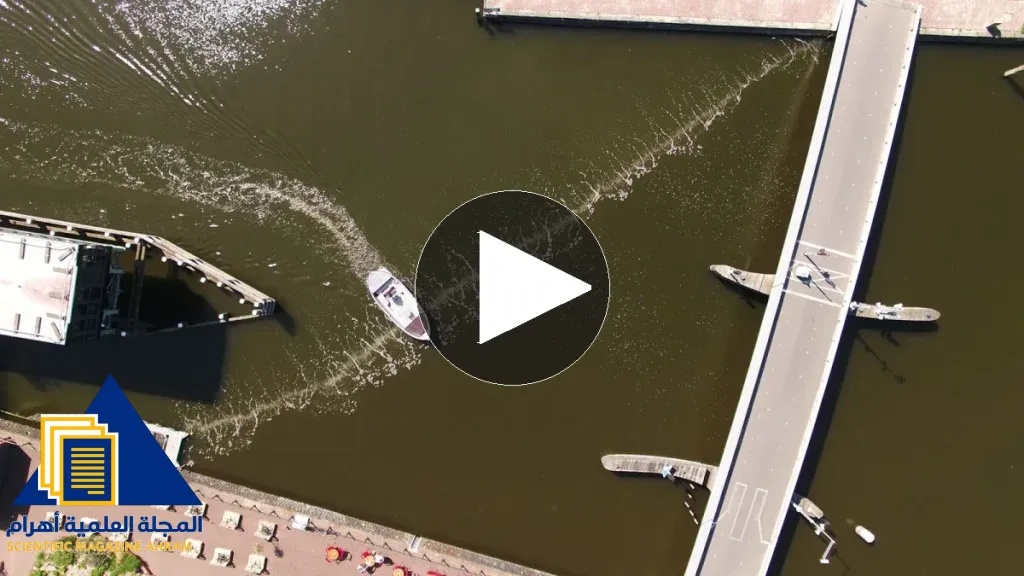

Dutch Innovation Takes US Waters by Storm
In a promising step to tackle rising plastic pollution in waterways, the city of Lansing, Michigan, is preparing to pioneer an innovative Dutch technology known as the Bubble Barrier. This technique is not just a theoretical idea; it has proven remarkably efficient at cleaning canals and waterways in the Netherlands, opening up new horizons for protecting aquatic ecosystems from the dangers of plastic waste.
How Does a Bubble Barrier Work?
The technology relies on a physical principle that is both simple and effective. A perforated tube is placed along the bottom of a river or canal to pump compressed air continuously. These rising bubbles create a strong air curtain that acts as a physical barrier preventing plastics from crossing. At the same time, the currents generated by the bubbles push waste from the depths toward the surface. Once the plastic reaches the surface, the water current guides it to a designated collection area on the riverbank, making it easy to remove without disrupting navigation or disturbing marine life.
Why Are We Betting on This Technology?
The strength of the Bubble Barrier lies in its sustainability and its ability to operate around the clock without interruption. Unlike traditional physical barriers that can obstruct vessel movement or trap silt and organic debris, this technology remains entirely transparent and allows fish and boats to pass smoothly. For Lansing, this innovation represents a smart and effective solution for managing waste before it reaches the Great Lakes, reducing manual cleanup costs and providing a first line of defense against microplastic pollution that now threatens food chains and fresh water.
A Promising Future for Waterways
If the experiment in Lansing succeeds, this technology could become a new global standard in aquatic environmental management. Plastic pollution is no longer a local issue, but a global crisis that requires unconventional innovations going beyond mere waste collection to smart systems that protect the environment at the source. With growing international interest in this technology, we may see a widespread rollout of this air curtain around the world in the near future to ensure our rivers and oceans remain clean and sustainable for generations to come.
By: Hany Sallam
Source: smithsonianmag.com


Latest video
تابع معنا تحليل قراءة الصحف اليومية مع الكاتب الصحفي Hany Sallam عبر