
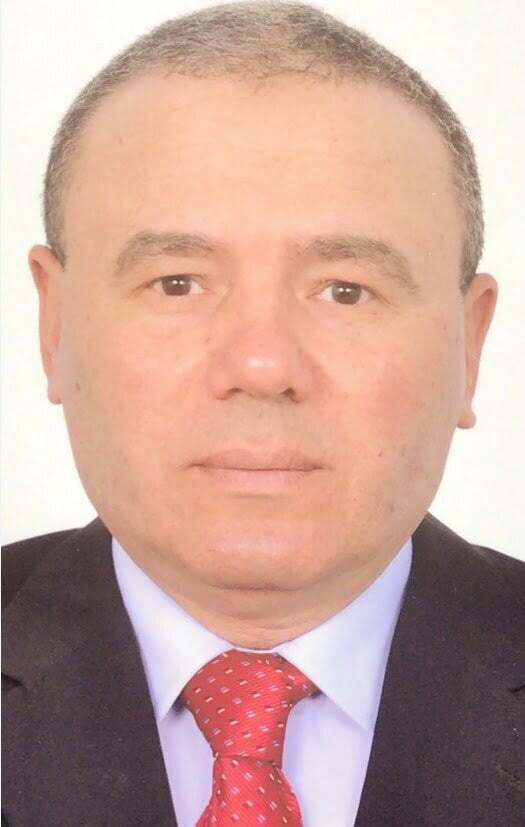

An interview conducted by Hany Sallam:
To tell the truth, when we contacted Major General Assem Abdullah Shokr, Vice Chairman of the Board of Directors of the Holding Company for Water and Wastewater, we found a serious and calm official whose leadership style is deceptively simple. He possesses a great deal of knowledge, which prompted us at the Ahram Scientific Magazine website to approach him carrying questions that occupy the minds of Egyptians.
To dispel the anxiety that plagues most of us, especially with climate change.
Water for Egyptians is life, and climate change has become a matter that not only occupies the world’s mind but occupies ours as well.
Given that Egypt is a prime example of a developing country that is highly vulnerable to climate change, it also faces numerous threats to its economic, social, and environmental sustainability—including energy, water, and food security. This vulnerability may cause immense foundational pressures on Egypt’s competitiveness and poses a growing threat to national security, as these threats are fueled by population growth and the associated rising demand, alongside the constraints of a limited resource base. These threats could develop into real crises if not addressed quickly and decisively.
Therefore, the Egyptian administration, led by President Abdel Fattah El-Sisi, is handling the issue of climate change with profound attention, monitoring its developments first in Egypt, then in the region, and then globally. Because Egypt is one of the developing countries affected by climate change, its management of this file tends to reject any mandatory commitments on developing countries to address the impacts of this phenomenon, while emphasizing the principles of the Rio de Janeiro Declaration and the Bali Action Plan,
particularly regarding common but differentiated responsibilities between developed and developing countries, as well as the responsibility of polluting entities to bear the cost of pollution. It also emphasizes that developed countries must fulfill their commitments to transfer technology, provide financing, and build capacities for developing countries without evading these obligations under the pretext of global financial crises.
However, in light of climate change that the world is witnessing at an accelerated pace, this has resulted in pressures on the Egyptian state. Although Egypt is one of the lowest contributors to global greenhouse gas emissions, accounting for 0.6% of total global emissions, it is one of the countries most exposed to the risks of climate change repercussions.
From there, we found a documented scientific response that reassured our hearts from Major General Engineer Assem Shokr.
Interview with Major General Engineer Assem Abdullah Shokr
Your Excellency, is Egypt prepared with new alternative water resources to the Nile River in the event of a drop in water levels as a result of climate change?
- The Egyptian state has implemented numerous engineering projects to maximize utilization
and increase governance of water resources through wastewater recycling and reuse
and the establishment of water desalination plants as a non-traditional source of water resources added
to the available water resources, which are not a substitute for the Nile River but rather complementary to it.
The Geographical Location of the Arab Republic of Egypt
- The Arab Republic of Egypt is located in northeastern Africa, just north of the Sahara, a region poor in water resources. Egypt depends on the Nile River for 97% of its available natural water sources.
- Since 2014, and under the direction of President Abdel Fattah El-Sisi, the Egyptian state has put in place a plan to bridge the gap between available water resources and Egypt’s growing water demands, as the country faces numerous challenges in securing its required water supplies.
- The most important of these challenges are:
- The surge in water requirements needed to carry out comprehensive development across all aspects of life in Egypt over the past eight years.
- The rise in water demand to keep pace with significant population growth, which exceeds 2.5% of Egypt’s population annually.
To overcome these challenges, the Egyptian state has implemented a policy to rationalize consumption and expand water resources along several pillars, primarily:
Pillar I: Supplying drinking water to coastal residential areas through seawater desalination plants powered by renewable energy.
Pillar II: Relying on groundwater in remote areas far from the Nile Valley and the coast.
Pillar III: Upgrading agricultural irrigation systems by lining canals and planting crop varieties that consume less water.
Pillar IV: Recycling and reusing wastewater (sanitary, agricultural, and industrial) through treatment for various purposes.
Pillar V: Harnessing flash floods and rainfall, which have increased significantly across Egypt over the past ten years due to climate change. This is done by building recharge wells to channel water underground into aquifers—as well as constructing obstruction dams, storage dams, or underground reservoirs in areas vulnerable to floods—to make use of the water.
Pillar VI: Raising public awareness among Egyptian citizens to avoid wasting water across all uses and to prevent the pollution of surface water sources, thereby preserving available natural water supplies and maximizing their utilization.
Major General Assem Shokry, in your capacity as Vice Chairman of the Board of Directors of the Holding Company for Water and Wastewater, what are the procedures followed in water desalination plants to transition from non-renewable energy to renewable energy to mitigate climate change?
- The Ministry of Housing, Utilities and Urban Communities has prepared Egypt’s strategic water desalination plan through 2050 to supply drinking water to new urban communities in coastal areas and meet the water demands of comprehensive national development. The plan establishes the principle of avoiding long-distance surface water transport by building large, centralized desalination plants. This approach prevents the need to pipe treated water over long distances to consumption areas, cuts costs, minimizes water loss, and maximizes efficiency through a public-private partnership (PPP) model with the Egyptian state.
- Egypt’s strategic water desalination plan has a total capacity of approximately 9 million cubic meters per day, distributed across six five-year plans from 2020 through 2050, with an investment cost reaching $5 billion.
- Part of the plan is currently underway with state investments providing a capacity of about 150,000 cubic meters per day at an investment cost of up to $250 million. The remaining projects of the first five-year plan (2020–2025)—which will bring desalination plant capacities to about 3.3 million cubic meters per day across 20 cities along the Red Sea and Mediterranean coasts in ten governorates—will be carried out through a partnership between local and international private sectors and the Egyptian state (PPP) using state-of-the-art desalination technology powered by renewable energy to protect the environment and produce low-cost drinking water.
- The Egyptian state offers incentives to encourage investors to carry out water desalination projects, create jobs, train engineers and technicians locally to handle desalination technology, and encourage the domestic manufacturing of desalination plant components in Egypt.
- Desalination projects use state-of-the-art plant technologies equipped with energy-saving devices and renewable energy to produce drinking water, prevent environmental pollution, mitigate climate change, and reduce the energy needed to produce a cubic meter of water, with the primary goal of lowering the production cost of drinking water from desalination plants.
Major General Assem, do you believe the cost of transitioning to solar or wind energy will affect the price of a cubic meter of water?
- The goal of using renewable energy is to protect the environment and curb climate change by reducing thermal emissions from fossil fuels, thereby preventing an increase in severe climate impacts such as flash floods, floods, droughts, desertification, and the like, while also lowering the production cost of drinking water from desalination plants.
So how will the state support desalinated water in the same way as pure Nile River water?
- Using water desalination projects to provide drinking water has become a necessity rather than an option as an unconventional water source, driven by significant annual population growth and the state’s implementation of a comprehensive development plan across all water sectors in Egypt.
- Drinking water produced from unconventional sources such as desalination plants must not be used for anything other than drinking water.
- The Egyptian state subsidizes drinking water according to approved consumption brackets.
- Using water produced from desalination plants for other purposes—such as tourism, industry, and commerce—is charged at production cost to preserve state resources, ease the burden on Egypt’s general budget, prevent water waste, and protect it from loss, because a drop of water equals life.
………………………….
The conversation was nearly over, but in truth, Major General Assem Abdullah Shokr engaged our thoughts on the need to continue our discussion because we found ourselves before an Egyptian scientist and a scientific encyclopedia aware of all changes, indeed arranging all the necessary procedures to protect our water security. Egypt certainly needs such heroes, the scientists of Egypt who are in positions of responsibility..
Finally, we extend our thanks to Major General Assem Abdullah Shokr, Vice Chairman of the Board of Directors of the Holding Company for Water and Wastewater


Latest video
تابع معنا تحليل قراءة الصحف اليومية مع الكاتب الصحفي Hany Sallam عبر