


Written by: Mohamed El-Amin Ahmed El-Sayed – Programmer and Graphic Designer

If we want to benefit from artificial intelligence and its applications, we need to first understand what it means and the limits of its capabilities. It is simply the simulation of human intelligence processes by machines, particularly computer systems and software. What most distinguishes artificial intelligence applications from other software is the element of prediction and subsequent reaction. For example, if a person sees a danger, the human mind predicts all the risks it faces, followed by a reaction, such as moving away from the danger or removing its source. This is where artificial intelligence plays its role by analyzing large amounts of data to form patterns, using those patterns to make predictions about future situations, and then providing necessary solutions as a reaction. Humans then choose the optimal solution. Artificial intelligence does not stop there; it enters the stage of Machine Learning, where historical data is used as input to predict new output values.

Artificial intelligence applications are divided into several categories:
- Logical analytics (the program decides what to do by inferring that certain actions are appropriate).
- Information retrieval (many of these applications connect to the internet and search for information related to a specific topic).
- Pattern recognition (when the program makes observations, it is often programmed to compare what it sees with a pattern, such as recognizing and correcting a misspelled word).
- Learning from experience (artificial intelligence programs build a database of human-selected solutions for each situation, providing those solutions when the current situation matches a previous one).
- Planning (the application contains facts, a database of information, and a statement of required goals to generate the steps needed to achieve them).
Artificial intelligence and its applications currently surround us in almost all daily activities, such as speech recognition programs on our mobile phones, search engines correcting misspelled words, spelling checkers in writing software, and in medicine and science, where programs diagnose diseases, predict patient conditions, and provide appropriate treatments. They are also used in factory and facility security systems that predict risks like fires and other disasters, with programs and devices analyzing risk ratios and closing exits facing higher danger levels, along with other applications that simulate human intelligence and eliminate human error.
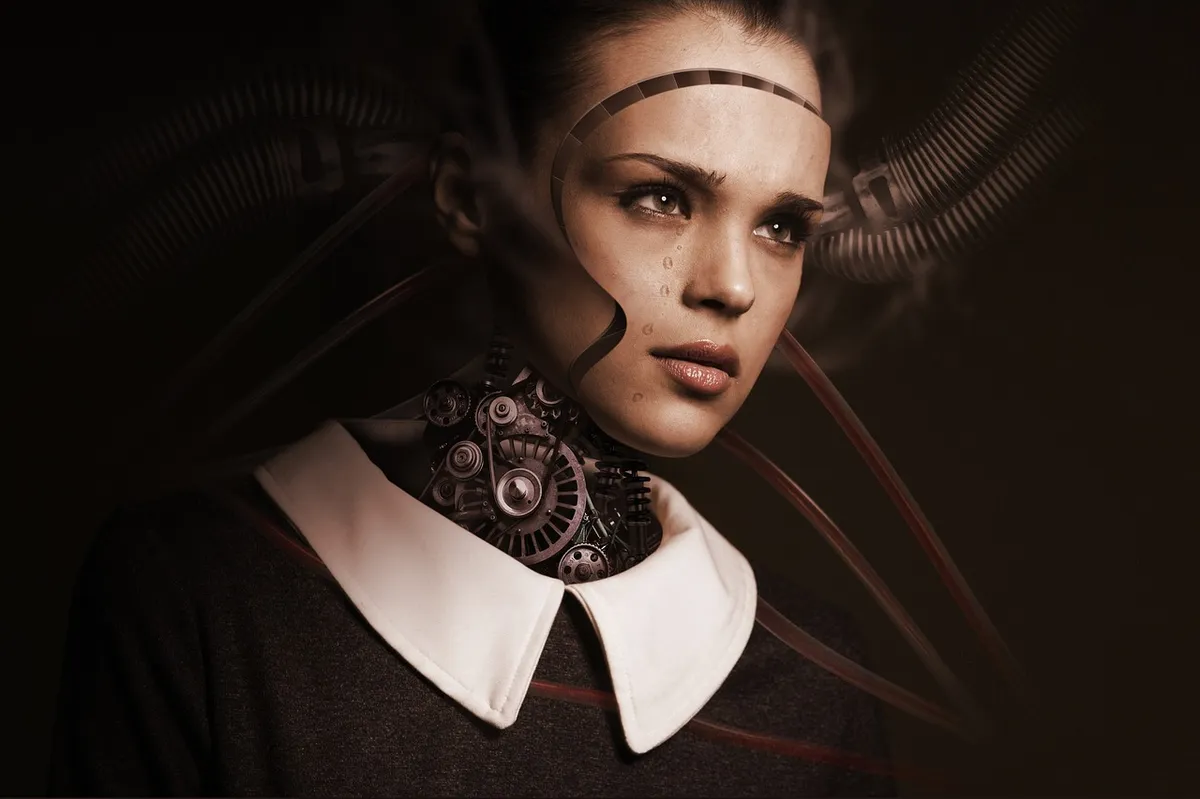
However, as noted, artificial intelligence applications surround us in all aspects of life and are rapidly penetrating our daily activities, especially over the past few years, as global companies and governments compete to provide these automated services. Therefore, we must keep in mind something of utmost importance: absolutely nothing matches the human mind. Although devices and machines accomplish tasks faster, without human intervention, many catastrophic errors can occur. Furthermore, relying on artificial intelligence makes future generations less active and reduces their ability to innovate and develop their skills, alongside other drawbacks of total reliance and excessive use.
References
Aurore Nishimw, Charles Ruranga, Clarisse Musanabaganwa. (2022). Leveraging Artificial Intelligence and Data Science Techniques in Harmonizing, Sharing, Accessing and Analyzing. https://www.researchsquare.com/article/rs-1418826/v1
Aboul-Ella Hassanien, Mohamed Hamed N. Taha, Nour Eldeen M. Khalifa (2021). Enabling AI Applications in Data Science. https://link.springer.com/book/10.1007/978-3-030-52067-0
Juan M. Górriz, Javier Ramírez, Andrés Ortíz, Francisco J. Martínez-Murcia, Fermin Segovia, John Suckling (2020). Artificial intelligence within the interplay between natural and artificial computation: Advances in data science, trends and applications. https://www.sciencedirect.com/science/article/abs/pii/S0925231220309292
Ku. Chhaya A. Khanzode Dr. Ravindra D. Sarode. (2020). ADVANTAGES AND DISADVANTAGES OF ARTIFICIAL INTELLIGENCE AND MACHINE LEARNING https://www.academia.edu/44895767/ADVANTAGES_AND_DISADVANTAGES_OF_ARTIFICIAL_INTELLIGENCE_AND_MACHINE_LEARNING_A_LITERATURE_REVIEW?from=cover_page
John McCarthy (2004). WHAT IS ARTIFICIAL INTELLIGENCE?. Stanford, CA 94305 jmc@cs.stanford.edu


Latest video
تابع معنا تحليل قراءة الصحف اليومية مع الكاتب الصحفي Hany Sallam عبر