


Follow-up by Dr. Chemist Maysa Salah El-Din Ismail
Head of the Scientific Department at Ahram Scientific Magazine and Board Member
Under the auspices of the Ministry of Foreign Affairs, and in cooperation with the Ministry of Environment, Cairo hosted the Environment and Development Forum 2022: The Road to Sharm El-Sheikh (COP 27). Organized by the Arab Water Council from September 11 to 13, 2022, the event brought together senior officials, experts, and thought leaders from 30 countries to highlight climate change impacts and solutions for environment and development, including adaptation measures and mitigation across multiple sectors.
The forum discussed eight main themes addressing climate change challenges featured on the agendas of most countries worldwide, with a focus on food and water security amid climate change, clean and renewable energy, sustainable development, environmental preservation, biodiversity protection, carbon dioxide emission control, and sustainable transport and cities.
The forum is part of preparations for the United Nations Framework Convention on Climate Change Conference (COP 27), scheduled for this coming November in Sharm El-Sheikh, by shaping relevant visions and initiatives and enhancing cooperation between decision-makers and experts in environment and sustainable development.
The forum proposed recommendations for the Sharm El-Sheikh Climate Change Conference (COP 27), highlighting innovation and progress in environmental protection, and identifying key climate change challenges along with the best sustainable development strategies needed to overcome them.
The opening session of the Environment and Development Forum 2022: The Road to Sharm El-Sheikh took place on Sunday, September 11, under the auspices of the Ministry of Foreign Affairs and organized by the Arab Water Council. It was attended by Sameh Shoukry, Minister of Foreign Affairs and President-Designate of COP 27; the ministers of electricity and renewable energy, and water resources and irrigation; the Secretary-General of the Arab League; the UN Climate Change High-Level Champion for Egypt; the UN Resident Coordinator in Egypt; and a group of senior officials, experts, researchers, and specialists.
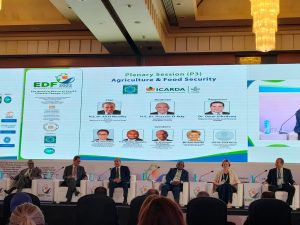
Sameh Shoukry, Minister of Foreign Affairs, delivered a speech during the opening session in which he noted the Egyptian presidency’s pursuit, from the very first moment it assumed this responsibility, to make the Sharm El-Sheikh conference a turning point in international climate action by shifting from promises and pledges to actual implementation on the ground. He also reviewed the Egyptian presidency’s vision for the conference regarding several priority issues in climate action.
Dr. Hany Sweilam, Minister of Water Resources and Irrigation, noted during his speech at the forum’s opening session that many countries suffer from water scarcity alongside population growth, a fixed water share, and climate change, which has reduced water availability for drinking, agriculture, and industry.
Dr. Sweilam stated that Egypt faces water challenges due to limited water resources, and noted that Egypt is among the countries most vulnerable to climate change impacts such as rising temperatures, coastal erosion, and saltwater intrusion.
He added that 97 percent of Egypt’s water comes from the Nile, pointing out that climate change impacts amplify the effects of water scarcity across northern, southern, and interior Egypt.
Dr. Sweilam pointed to the extreme weather phenomena facing many countries and their negative impacts on the water sector, which requires enhancing cooperation among all nations and placing the water sector on the global climate agenda to increase countries’ capacity to address water issues in a way that reflects on achieving sustainable development goals related to water.
The minister explained that the Ministry of Irrigation is making major efforts in water improvement through canal rehabilitation to deliver water quickly and efficiently to farmers, noting that the state undertakes numerous efforts in this field and works on creating a manual for canal rehabilitation works.
The irrigation minister pointed to the state’s construction of huge water treatment plants, such as the Bahr El-Baqar plant, for agricultural use, alongside its focus on scientific research.
He noted the role of water as a key element in agriculture and food security, and the need to prioritize the water, agriculture, and food sectors in the climate change dossier.
He also stressed the importance of expanding water desalination, exploring ways to achieve lower costs while using renewable energy, and finding solutions for wastewater, which rank among the most crucial challenges facing the water desalination sector. He emphasized the vital role of scientific research in solving such challenges.
Dr. Mahmoud Mohieldin, UN Climate Change High-Level Champion for Egypt’s COP27 Presidency and UN Special Envoy on Financing 2030 Sustainable Development Agenda, stated in his speech at the opening session that 4,471 projects from all governorates were competing in the National Initiative for Smart Green Projects as of September 8.
Mohieldin stressed the need to localize sustainable development and climate action so ordinary people can feel the fruits of climate action and the outcomes of climate summits, noting that the climate conference aims to present solutions and alternatives to challenges related to climate change.
He noted that the approach adopted by the Egyptian presidency of the climate summit focuses on implementation, turning pledges into execution and projects into investments. He pointed to climate action priorities to focus on during the coming period, specifically adopting a comprehensive and integrated approach that addresses the climate crisis within sustainable development, including mobilizing investments in the water and energy sectors, which helps tackle extreme poverty and provide jobs.
He stressed the need to integrate the regional dimension to advance the climate action agenda, pointing to the initiative by the Egyptian COP27 presidency with the five UN regional commissions and the UN Climate Change High-Level Champion for Egypt’s COP27 Presidency to hold five regional forums to mobilize financing for climate projects.
He said that three forums had already been held in Africa, Asia, and Latin America, and the number of submitted projects in emissions mitigation and adaptation to the impacts of climate change exceeded 30.
Regarding financing, he stressed the need to reduce reliance on borrowing and take advantage of developments in carbon markets and green bonds, as developing countries suffer the most from the consequences of climate change.
A large number of researchers interested in climate change and its impact on various state sectors participated in the forum. Participating entities included the Holding Company for Water and Wastewater and its subsidiaries, and a large number of leaders attended:
- Major General Assem Shokry, Deputy Chairman of the Holding Company for Water and Wastewater
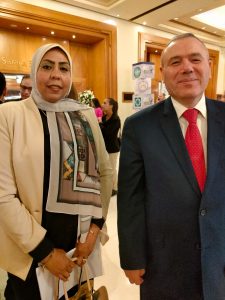
- Dr. Refaat Abdel Wahab, former Head of the Research and Development Sector at the Holding Company and Advisor to the Chairman of the Holding Company for Water and Wastewater
- Representatives of the subsidiary companies
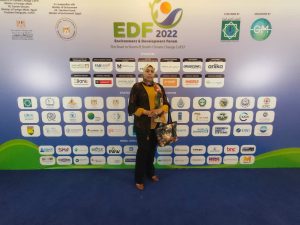
Dr. Maysa Salah El-Din Ismail, Head of the Scientific Department and Board Member of the Al-Ahram Scientific Journal, also participated in the forum


Latest video
تابع معنا تحليل قراءة الصحف اليومية مع الكاتب الصحفي Hany Sallam عبر