


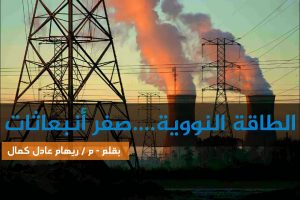
“Nuclear Energy Is a Reliable Source for an Emissions-Free World”
Reham Adel Kamal Chemical Engineer
Nuclear energy plays a crucial role in helping the world reach a key goal of zero carbon emissions by mid-century, especially in countries with low wind resources.
Human activity increases carbon pollution in the atmosphere, affecting the global carbon cycle and causing global warming, along with changing precipitation patterns.
Therefore, according to the Intergovernmental Panel on Climate Change (IPCC) and research from the Carnegie Institution for Science, to keep catastrophic climate impacts to a minimum, humanity needs to ensure that the rise in global average temperature does not exceed 1.5 degrees Celsius compared to pre-industrial levels. To achieve this goal, the panel stated that carbon emissions from across the energy system must reach zero by mid-century.
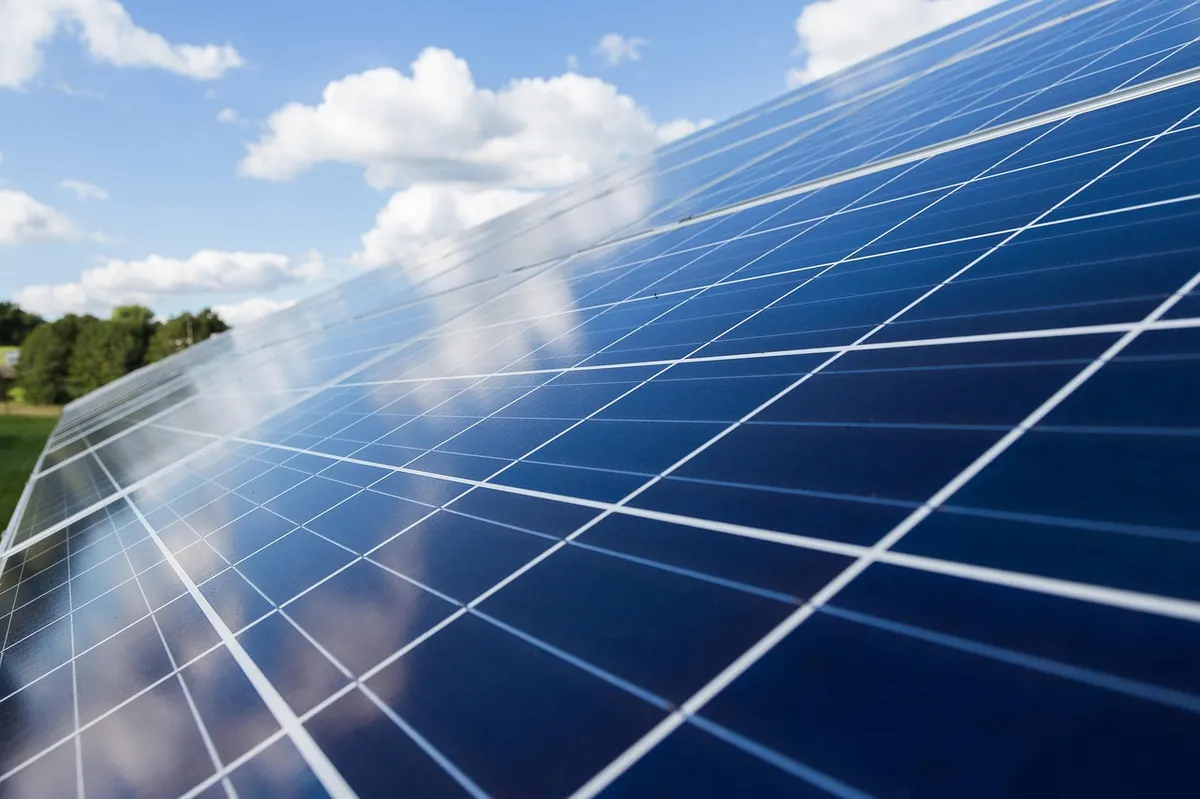
We cannot rely on renewable energy sources such as wind and solar power as a stable source to reduce emissions.

“Because wind and solar have natural variability in their availability from one day to the next, and also vary across geographic regions, this creates overall complexities in relying on them as a primary source to reduce emissions.”
Today, the gaps in energy supplied by wind and solar can be bridged through power generation from natural gas. However, in an emissions-free electricity system, another method is needed to provide electricity when the sun is not shining and the wind is not blowing.
Previous studies have shown that cutting carbon emissions by 80% can be achieved by scaling up wind and solar installations. However, the gaps between supply and demand resulting from this natural resource variability require major infrastructure changes—massive expansions in energy storage and transmission capacities, as well as in power generation infrastructure—in order to achieve a reduction rate that approaches nearly 100%.
“To achieve that rate—the 10% or 20% of decarbonization—we need other sources, not just wind and solar power.”
Turning to Nuclear Energy as a Stable, Guaranteed Alternative to Solar and Wind Power:

The institution investigated wind and solar resources in 42 countries and used this information to evaluate the capacity of nuclear energy to provide low-cost power and replace natural gas as a backup energy source. Their analysis focused on identifying countries that would benefit from exploring nuclear energy as an option for their energy mix.
They found that countries like the United States, which enjoy favorable geographic and climatic conditions to generate abundant wind power, would deploy nuclear energy only after it is needed to overcome the final remaining obstacles to decarbonization. But in countries with poorer wind resources, such as Brazil, the strategic use of nuclear energy can lead to a faster transition to near-zero carbon emissions.
Nuclear Energy Is the Cheapest Way to Eliminate All Carbon Emissions in the Electricity System Everywhere:
The reliable power generation provided by nuclear energy has a lot of potential value in the electricity grid for most countries. “Places with weak wind resources can benefit from nuclear energy early on by reaching zero emissions, whereas places with very good wind resources will need it only to eliminate the final effects of carbon emissions.”
It was found that the cheapest way to eliminate carbon dioxide emissions, assuming today’s prices, is nuclear energy.
Under strict greenhouse gas emission controls, the reliable power generation provided by nuclear energy has a lot of potential value in the electricity grid for most countries. “Places with weak wind resources can benefit from nuclear energy early on by reaching zero emissions.”
References:
- Materials provided by Carnegie Institution for Science.
- Lei Duan, Robert Petroski, Lowell Wood, Ken Caldeira. Stylized least-cost analysis of flexible nuclear power in deeply decarbonized electricity systems considering wind and solar resources worldwide. Nature Energy, 2022; DOI: 10.1038/s41560-022-00979-x


Latest video
تابع معنا تحليل قراءة الصحف اليومية مع الكاتب الصحفي Hany Sallam عبر