
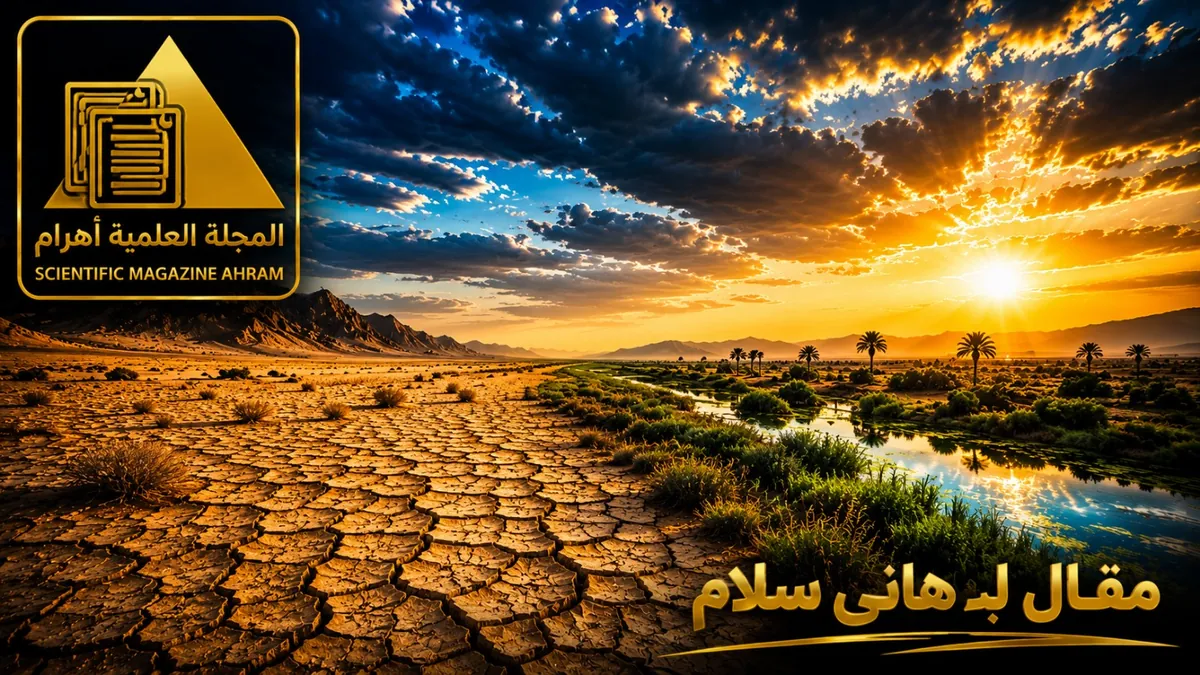

When we look at Egypt’s map, nature may seem as fixed as we have known it for decades. Today, however, scientists are monitoring slow changes occurring in certain areas that most people may not notice from one year to the next, yet which become clearer when compared over long periods.
These observations lead some researchers to ask an important question: Is the natural map of Egypt changing silently?
As temperatures rise and the global impacts of climate change increase, many countries have begun closely monitoring shifts that could affect ecosystems, water sources, and vegetation.
What Does Increasing Drought Mean?
Drought does not always mean the complete disappearance of water; instead, it may appear as higher evaporation rates, lower soil moisture, or longer periods of extreme heat.
Over time, these factors can affect plants, animals, and agricultural activities, particularly in ecologically sensitive areas.
This is why scientists rely on satellite imagery and long-term climate measurements to track any changes that may occur in the nature of Egyptian lands.
Challenges Imposed by Rising Temperatures
Many regions around the world have seen a noticeable rise in temperatures over recent decades, and Egypt is not isolated from this global phenomenon.
Whenever temperatures rise, the rates of water loss from soil and plants increase. Some crops also need larger amounts of water to maintain their productivity.
Furthermore, some natural ecosystems may face additional pressures as a result of changing usual climate conditions.
How Do Scientists Track These Changes?
Researchers rely on a wide range of modern tools to monitor the Egyptian environment.
These tools include satellites, climate monitoring stations, and advanced computer models that help analyze long-term trends.
These technologies also make it possible to track changes in vegetation cover, moisture levels, and the distribution of certain plant and animal species over time.
Is the Desert Expanding?
Some people ask this question frequently when discussing drought and climate change.
Yet the answer is not that simple. Scientists study multiple factors before making final judgments, because the changing of ecosystems depends on a complex interaction between climate, water, and human activities.
For this reason, continuous monitoring and long-term data remain essential for understanding the full picture.
What Does the Future Hold?
Experts believe that facing the effects of climate change requires expanding environmental monitoring programs, conserving natural resources, and using modern technologies in water management.
Afforestation projects, land reclamation, and improving water use efficiency can also help enhance the ability of ecosystems to adapt to future conditions.
Ultimately, Egypt’s natural map may not change overnight, but keeping track of these slow shifts remains essential for understanding the future of the Egyptian environment and preparing for upcoming challenges.
Hany Sallam


Latest video
تابع معنا تحليل قراءة الصحف اليومية مع الكاتب الصحفي Hany Sallam عبر