

On Egypt’s Strategic Climate Action Plans After COP27
By Chemical Engineer Yasmine Mostafa
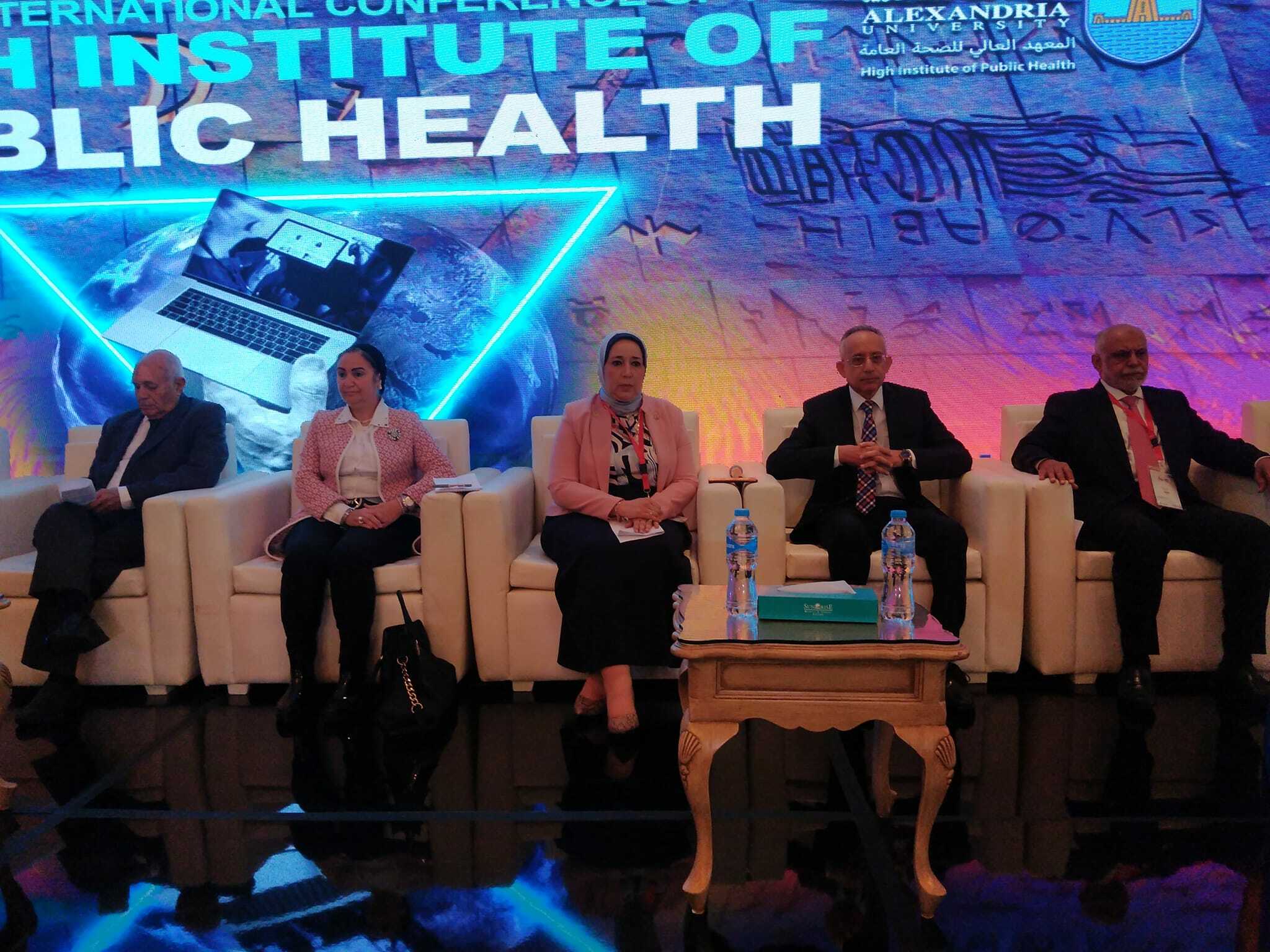
Under the patronage of Dr. Ayman Ashour, Minister of Higher Education and Scientific Research; Dr. Khaled Abdel Ghaffar, Minister of Health and Population; Dr. Amr Talaat, Minister of Communications and Information Technology; and Dr. Abdelaziz Konsowa, President of Alexandria University, Dr. Ashraf El-Ghandour, Vice President of the University for Graduate Studies and Research, inaugurated on Sunday morning, November 27, 2022, the 10th international conference organized by the High Institute of Public Health in cooperation with the World Health Organization (Eastern Mediterranean Regional Office) and Save the Children, affiliated with the United Nations.
Held under the theme “Telehealth” for two days, the opening was attended by Dr. Heba El-Kady, Dean of the High Institute of Public Health; Dr. Engy Mohamed El-Ghitany, Vice Dean for Community Service and Environmental Development; Dr. Nisreen El-Nemer, Vice Dean for Graduate Studies and Research; Dr. Naeema Al-Gasseer, WHO Representative in Egypt; Dr. Mohammad Al-Jarallah, President of the Islamic Organization for Medical Sciences and former Minister of Health of Kuwait; Dr. Amira Tahio, Undersecretary of the Ministry of Health in Alexandria; Engineer Hoda Dahroug, representative of the Ministry of Communications and Information Technology; along with a group of experts and public health enthusiasts from the Arab world, Africa, Europe, and America, and professors from Egyptian universities.
Climate change has become a major threat to local and global health systems, water resources, and the future in general. Therefore, it was necessary to discuss the issue, clarify its importance, and raise public awareness of the benefits of reducing energy and goods consumption to save our planet from climate change. Over two days, a group of professors and companies discussed the threat of climate change, their role in addressing it, and ways to adapt. They also addressed the relationship between climate and environmental changes and public health, women’s and children’s health, and nutrition—its importance, and how poor dietary habits cause many diseases—along with the importance of telehealth and its activity during COVID-19.
The conference issued several recommendations:
- Mega projects need to be built to mitigate water resource shortages.
- Efforts should be made to produce crops that adapt to high temperatures and salinity, feature short life cycles, and undergo post-harvest improvement to extend shelf life.
- Land reclamation programs need to be implemented.
- The strategic plan to reduce emissions from public transport should be adapted.
- Comprehensive e-waste management programs need to be implemented.
- An integrated system for hospital waste management and safe disposal needs to be activated.
- Appropriate and responsive public health policies should be adopted to mitigate the risks of climate change on pregnancy and childbirth outcomes.
- Public awareness of the benefits of reducing energy and goods consumption needs to be increased to save our planet from climate change.
- Lifestyle modifications should be initiated for diabetes patients.
- The term obesity needs to be replaced with a more accurate diagnostic term that describes the disease condition.
- Further longitudinal intervention studies related to genetic and environmental factors and dynamic outcomes, such as weight change, dietary modification, and/or exercise, should be conducted.


Latest video
تابع معنا تحليل قراءة الصحف اليومية مع الكاتب الصحفي Hany Sallam عبر